A path is a line you walk every day. Get the line right.
We lay garden paths across South London from our base in Norbury SW16: sandstone, porcelain and slate footpaths, paths set in gravel, stepping stones through a lawn, side returns and front paths. Each job here is documented with photos and a price, from a £3,000 sandstone and gravel path in Bexleyheath to paving and a footpath across a Lewisham garden for £10,000.
A good path goes where people really walk: from the back door to the shed, along the side of the house to the bins, from the gate to the front door. The route matters as much as the paving, because a path that takes the long way round gets ignored and the grass beside it wears bare. Once the line is agreed it is set out on the ground and the width decided, wide enough for a wheelbarrow where one will go, narrower where the path only has to lead the eye.
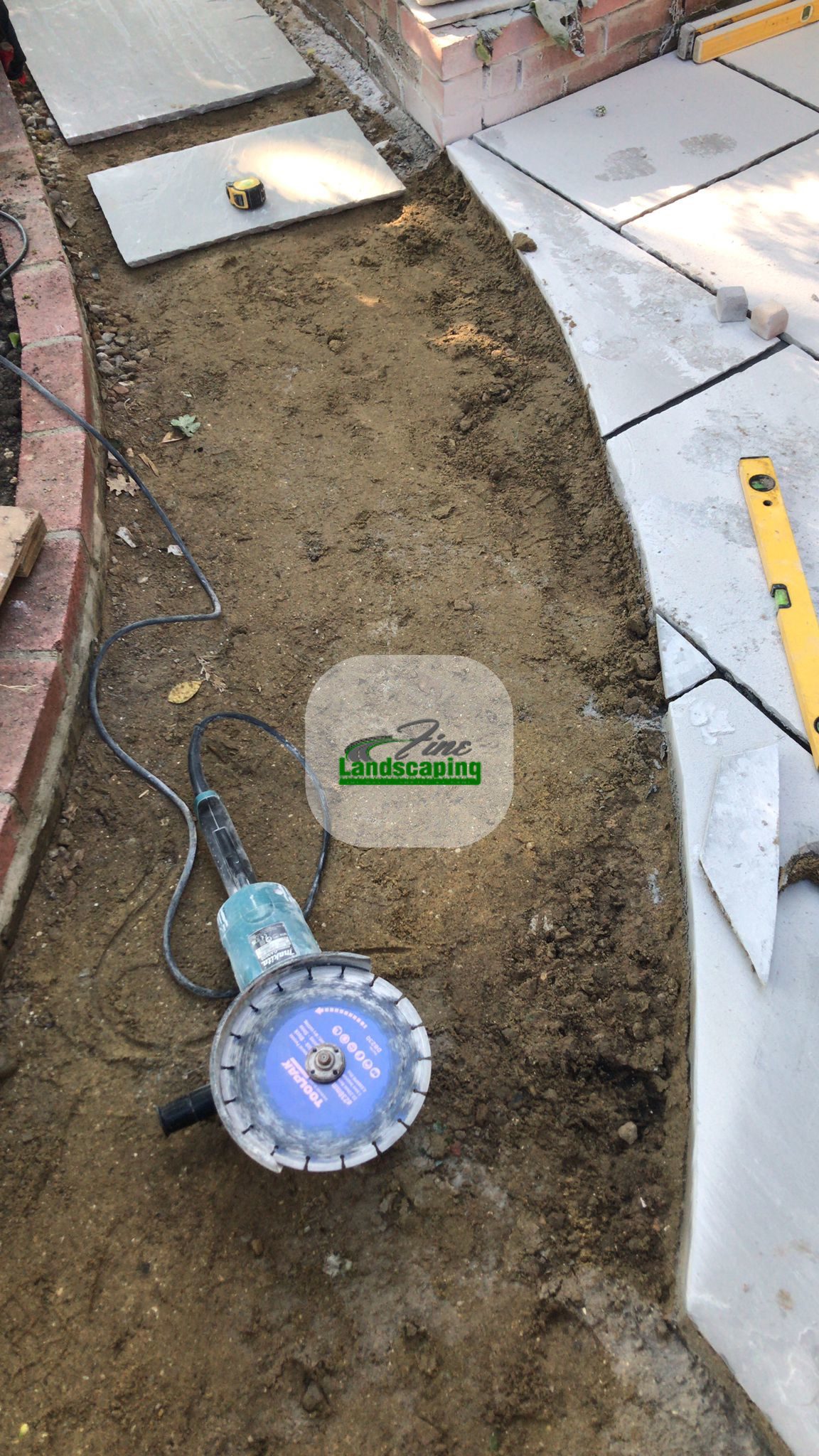
Underneath, a path is built like a small patio. The line is dug out, a Type 1 base laid and compacted, and the stone bedded on top, as on the buff sandstone path in Bexleyheath and the Kandla grey footpath in Lewisham, where a mini digger cleared the ground first. A path carries far less weight than a drive, but it still sits on ground that swells and shrinks with the seasons, and without a base the slabs rock and the edges sink.
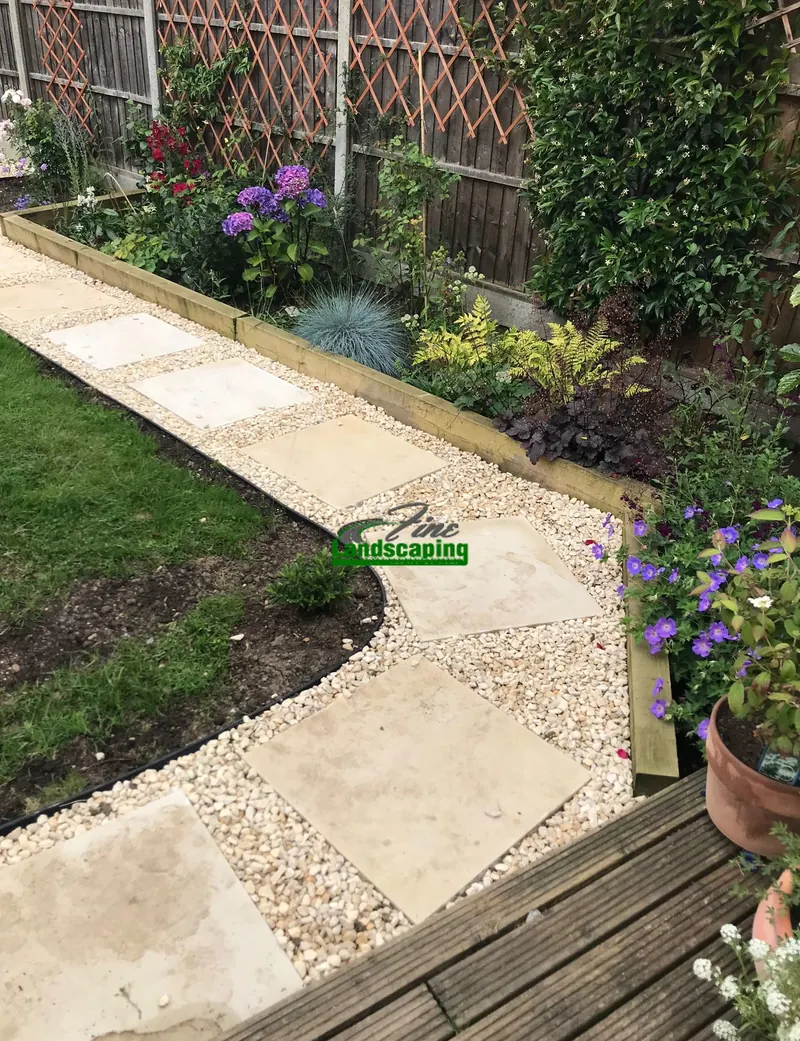
The edges decide the look. Paving can stop against a lawn, as the black sandstone path at Brixton Hill does with turf on either side, or sit in gravel, as in South Norwood, or in Bexleyheath, where plastic edging on both sides keeps the Cotswold cream gravel in place. Stepping stones are the lightest option, set into new turf in East Sheen or laid with shingle between them down a Clapham side return. Our own team lays every path, and the work carries our 10-year workmanship guarantee.
Back-garden footpaths, side returns, stepping stones and front paths, each with its own case study, photos and price.
BeforeAfter
The patio corner · drag to compare
BeforeAfter
The finished patio · drag to compare
Featured project · South Norwood SE25 · August 2023
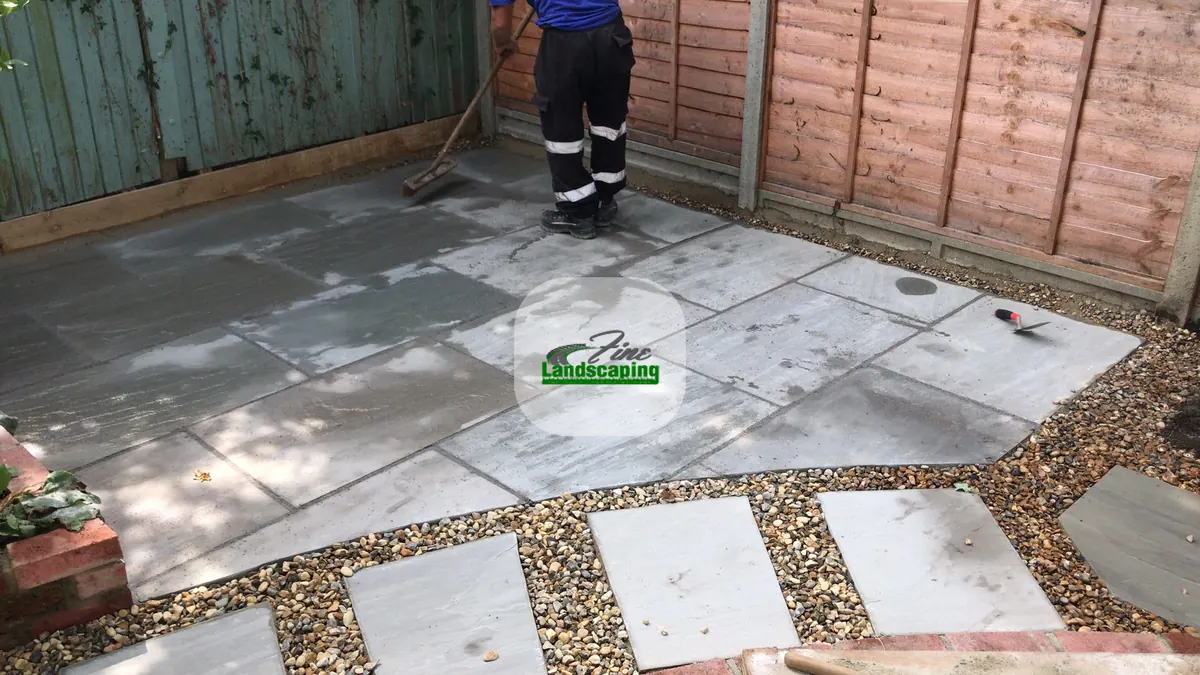
Indian sandstone footpath and a 3m x 3m patio with gravel in South Norwood
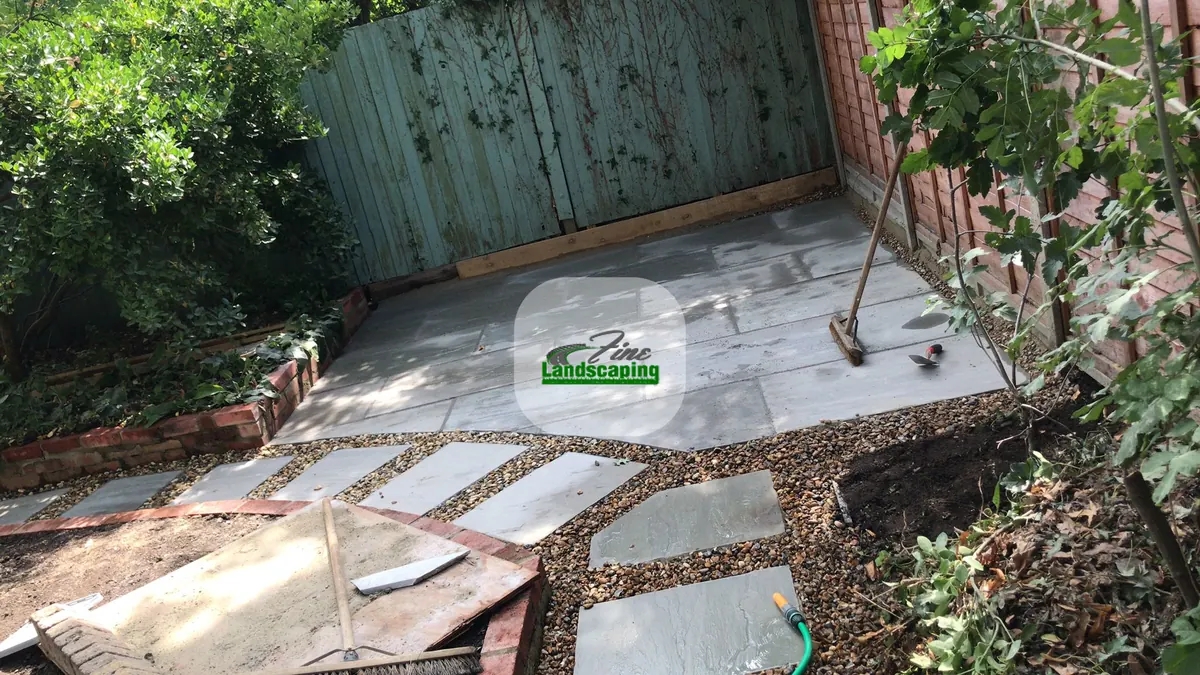
In this South Norwood garden, a light grey Indian sandstone footpath now leads to a new 3m x 3m patio laid in four sizes of the same stone. The slabs were cut to shape on site, the footpath was laid across the garden, and gravel was spread around both the path and the patio to finish them. Three days, £4,620 including VAT.
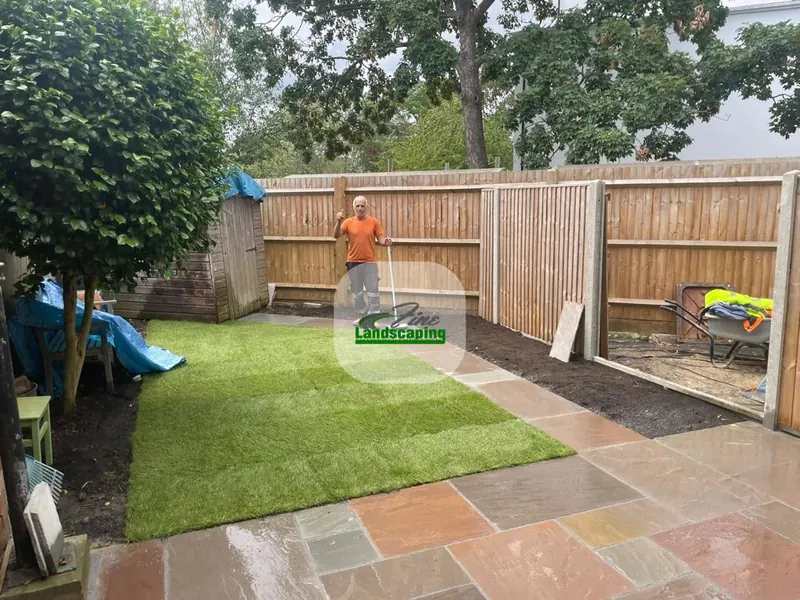
New Indian sandstone paving and a footpath to the shed, with flower beds on both sides and new grass in the middle, in 5 days for £6,500 including VAT.
A full footpath of buff Indian sandstone with Cotswold cream gravel, plastic edging and random stepping stones, in three days for £3,000 including VAT.
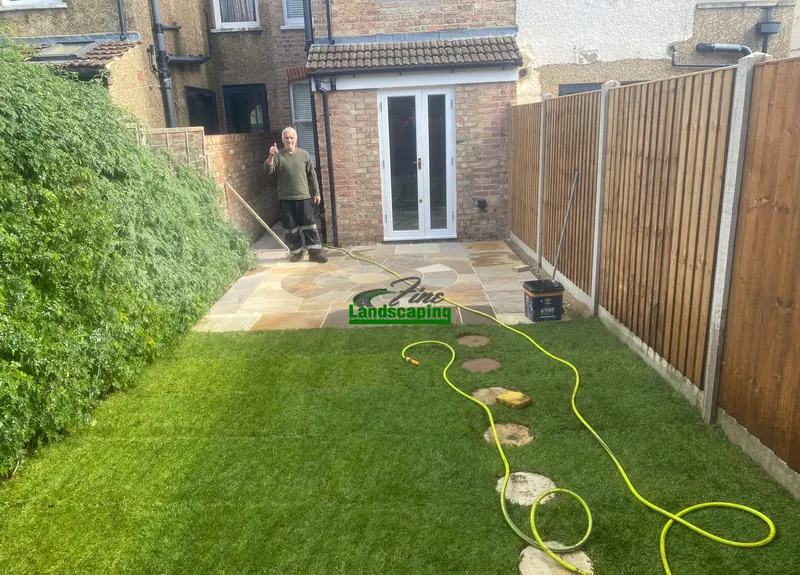
Random concrete stepping stones set into the lawn to make a path to the shed, with a custom-made pergola over the side return, crazy paving jet washed and regrouted and around 15m of French drains, in four days for £7,500 including VAT.
Around 20m² of grey 60x90 porcelain laid to drain towards the garden, a new wall clad in the same paving, a new manhole cover and a footpath to the garage, in four days for £5,000 including VAT.
A new red-brown block paving driveway, Autumn Indian sandstone down the side and across the back, five clad steps, a ramp, a curved path beside new turf, a sleeper bed, eco drains and three recessed manhole covers, with over 100 tonnes of soil removed, in four weeks for around £45,000 including VAT.
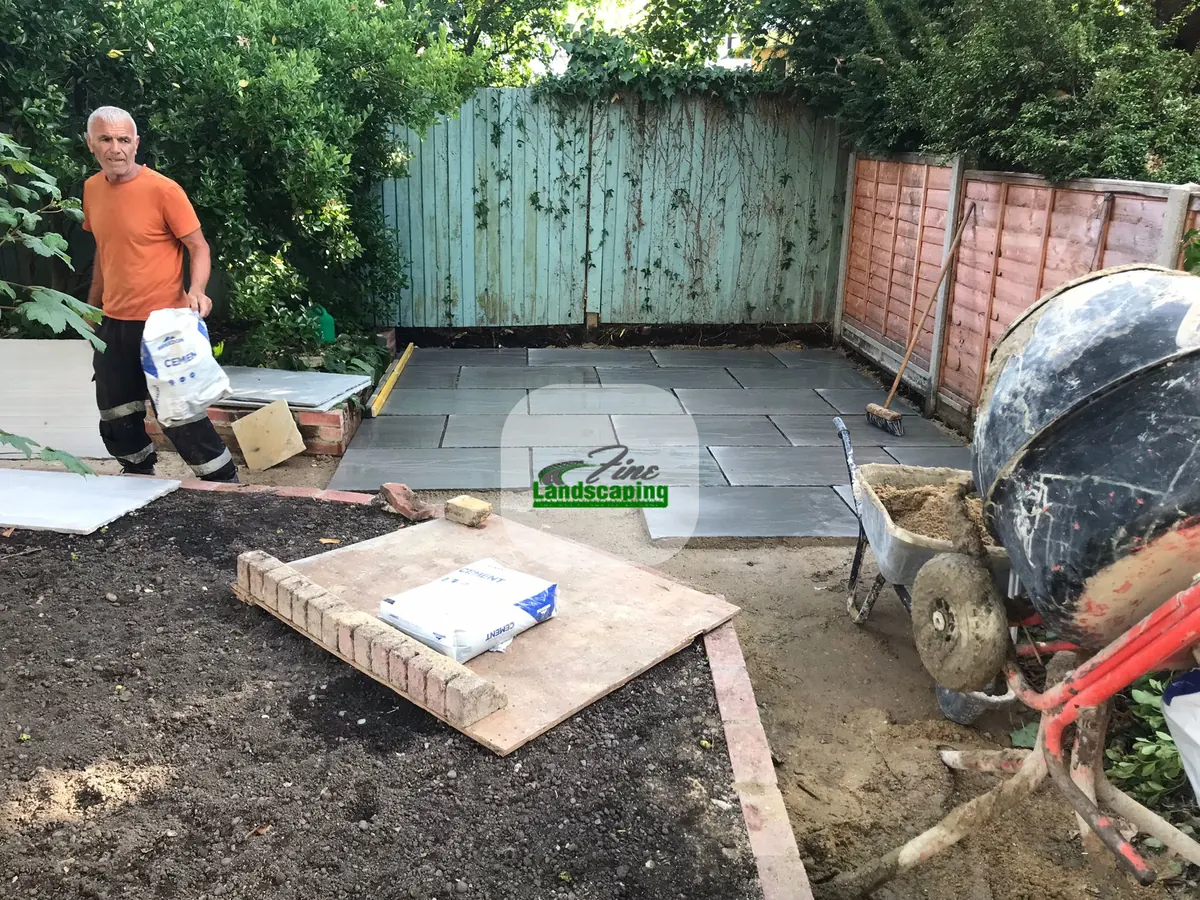
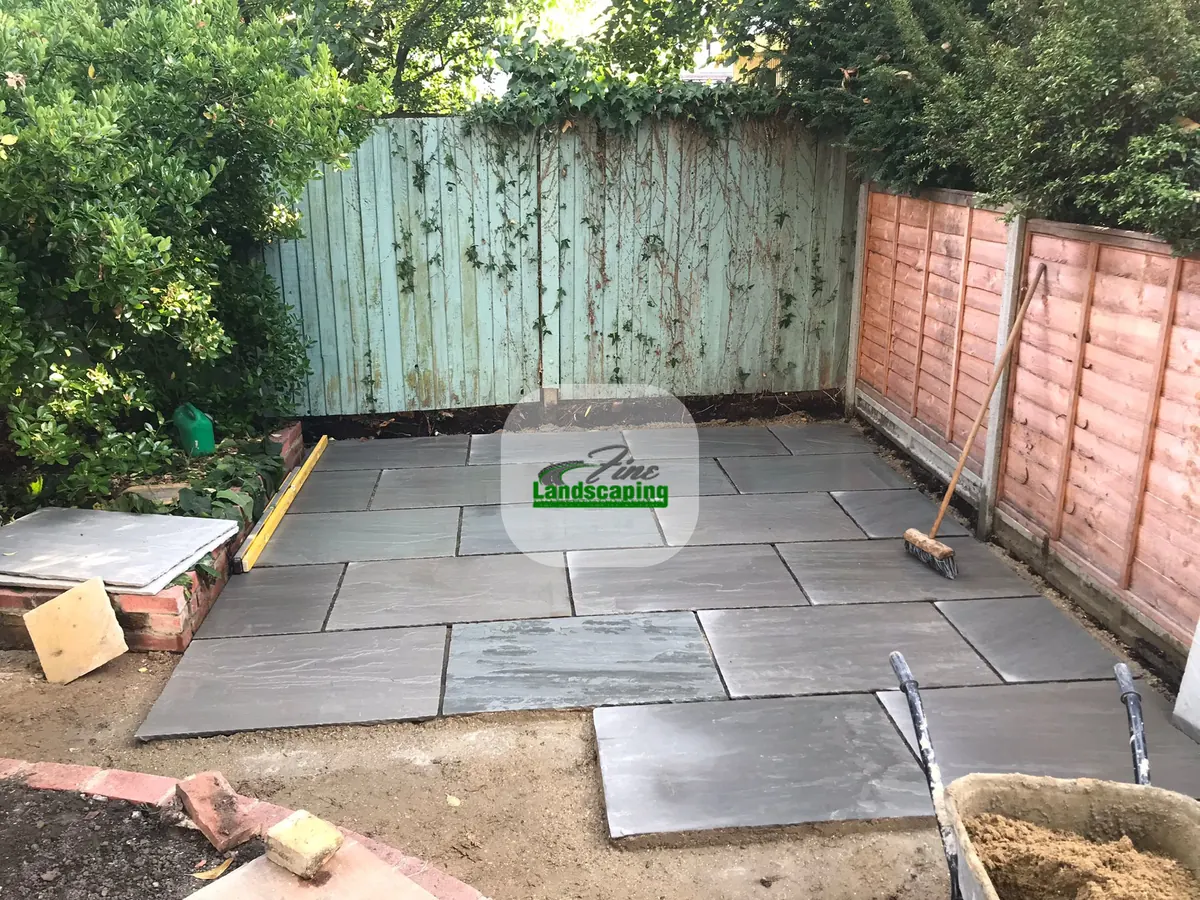
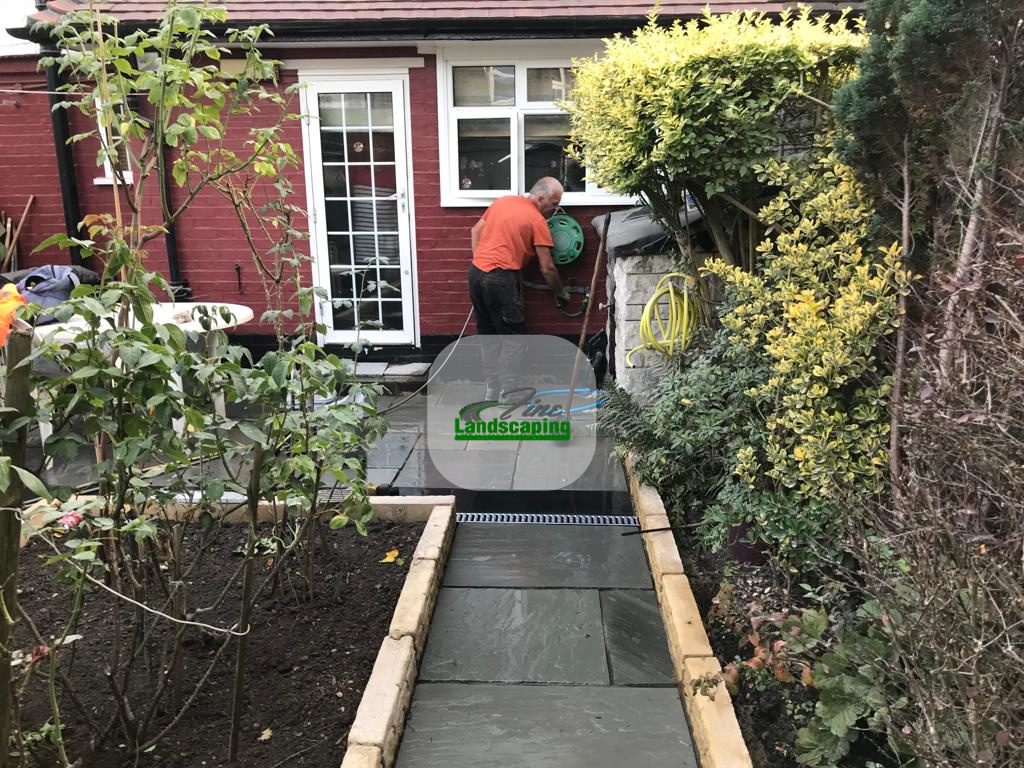
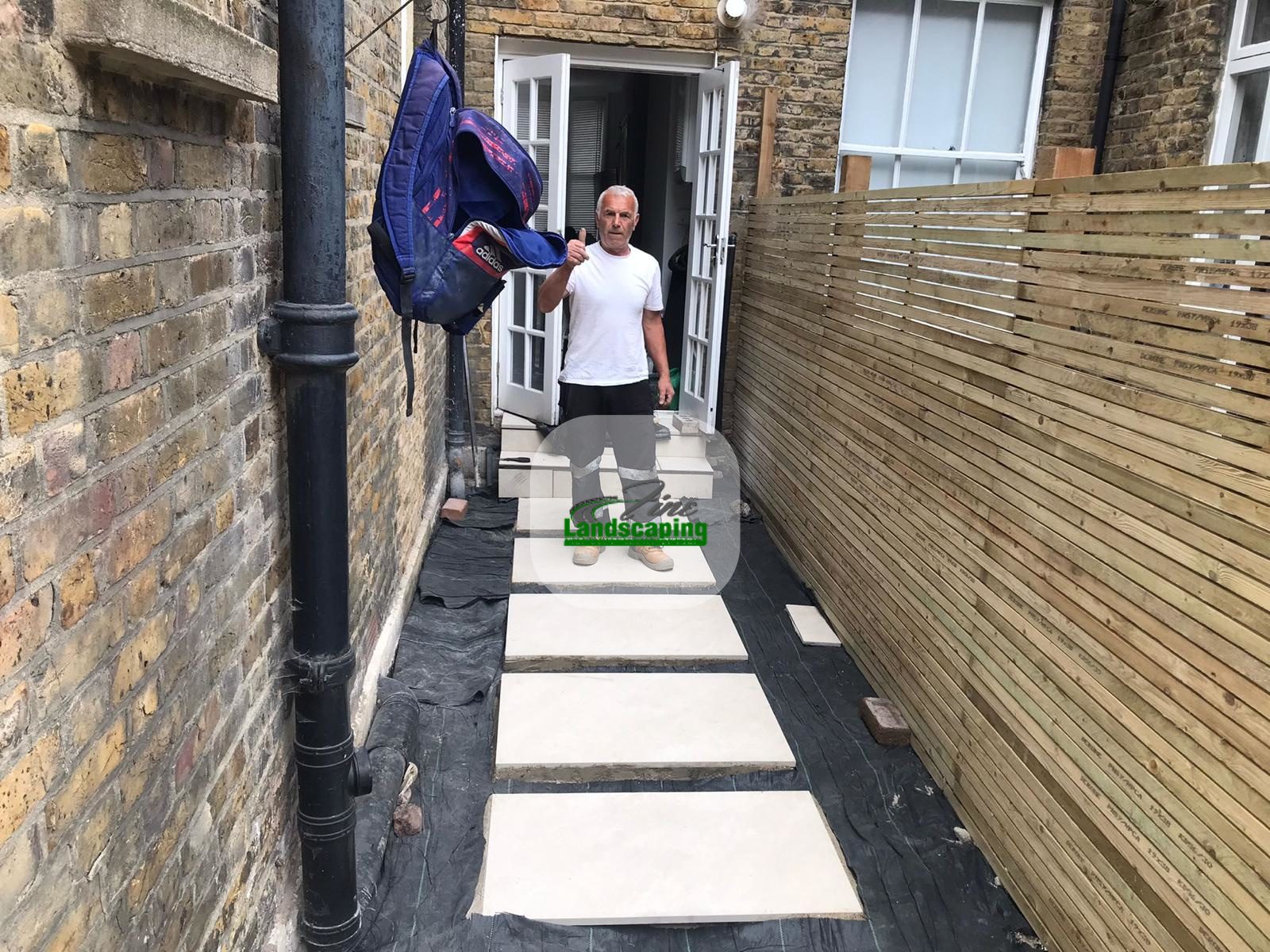
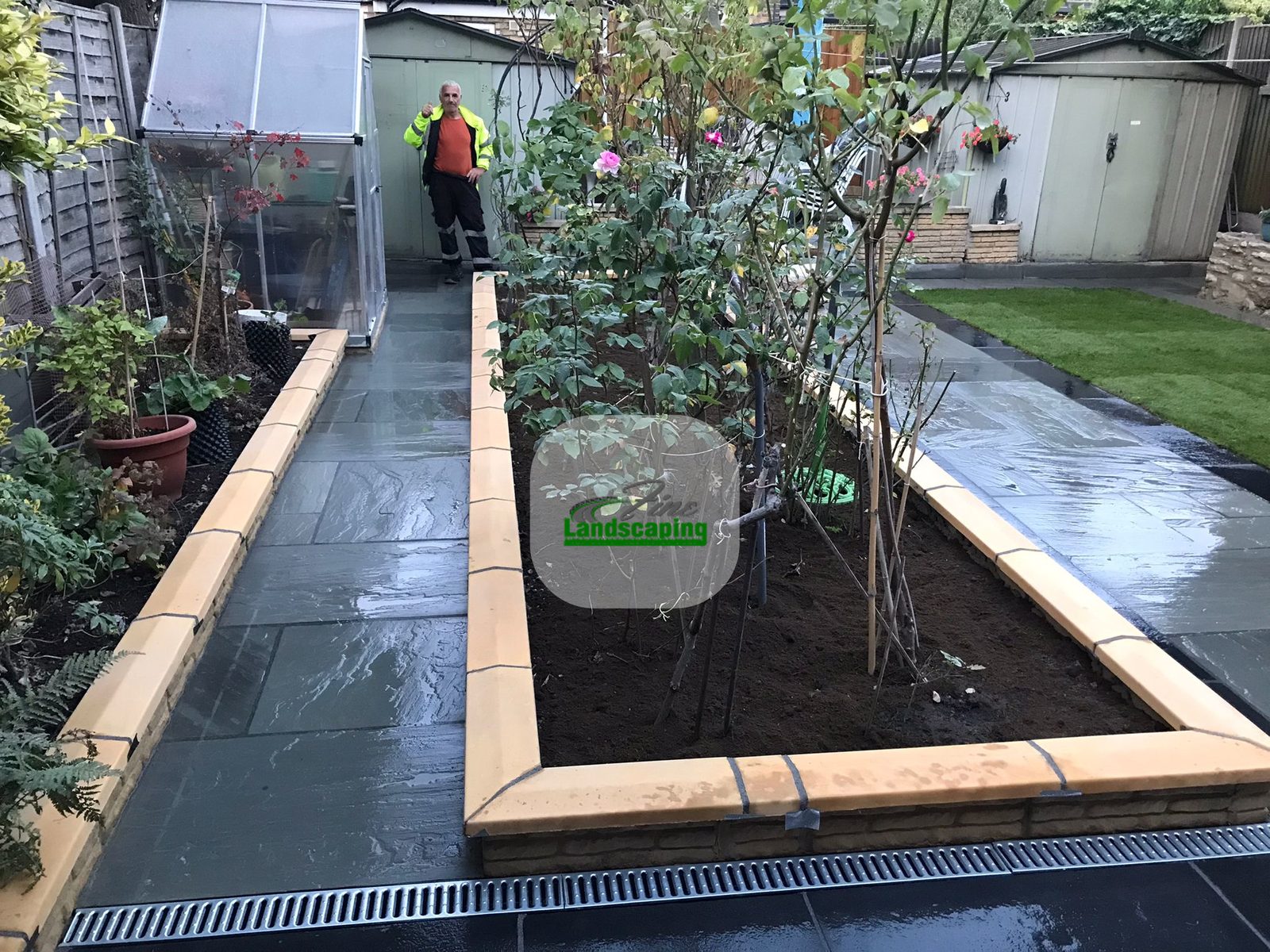
The base, the cutting, the stepping stones and our team on documented path jobs. Click any photo to enlarge it; the place name links to that job's case study.
The route and the edge change more from garden to garden than the stone does. These are the path types we lay, each with real jobs to look at.
01
Paved paths in gravel
Neat, free-draining edges
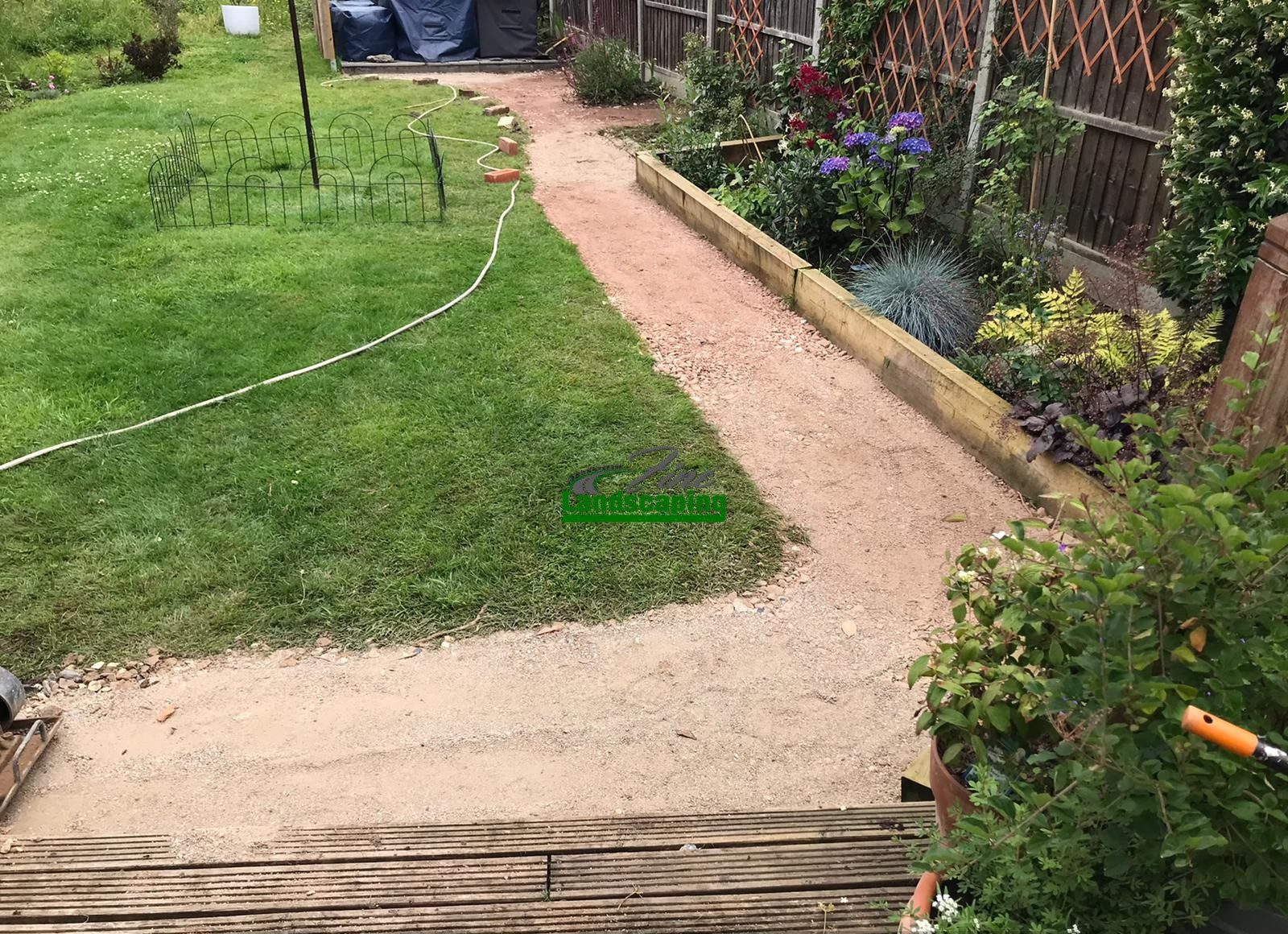
Slabs or stepping stones bedded on a base, with gravel filling around them. In South Norwood light grey sandstone sits in gravel; in Bexleyheath buff Indian sandstone has Cotswold cream gravel between the stones and plastic edging on both sides to hold it.
Stones set into a lawn, as in East Sheen and in Thornton Heath, where random concrete paver stepping stones lead across the grass to the shed, or laid with shingle between them, as down a Clapham side return.
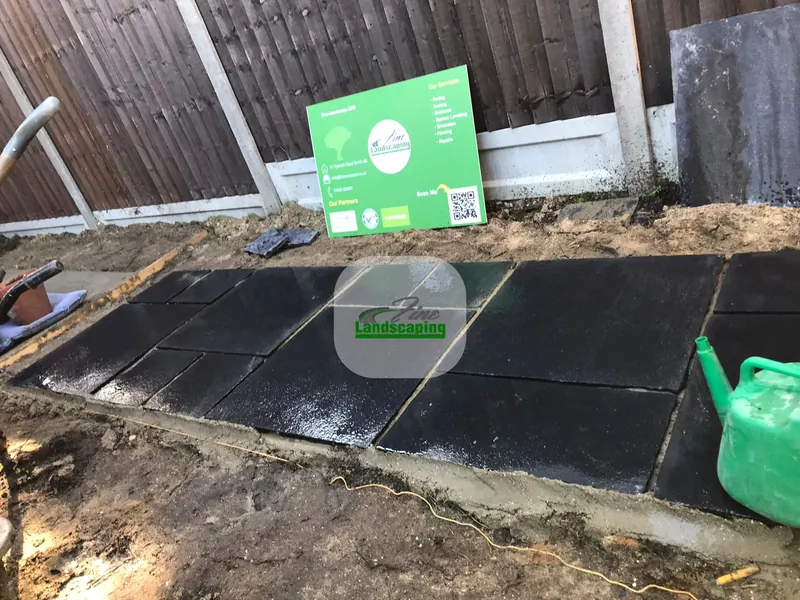
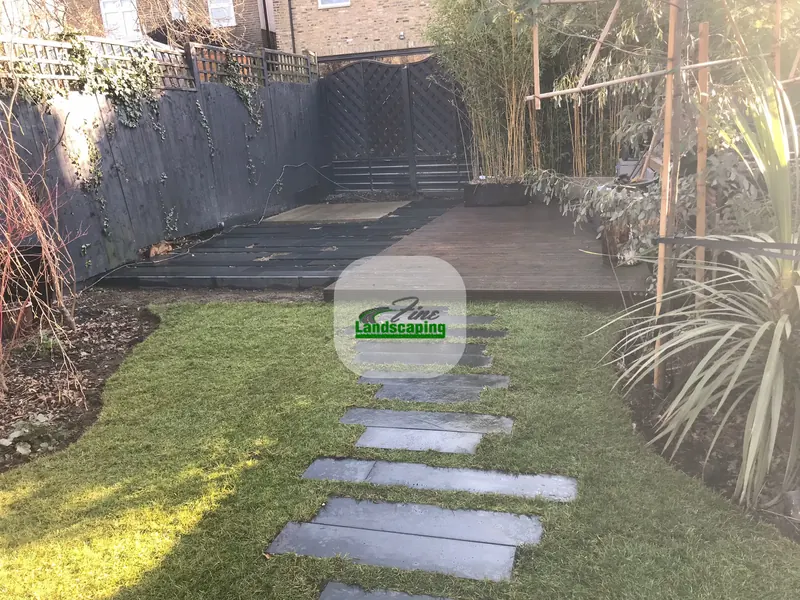
A paved path with turf laid right up to it. At Brixton Hill a black Indian sandstone footpath was laid first and 20m² of turf went down either side; in Clapham a slate footpath runs through new turf to the client's design.
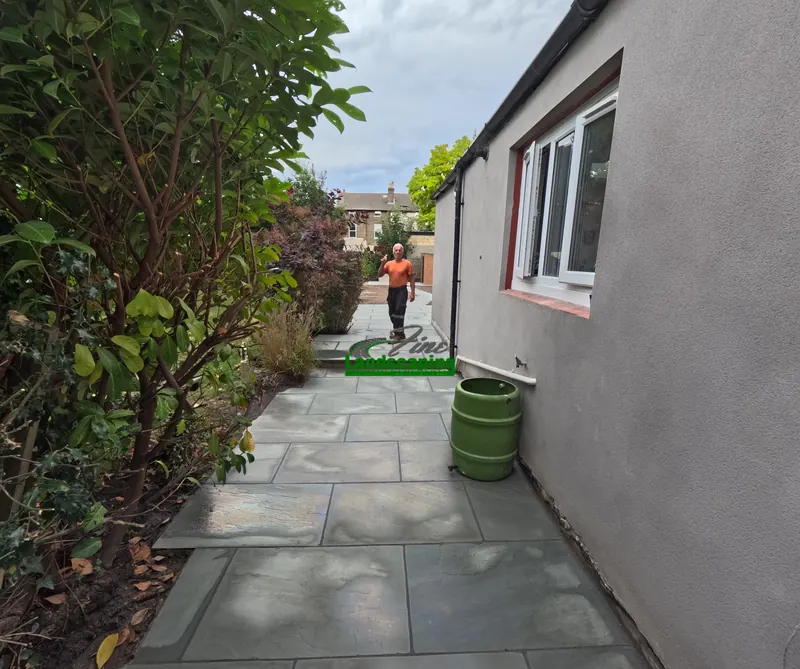
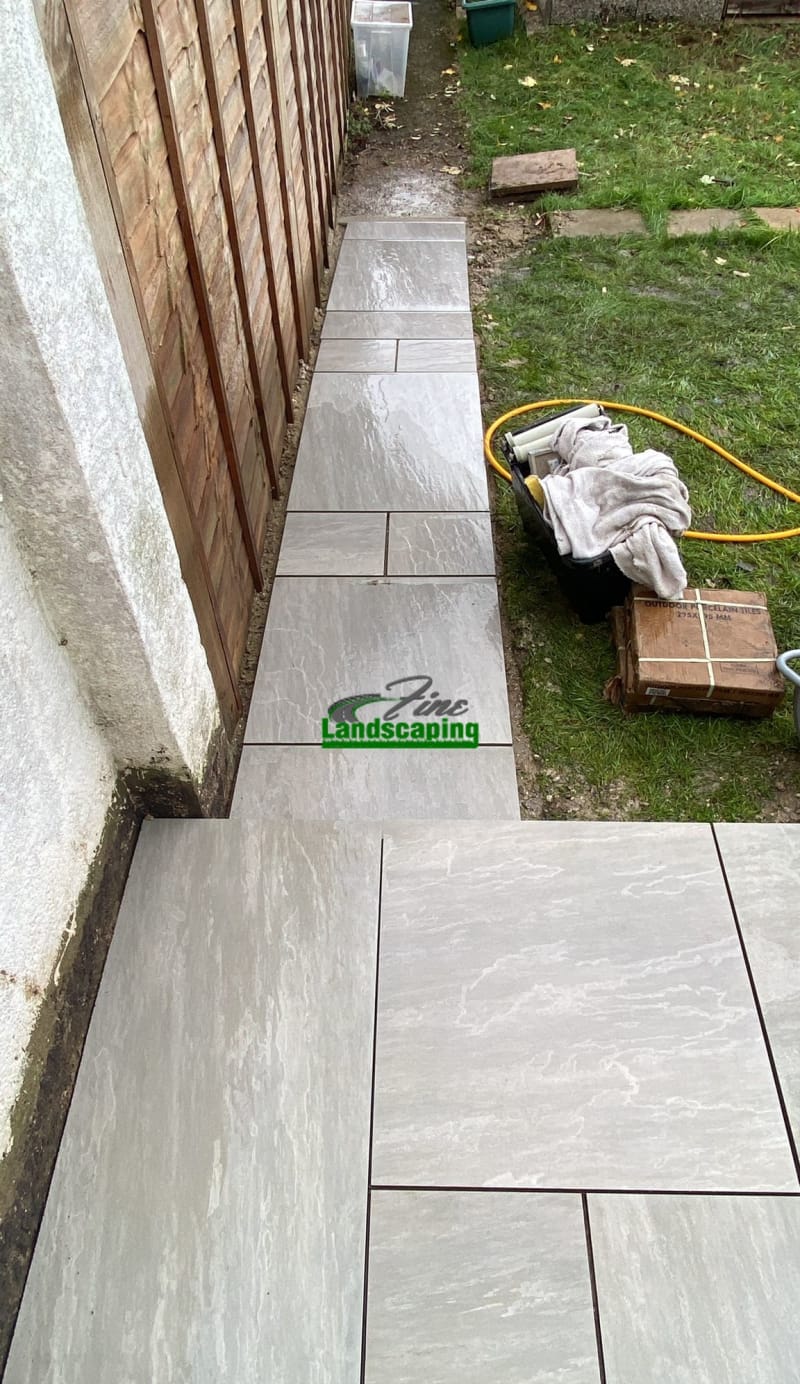
The narrow run beside the house is often the most used path in the garden. Mint sandstone was continued down the side return in Mitcham, Kandla grey paving fills the side of a Lewisham house, and in Bromley porcelain runs along the house on a concrete base.
In Streatham Hill an Indian sandstone footpath runs from the patio to the shed with beds dug either side; in Tooting a small porcelain footpath leads down to the garage; in Wimbledon a new footpath runs down the garden beside the lawn.
In Acton a Victorian tile path with rope edging went onto a new concrete base, and in Putney a grey-and-white Victorian tile path leads to the front door, with the existing gate rehung between new pillars.
Paths that look tired usually lose their edges before their paving. Gravel drifts onto the lawn, grass creeps over the slabs, or the outer stones tip because nothing holds them. So the edge is decided before the path is laid. Against a lawn, paving set just below the turf lets a mower run straight over it. In gravel, a fixed edging strip holds the stones, like the plastic edging on both sides of the Bexleyheath path. Beside a bed, a solid edge keeps soil off the path, as with the brick flower beds built along the South Morden footpaths.
How we build it
How we lay a garden path
Four stages for a paved footpath; stepping stones set into a lawn are simpler.
01
Survey and line
We look at where people actually walk, measure the route and the levels, and agree the width, the material and the edging before a fixed written quote.
02
Dig out and base
The line of the path is dug out, roots and old paving are removed, and a base is laid to suit: compacted Type 1 under the Bexleyheath and Lewisham paths, concrete under the porcelain in Bromley.
03
Lay and edge
Slabs are cut and bedded to the line, stepping stones are set to the lawn level, and edging, gravel or shingle is fitted along the sides.
04
Finish and clean
Joints are pointed, turf or gravel is made good up to the edges, and the path is cleaned down and the waste taken away.
A complete quote, not a guess
What does a garden path cost?
A path on its own is one of the more modest garden jobs. The buff sandstone and gravel path in Bexleyheath cost £3,000 over three days, the Victorian tile front path in Acton £3,820, and the South Norwood footpath with its 3m x 3m patio £4,620. Paths laid with a lawn or patio cost more: £6,500 for the patio, shed path and new lawn in Streatham Hill, and £10,000 for the Kandla grey paving and footpath in Lewisham. Length, the stone and the edging decide most of it.
How far the path runs, and whether it must take a wheelbarrow.
Material
Sandstone, porcelain, slate or Victorian tiles.
Edging and gravel
Plastic or brick edging, gravel or shingle, and turf made good.
Groundwork
Digging out the line, roots and old paving, and the base.
Compare like for like. Check that a path quote states the base under it, what the edges are and how the joints are finished, and whether making good the lawn either side is included. Our written quotes list each part of the job separately.
What our garden paths and the jobs around them cost
Prices as shown on each case study. Every garden is different, so your price is fixed in a written quote after a free site survey.
16 local pages
Garden paths by town
Links to our garden path pages for individual towns, arranged by council area and starting closest to Norbury. Bold links are the full local guides with nearby jobs and prices.
How do sandstone, porcelain and slate paths compare?
Sandstone varies in colour and texture and suits older houses and planted gardens, as in South Norwood and Bexleyheath. Porcelain is uniform and easy to keep clean, like the footpath to the garage in Tooting. Slate is darker with a fine grain, as on the Clapham footpath. All three last when they sit on a compacted base.
Does a garden path need a proper base?
Yes. Nobody parks on a path, but it still sits on ground that moves with the weather. The line is dug out and a Type 1 base laid and compacted before any stone goes down, as on the Bexleyheath and Lewisham paths. Without one, slabs rock and the edges sink within a few winters.
Can stepping stones be laid in an existing lawn?
Yes. Each stone is cut into the turf and set level with the grass so a mower can pass over it. In Thornton Heath random concrete paver stepping stones were set into the existing lawn to make a path to the shed, and in East Sheen the stones went in as the new turf was laid.
How do you keep a gravel path tidy?
With fixed edging and a firm base. In Bexleyheath plastic edging runs along both sides of the sandstone and Cotswold cream gravel path, and the Type 1 base under it stops the gravel sinking into the soil. A rake now and then puts back the stones that wander.
Can a path run down a side return?
Yes, and it is often the most used path in the garden. In Mitcham the mint sandstone patio was continued down the side return, in Clapham stepping stones with shingle run down the side of the house, and in Bromley a porcelain side path was laid on a concrete base along the house.
Do curved paths cost more than straight ones?
Usually a little, because slabs along a curve have to be cut to the line, which takes longer than laying full slabs in a straight run. In Orpington half the garden was paved in a curve, with new turf laid alongside it.
Do you lay Victorian tile front paths?
Yes. In Acton a front path was dug out, given a new concrete base with metal bars and laid in Victorian tiles to the client's design, with rope edging on both sides, in three days for £3,820. Our Victorian tile path page has more on patterns and edging.
Can a path and a new lawn be done together?
Yes, and the path usually goes in first so the turf can be laid right up to it. At Brixton Hill the black sandstone footpath was laid, then 20m² of turf went down either side; in Clapham the slate footpath and the new lawn went in together, with a French drain along the border.
Are your garden paths guaranteed?
Yes. Every path is laid by our own team, we are fully insured, and the workmanship carries our 10-year guarantee. The full terms are on our warranty and guarantees page.
Free site survey
Planning a new garden path?
Tell us where the path needs to go, roughly how long it is and what is there now. We will book a free site survey and send a written quote.