The slab nobody sees decides how long the rest lasts.
We lay concrete across South London from our base in Norbury SW16: shed and garden room bases, bike store pads, front-garden slabs, and the concrete hidden under steps, patios and paths. The jobs here are documented with photos and prices, from a £1,060 bike store base in Richmond and an £1,820 shed base in Beckenham to a £15,000 garden room base and retaining wall in Purley.
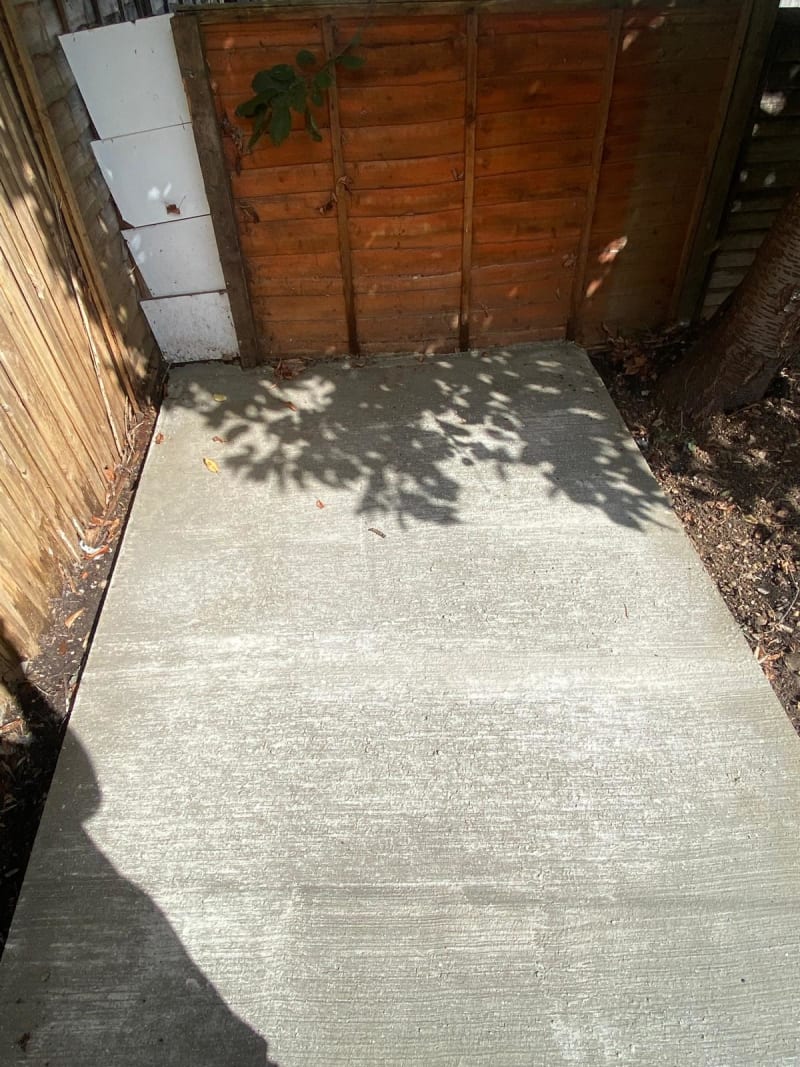
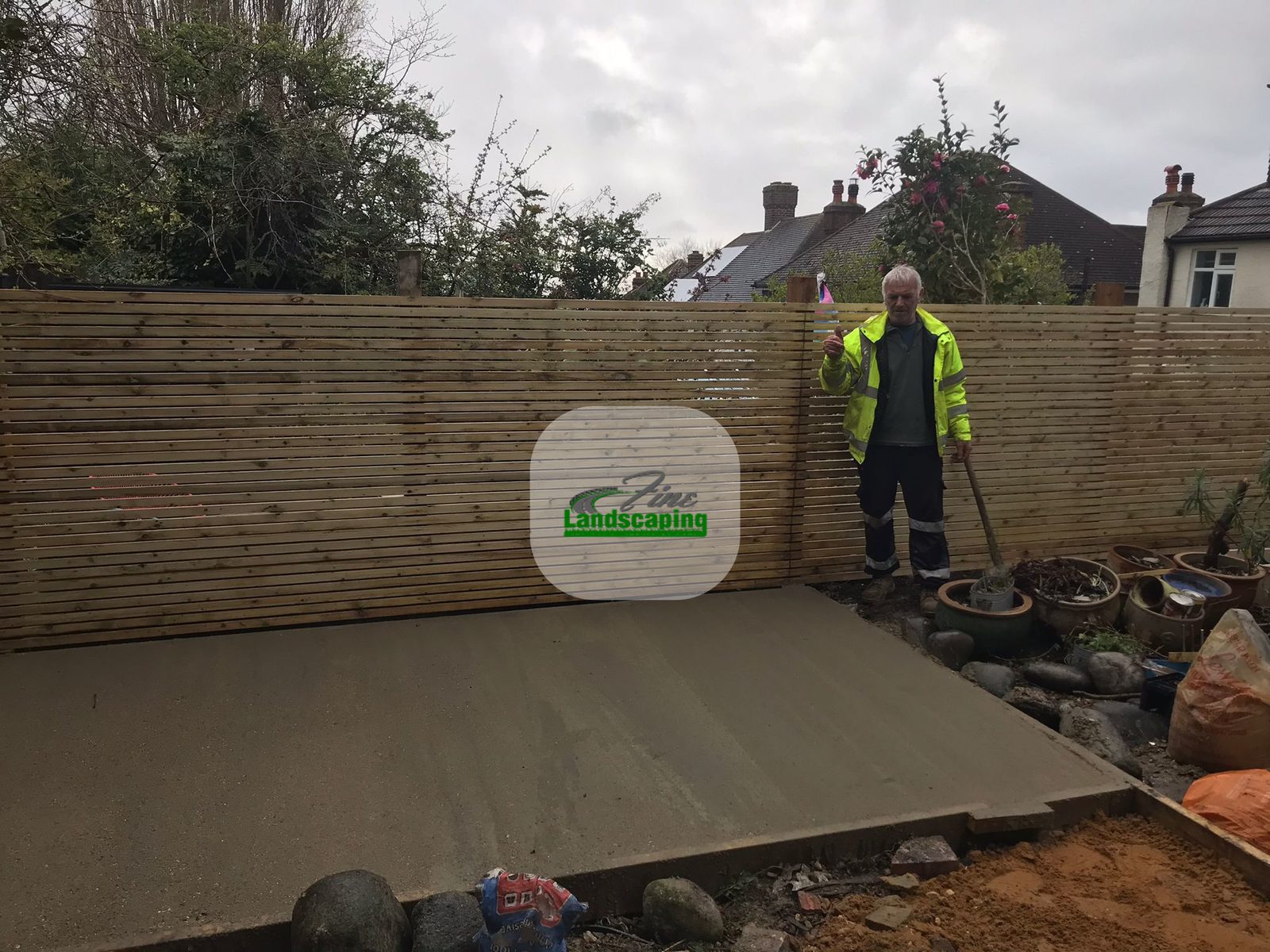
Much of the concrete we pour ends up out of sight. It is the slab under a shed or garden room, the core of a flight of steps before it is clad, the base under a large-format porcelain patio, or the bed beneath a Victorian tile path. Sometimes it is the finished surface, as on the Hackbridge front garden or the brushed shed base in Beckenham. Either way the job is the same: a firm, level slab that will not crack, rock or settle.
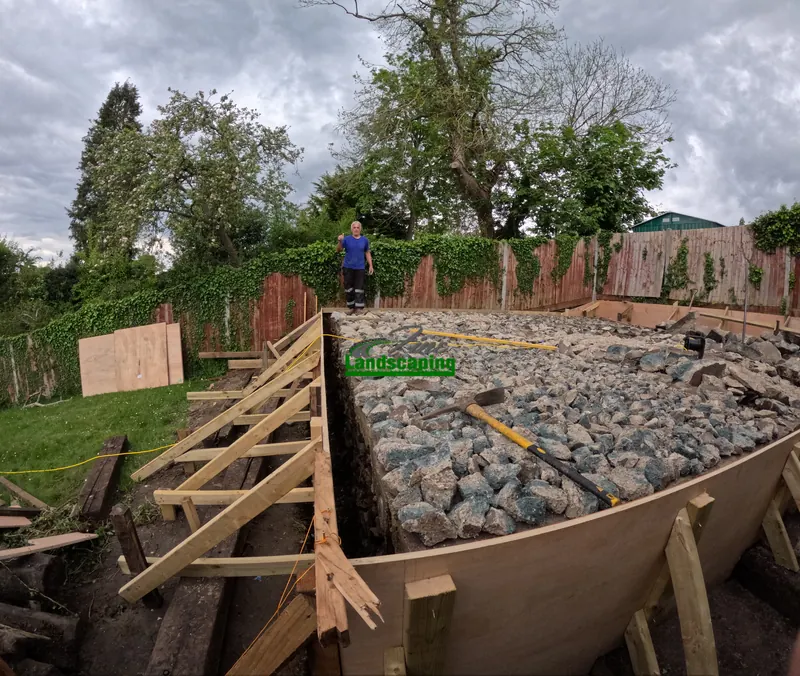
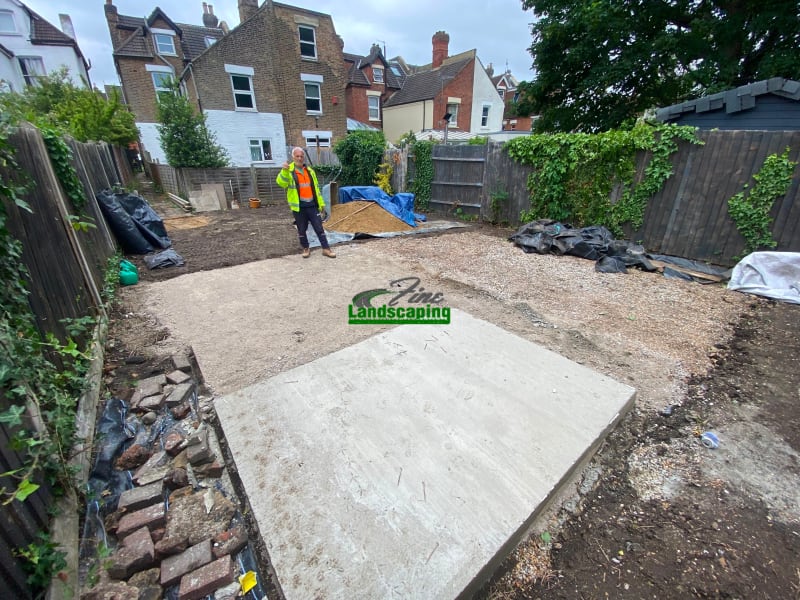
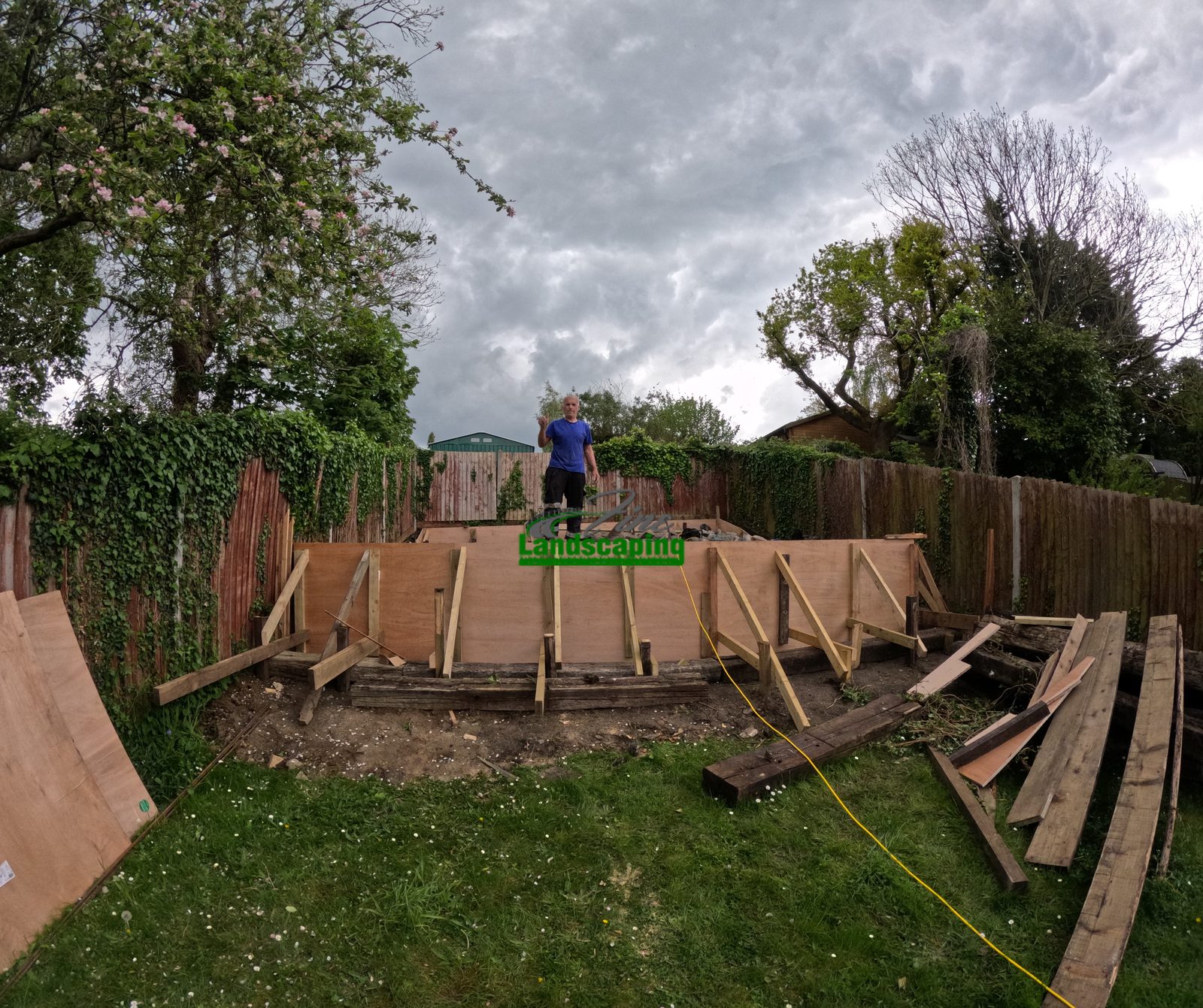
That starts with clearing to firm ground. Old concrete and soil are broken out and taken away, as they were across the 8ft × 10ft footprint in Beckenham. The area is set out square and to level, with formwork or shuttering where the concrete needs a shape: timber formwork to the line of a patio step in Bromley, braced shuttering for a 20cm wall in Purley. Steel mesh goes in before the pour where the slab needs it, as with the A142 mesh in Hackbridge and the mesh in the Beckenham shed base.
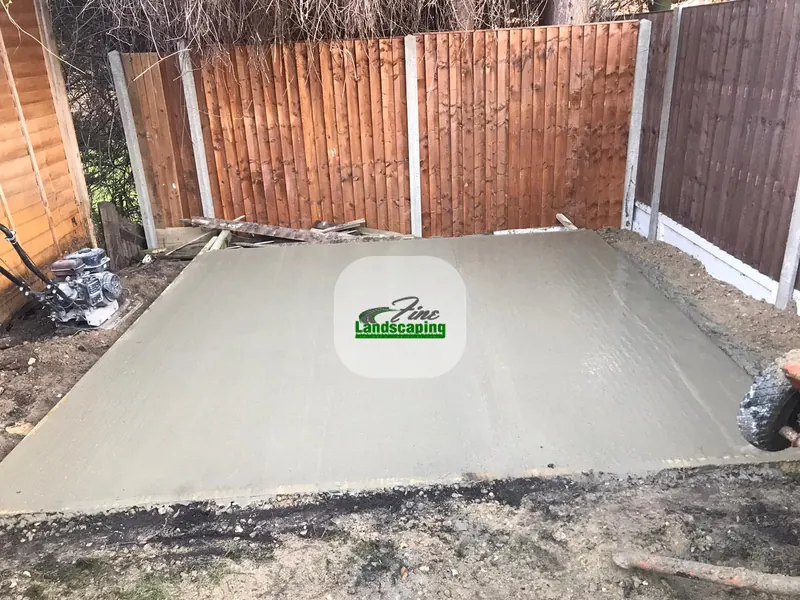
Then the concrete goes in. Where a garden can only be reached through the house or up a steep path, a concrete truck and pump can bring it in by hose, as they did in Purley and Shortlands. It is levelled, finished brushed or plain to suit what goes on top, and left to cure before anything is built on it. Our own team does every stage, we are fully insured, and the work carries our 10-year workmanship guarantee.
Some of these were a one-day base; in others the concrete was one stage of a bigger garden. Each has its own case study and price.
BeforeAfter
The front garden · drag to compare
BeforeAfter
The back garden · drag to compare
Featured project · Hackbridge SM6 · May 2026
Concrete front garden and porcelain patio in Hackbridge
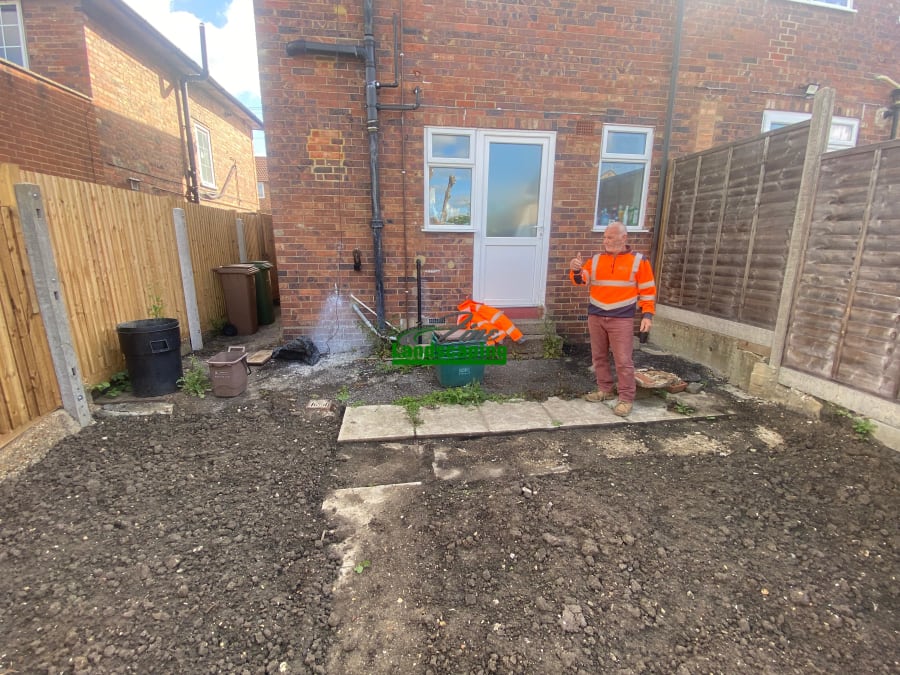
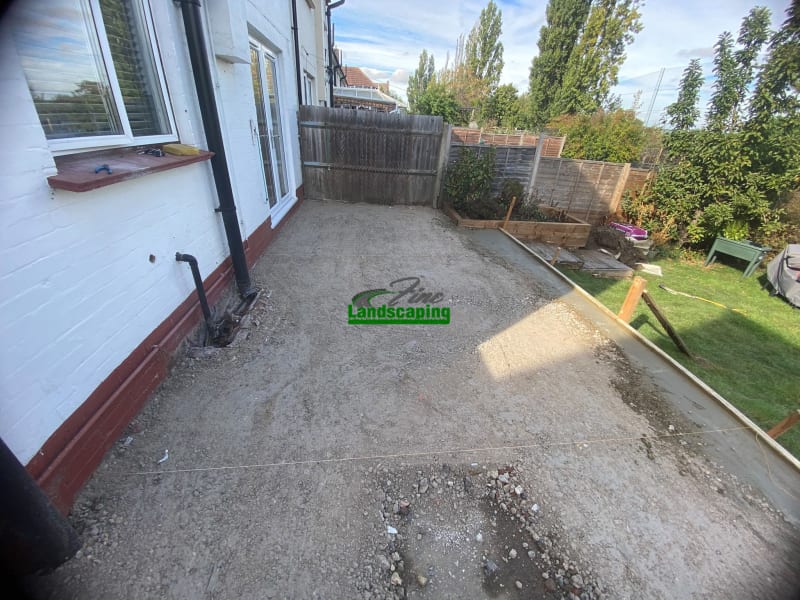
This weedy Hackbridge front garden was fully dug out, and a concrete retaining wall was formed along the front boundary. A142 steel reinforcement mesh was laid across the whole area, then the concrete was poured 4 inches thick over it and finished to a plain, even surface. At the back, the same job laid a beige 60 × 90cm porcelain patio and footpath. Ten days, £12,000 including VAT for front and back.
An 8ft × 10ft concrete shed base with steel reinforcement mesh and a brushed finish, after removing old concrete and soil, completed in one day for £1,820 including VAT.
A concrete base for a garden room, which another contractor was to build, with a 20cm concrete retaining wall on a sloping site with narrow, steep access, in ten days for £15,000 including VAT.
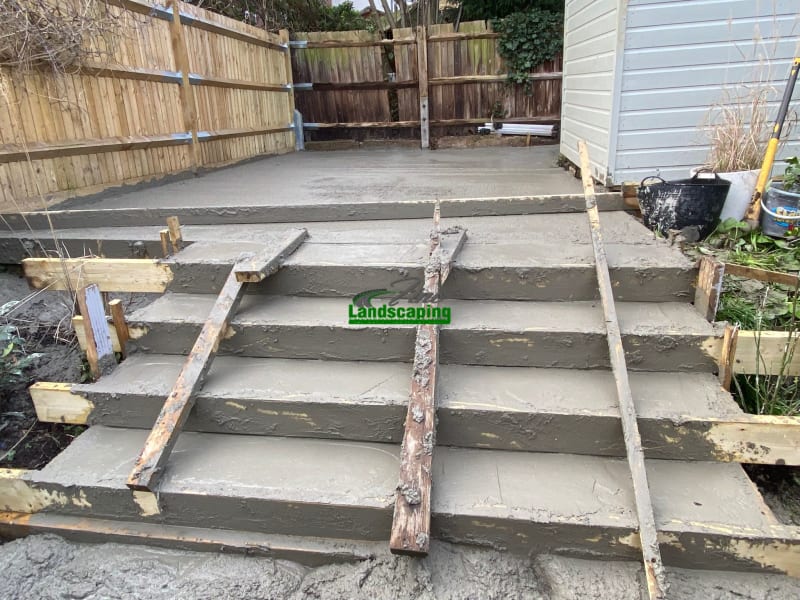
On a steep garden with access only through the house, concrete was pumped in for a base, new steps and a shed base, the steps were clad in London Stone bullnose porcelain and a 25m² grey 60 × 90cm porcelain patio was laid with a concrete edge, in one week for £9,250 including VAT.
A larger patio in beige 600 × 900 mm porcelain on a new concrete base, with porcelain-clad steps, re-routed pipework and the manhole reset, completed in 10–14 days for £12,000–£15,000.
A bare garden cleared of waste and old concrete edging, levelled with a digger, and finished with a concrete shed base, a dark grey porcelain patio edged in block paving with gravel borders, new topsoil and fresh turf, in one week for £10,000 including VAT.
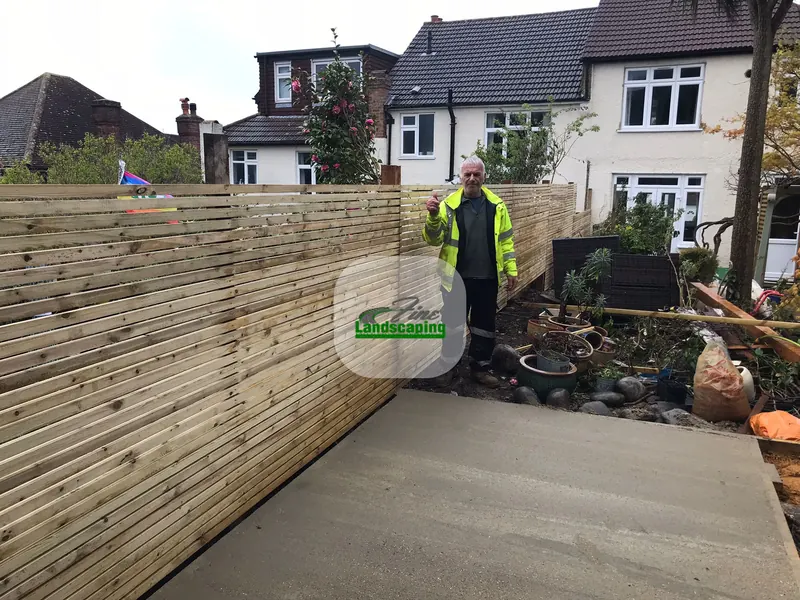
30 metres of 6ft slatted fence on new concrete posts, a concrete base, natural stone paving, re-rendered walls with coping, new beds, a lawn and 2 steps, in about 3 weeks for £25,000 including VAT.
Mesh, shuttering, formwork, the pump and the finished slab, all from documented jobs. Click any photo to enlarge it; the place name links to that job's case study.
Concrete does six different jobs in the gardens we build. The mix of mesh, thickness and finish changes with each; every one has a real job to look at.
01
Shed and garden room bases
A flat, solid footing
A level slab sized to the building, with steel mesh where it needs it. The Beckenham base is 8ft × 10ft with steel mesh and a brushed finish, laid in one day; bases for garden rooms went in at Brixton Hill and Purley. We lay the base; we do not build garden rooms.
A smaller structure still needs a level pad. In Richmond a base was laid in a front-garden corner against a brick wall, and the client's metal bike store was installed on it and checked level. In Wimbledon Park a 2m × 3m base went in during a full garden rebuild.
Plain concrete as the finished surface is hard-wearing and quick to sweep. In Hackbridge it went down 4 inches thick on A142 mesh behind a new concrete retaining wall. Because concrete sheds water, the fall and where the rain goes need planning before the pour.
Large porcelain slabs and small tiles both benefit from a rigid bed. In Bromley a concrete base was poured inside timber formwork across the whole patio, and in Acton a new concrete base with metal bars went under a Victorian tile path.
Clad garden steps can be formed in concrete first, so the cladding sits on something that cannot move. In Crystal Palace four steps on a concrete base were clad in porcelain; in Shortlands the steps were pumped in concrete and clad in bullnose porcelain.
On a slope, concrete holds the ground. In Purley braced timber shuttering formed a 20cm concrete wall around a raised base for a garden room, with the concrete pumped up a narrow, steep access. In Hackbridge a concrete retaining wall runs along the front boundary.
Concrete is strong when squeezed but weak when it bends, so a slab on soft or uneven ground cracks where nothing supports it. Two things prevent that. The first is the ground: soil and old concrete come out and the area is set out level, so the slab sits on a firm, even bed. The second is steel: reinforcement mesh, such as the A142 mesh in Hackbridge, holds the slab together if the ground moves and helps it carry heavier loads, which is why the Beckenham shed base has it too. Thickness follows the load the slab will carry.
How we build it
How we lay a concrete base
Four stages, whether it is a one-day shed base or a pumped wall and slab.
01
Survey and quote
We look at the size, the levels, what is there now and how the concrete can be brought in. Your price is then fixed in a written quote.
02
Break out and set out
Old concrete, sleepers and soil are broken out and cleared, and the area is set out square and to level, with formwork or shuttering where it is needed.
03
Mesh and pour
Reinforcement mesh is laid where the slab needs it and the concrete is poured, brought in by truck and pump on the hardest sites, as in Purley and Shortlands.
04
Finish and cure
The surface is levelled and given a brushed or plain finish, then left to cure before a shed, cladding or paving goes on top.
A complete quote, not a guess
What does a concrete base cost?
On its own, a concrete base is one of our smaller jobs: £1,060 for the bike store base in Richmond, laid with the store installed in a day, and £1,820 for the reinforced 8ft × 10ft shed base in Beckenham, also one day. Structural work costs more: the garden room base and 20cm retaining wall in Purley, with a truck and pump on a steep, narrow site, was £15,000 over ten days. Most of the other jobs in the table include a base as one part of a larger garden.
The footprint, and how thick the slab must be for what it carries.
Breaking out
Old concrete, sleepers, roots and soil to remove and take away.
Access
A garden reached only through the house or up a steep path may need a truck and pump.
Mesh and formwork
Steel mesh, timber formwork or braced shuttering for walls and steps.
Finish
Brushed, plain, or left ready for paving, cladding or tiles.
Compare like for like. Check that every quote gives the slab size and thickness, says whether steel mesh is included, explains how the concrete gets in and covers the waste. Our written quotes list each part of the job separately.
What our concrete bases and the jobs around them cost
Prices as shown on each case study. Every garden is different, so your price is fixed in a written quote after a free site survey.
11 local pages
Concrete bases by town
Each link is a page about shed bases in one town, grouped by council area and ordered from Norbury outwards. Bold links are full local guides with nearby jobs and prices.
Anything that needs a flat, solid footing. Our case studies include shed bases in Beckenham and Raynes Park, garden room bases in Brixton Hill and Purley, a bike store pad in Richmond and a 2m × 3m base in Wimbledon Park, as well as concrete under steps, a porcelain patio and a Victorian tile path.
Will you put up the garden room on the base?
No. We lay concrete bases for garden rooms, but we do not build garden rooms, annexes or garden offices themselves. Bases for garden rooms went in at Brixton Hill and Purley; in Purley the room itself was to be built by another contractor. Tell us the size and level your supplier needs when you ask for a quote.
Is a concrete base needed under a porcelain patio?
Not always, but on loose or uneven ground, or with large 600 × 900mm slabs, it helps. In Bromley the ground beside the house was uneven, so a concrete base was poured inside timber formwork across the whole patio and the porcelain laid on top, which stops individual slabs rocking or cracking.
What is a concrete pump and when is it needed?
A pump pushes concrete from the truck along a hose, so it can reach a garden a barrow cannot easily get to. In Purley the access was narrow and steeply uphill; in Shortlands everything had to go through the house. On both jobs a truck and pump placed the concrete for the base, walls and steps.
What finish can a concrete base have?
A brushed finish gives grip and suits a base that stays on show, like the Beckenham shed base. A plain, even finish suits a front garden, as in Hackbridge. Where paving, tiles or cladding go on top, the surface is left ready for the bedding instead.
How long does concrete need before a shed goes on it?
It needs time to cure, and how long depends on the weather and the thickness. The Beckenham base was poured and finished in a single day and then left to cure before the shed went on. We tell you at handover how long to wait for your own base.
What happens to the old slab and shed?
Old concrete is broken out and taken away with the soil, as across the whole footprint in Beckenham. In Purley the old sleepers were removed and the old concrete base was broken up before the new wall and base went in. In St Helier the old shed was removed, a new fence went in behind it and a concrete base was built at the back for a new shed.
Is concrete a good choice for a front garden?
It is hard-wearing, plain and easy to keep clean. In Hackbridge a weedy front garden was dug out and laid in 4-inch plain concrete over A142 mesh. The trade-off is drainage: concrete does not let water through, so over 5m² of front garden the rain needs to run to a border or drain, or permission may be needed.
Is concrete work guaranteed?
Yes. Concrete bases are laid by our own team, we are fully insured, and the workmanship carries our 10-year guarantee. The terms are on our warranty and guarantees page.
Free site survey
Need a concrete base?
Tell us what is going on it, roughly how big it needs to be and how we would get to it. We will book a free site survey and send a written quote.