
Those grand Victorian terraces lining Tooting's streets deserve entrances that match their heritage. Period-correct pathways blend timeless design with contemporary durability, bringing nineteenth-century elegance to twenty-first-century life.
Response within 24 hours
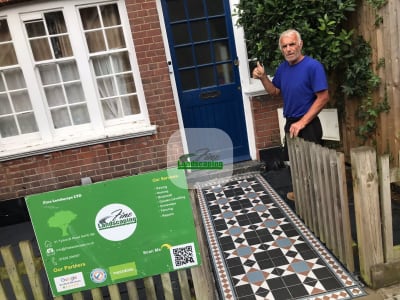
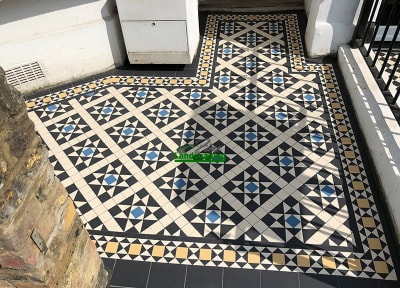
Victorian pathway restoration has become something of an art form around Tooting Bec and Furzedown, where original tessellated tiles peek through decades of tarmac. Many homeowners discover fragments of geometric patterns beneath worn surfaces - red and buff diamonds, intricate borders, decorative motifs that once announced a property's status. Recreating these designs requires both detective work and skilled craftsmanship, particularly when matching the specific patterns common to SW17's housing stock.
Installing authentic Victorian pathways involves precise groundwork preparation, especially given Tooting's London clay substrate. Original Edwardian builders understood drainage; modern techniques improve upon their methods whilst maintaining period aesthetics. Each tessellated tile gets bedded individually, ensuring proper levels despite the gentle slopes characteristic of properties between Tooting Broadway station and Mitcham Lane. Weather-resistant pointing compounds replace traditional lime mortar, offering superior longevity without compromising appearance.
Local knowledge proves invaluable when sourcing reclaimed materials from architectural salvage yards across South London. Understanding which tile patterns appeared during Tooting's 1890s building boom helps create pathways that feel genuinely original rather than mere pastiche.



Rated 4.9/5 from over 280 verified reviews
Expect £120-180 per square metre for quality tessellated tiles, though simpler geometric designs start around £95. A standard three-metre pathway to a terraced house usually ranges £1,800-2,700, including groundworks and edging.
Absolutely - from the grand villas near Tooting Bec Common through to the workers' cottages off Garratt Lane. The entire SW17 postcode falls within our regular working area, including Furzedown's tree-lined avenues.
Most front paths take 4-6 working days, allowing proper curing time between base preparation and tile laying. Larger or more complex restorations might extend to 8-10 days.
Each installation carries decade-long protection covering both materials and workmanship. This includes frost damage, pointing deterioration, and any settlement issues - comprehensive coverage that reflects confidence in traditional building methods adapted for modern conditions.
Pattern matching forms a regular part of pathway restoration. Photography archives and salvage yard connections help identify original designs, whilst skilled tilers can recreate missing sections using period-appropriate materials. Sometimes a single intact corner provides enough information to reconstruct an entire entrance.
Get your free, no-obligation quote today.