
Those cracked tiles leading to your Victorian terrace tell a century's worth of stories. Throughout Dulwich's conservation areas, original pathways deserve restoration that honours their heritage while meeting today's practical demands.
Response within 24 hours
Period properties across SE21 and SE22 often feature intricate geometric patterns that have weathered decades of South London winters. Many homeowners discover original tessellated tiles beneath layers of concrete when renovating their front gardens. Working with these historic materials requires patience and an understanding of traditional laying techniques that modern contractors sometimes overlook.
Authentic restoration begins with careful documentation of existing patterns, particularly important given Dulwich Estate's architectural guidelines. Sourcing reclaimed materials from salvage yards ensures colour matching for repairs, while new sections incorporate frost-resistant ceramics that replicate Victorian manufacturing methods. Proper substrate preparation prevents the settlement issues common in London clay, particularly around the mature plane trees lining so many local streets.
Living in Dulwich myself, I've restored pathways for neighbours from Gallery Road to Lordship Lane. Each project respects both the property's character and the estate's heritage requirements, avoiding the generic solutions that jar against Victorian architecture.

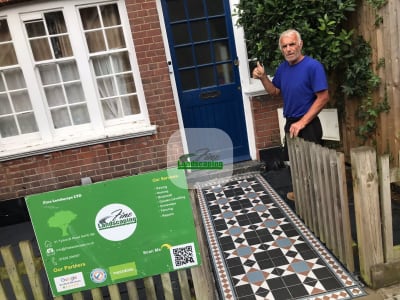


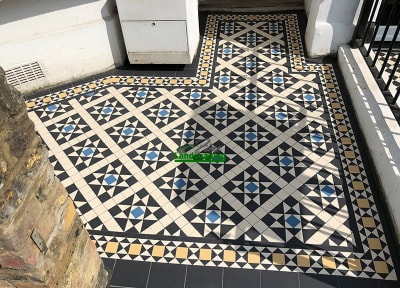
Rated 4.9/5 from over 280 verified reviews
Most pathway restorations in Dulwich range between £4,500-£8,000, depending on pattern complexity and tile availability. Terraced properties with shorter paths generally fall around £3,000-£5,000, while larger detached homes may reach £10,000+ for elaborate designs.
Absolutely - from the grand houses near Dulwich Picture Gallery in SE21 to the Victorian terraces of East Dulwich (SE22) and the conservation properties around Herne Hill (SE24). Each neighbourhood has distinct architectural features we've grown familiar with over years of local work.
Simple repairs might complete within 5-7 days, though full restorations typically require 2-3 weeks. Complex geometric patterns or extensive substrate work can extend this to 4 weeks, especially when matching rare tile designs.
All structural elements carry our decade-long guarantee, covering substrate integrity and installation quality. For reclaimed materials, we provide detailed condition reports and maintenance guidance to ensure longevity matching the original Victorian craftsmanship.
Yes - using photographic archives and pattern books from the Victorian era, we can recreate most geometric designs. Local museums and the Dulwich Society often help with historical research, ensuring new installations remain true to your property's original character.
Get your free, no-obligation quote today.