
Those intricate Victorian pathways threading through Cheam's older properties deserve proper restoration. Original tiles crack, edges crumble, yet beneath lies craftsmanship worth preserving.
Response within 24 hours
Period properties throughout SM2 and SM3 feature distinctive pathway designs that modern alternatives simply can't replicate. Black and white geometric patterns, terracotta edging, original quarry tiles - each tells a story. Restoration requires understanding both Victorian construction methods and contemporary drainage solutions to prevent future deterioration.
Matching replacement tiles involves sourcing from specialist suppliers, sometimes salvage yards holding reclaimed materials. Substrate preparation differs significantly from standard paving - Victorian builders used techniques we must respect whilst incorporating modern waterproofing. Each project begins with careful lifting, cataloguing patterns, then rebuilding using lime-based mortars that allow natural movement.
Twenty years working on Cheam's Edwardian and Victorian homes teaches you which original features survived where. Local knowledge matters when sourcing matching materials or understanding why certain pathways failed.

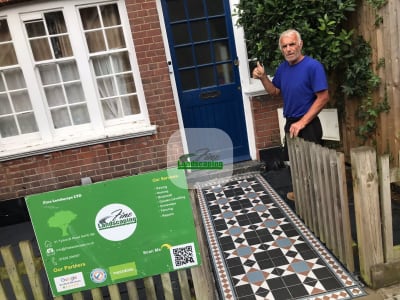


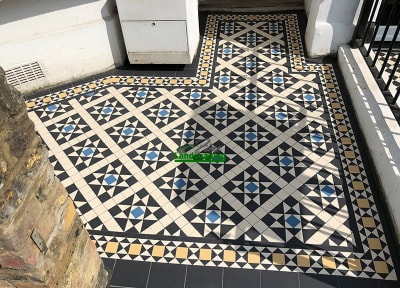
Rated 4.9/5 from over 280 verified reviews
Restoration typically ranges £85-150 per square metre, influenced by tile availability and subbase condition. A standard front path (15-20m²) usually falls between £1,275-£3,000 including preparation work.
Absolutely - from the Victorian terraces near Cheam station to the larger period properties towards Nonsuch Park. Regular work across both SM2 and SM3 postcodes, plus neighbouring Worcester Park and Ewell.
Most Victorian pathways require 5-8 working days, though complex patterns or extensive substrate repairs might extend this. Weather plays a part - lime mortars need specific conditions.
All structural work carries decade-long coverage, though we're honest about natural tile wear. Documentation includes maintenance guidance specific to Victorian materials, helping preserve your investment long-term.
Patch repairs work well for localised damage. We'll match existing patterns and materials where possible, though sometimes partial restoration proves more cost-effective than multiple small repairs.
Get your free, no-obligation quote today.