
Soakaways in Woolwich that stop pooling water and protect your home’s foundations. We design, test and install compliant systems that suit your plot and drainage layout. Expect clear advice, neat finishes and long-term performance.
Response within 24 hours
Standing water after heavy rain is a common complaint around SE18, especially where older drainage has been altered over time. We install soakaways that disperse surface water safely, reducing the risk of damp patches, slippery paving and overwhelmed gullies. Whether you’re near Royal Arsenal or closer to Woolwich Town Centre, we’ll design a solution that fits your space and drainage routes. Our work includes proper connections, inspection chambers and a clean handover.
Woolwich’s mix of Victorian terraces, converted arsenal buildings and modern apartments means drainage layouts vary widely. Tight side returns, shared access paths and small rear gardens often call for crate systems with careful sizing. For larger plots around Plumstead or Charlton, rubble soakaways can be suitable where ground conditions allow. We tailor depths, pipe runs and chamber locations to minimise disruption while keeping everything serviceable.
We start with percolation tests and sizing calculations, then recommend the right soakaway type and position. Installations are completed to Building Regulations guidance, with correct falls, geotextiles and robust pipe connections. You’ll get straightforward communication, tidy working practices and photos of key stages if requested. Homeowners choose us for soakaways woolwich area because we plan properly and build for longevity, not quick fixes.
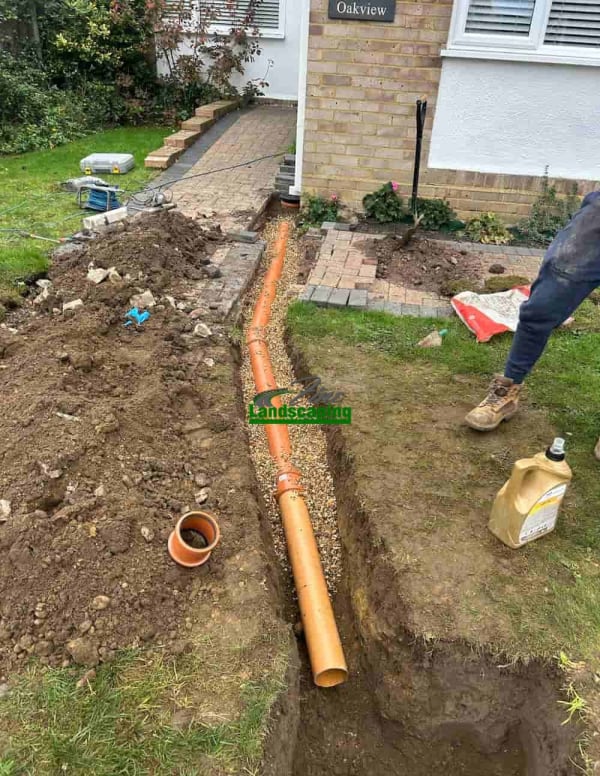
In the Royal Borough of Greenwich, access and parking can be challenging near busy routes and apartment developments, so we plan deliveries and spoil removal carefully. Around Woolwich Ferry and the riverside, ground conditions and high water tables can influence depth and design. We also account for tight Victorian plots, shared boundaries and existing drains that may have been rerouted. Our approach keeps disruption down while ensuring the system remains inspectable and maintainable.



Rated 4.9/5 from over 280 verified reviews
Costs vary with soakaway size, depth, access, and whether percolation testing is needed. As a guide, smaller crate systems for a downpipe can start around £1,200–£2,500, while larger driveway or multi-downpipe systems are often £2,500–£6,000+. If excavation is difficult, spoil removal is restricted, or extra inspection chambers and long pipe runs are required, budgets can rise accordingly.
Most domestic soakaway jobs take 1–3 days on site, depending on excavation volume and access. A straightforward downpipe connection with a small crate system can sometimes be completed in a day, while larger systems serving driveways or multiple gullies may take longer. Timescales are affected by ground conditions, the need for percolation tests, locating existing services, and reinstatement of paving, turf, or planting areas.
Soakaways are usually permitted for typical garden and driveway drainage works, provided you’re managing surface water within your property and not discharging to the public sewer without consent. However, rules can change for listed buildings, conservation considerations, major hardstanding changes, or where a new drainage route is proposed. We check the practical requirements, follow Building Regs guidance, and advise if you should speak to the council or a building control officer.
Yes. We provide a 10-year warranty on workmanship for our soakaway installations, covering issues caused by installation defects such as incorrect falls, poor connections, or inadequate protection of the system. The warranty doesn’t cover damage from third-party works, misuse, or extreme events beyond design assumptions, but we’ll always help diagnose problems. We also build in inspection chambers so maintenance and checks are straightforward.
We install modern crate systems (wrapped in geotextile) for high-capacity drainage in tight spaces, as well as traditional rubble soakaways where ground conditions and space suit. Designs can include single or multiple crates, silt traps, and inspection chambers for access and maintenance. After percolation tests and sizing calculations, we recommend the best option for your property, budget, and available footprint, then connect it neatly to downpipes or gullies.
Get your free, no-obligation quote today.