
Soakaways in Raynes Park that stop standing water and protect your home. We design, test and install compliant systems with proper connections and inspection access. Expect clear advice, neat workmanship and long-term performance.
Response within 24 hours
If your lawn stays boggy or your driveway floods after heavy rain, a correctly designed soakaway can make a lasting difference. We install systems across SW20, including homes near Raynes Park station and routes towards Wimbledon. Our work focuses on moving surface water away from buildings and preventing repeat issues. Every installation starts with the right checks, not guesswork.
Raynes Park has a mix of Victorian terraces, Edwardian houses and 1930s semis, often with side access and compact rear gardens. That variety affects where a soakaway can go, how deep it should be, and how we route pipework from gullies or channel drains. We regularly work in the soakaways Raynes Park area, including New Malden and Motspur Park, adapting designs to each plot. Where space is tight, crate systems can deliver capacity without taking over the garden.
We begin with a site visit, percolation tests where needed, then sizing calculations to match roof or driveway runoff. You’ll get a clear plan for connections, inspection chambers and maintenance access, with Building Regs considered from the outset. Our team protects paving, keeps spoil controlled, and leaves the site tidy. Homeowners choose us for straightforward communication, documented workmanship, and a system that’s built to last.
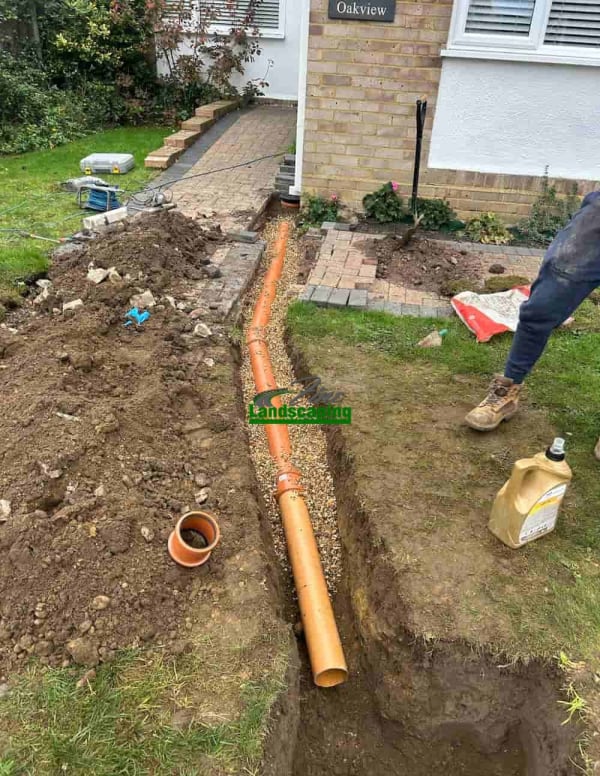
Ground conditions vary across the London Borough of Merton, so we don’t assume one design fits all. In Raynes Park, access can be limited by side passages, shared drives and on-street parking, so we plan deliveries and excavation to minimise disruption. We also account for mature trees near green spaces such as Cannon Hill Common, positioning soakaways to avoid root issues and maintain performance. Where required, we help you document compliance and sensible discharge routes.



Rated 4.9/5 from over 280 verified reviews
Costs vary with size, depth, access and whether you need new drainage runs. As a guide, a small rubble soakaway might start around £900–£1,800, while a properly sized crate system with inspection chamber and connections is often £1,800–£4,500+. If percolation tests, long pipe runs, or reinstatement of paving/turf are needed, budgets can rise to £5,000–£8,000. We provide a written breakdown after a site visit.
Most installations take 1–3 days on site, depending on excavation depth, spoil removal and reinstatement. A straightforward crate soakaway with a short connection from a downpipe can sometimes be completed in a day. Larger systems serving driveways, or jobs needing multiple gullies, channel drains and inspection chambers, usually take longer. Timescales are also affected by access for machinery, underground services, and whether percolation testing is required first.
In many cases, soakaways and garden drainage works are permitted development, especially when you’re managing rainwater on your own land. However, rules can change if you’re altering levels significantly, working close to boundaries, or the property is subject to restrictions (for example, certain conservation considerations). We design soakaways in London Borough of Merton with Building Regulations and good practice in mind, and we’ll flag when permissions, notifications or additional checks may be sensible.
Yes. We provide a 10-year warranty on our soakaway installation workmanship, covering defects in installation such as incorrect assembly, poor connections, or inadequate access provision (where included). The warranty assumes normal use and that the system isn’t damaged by later building works, blocked by misuse, or compromised by unapproved alterations. We also explain simple maintenance steps and, where fitted, how to use inspection chambers to spot issues early.
We install both modern crate systems and traditional rubble soakaways, selecting the approach based on available space, ground conditions and required capacity. Crate systems offer high void ratio and predictable sizing, while rubble can suit smaller, simpler applications where appropriate. We can include silt traps, geotextile wrapping, and inspection chambers for maintenance. After percolation testing and sizing calculations, we’ll recommend the best layout, depth and connection method for your property.
Get your free, no-obligation quote today.