
Victorian terraces in Wimbledon face unique drainage challenges that traditional block paving simply can't solve. Transform your waterlogged driveway into a sustainable, flood-resistant surface that actually works with London clay.
Response within 24 hours
Those steep driveways leading up from Worple Road? They're exactly why permeable paving has become essential in SW19. Rain cascades down impermeable surfaces, overwhelming Victorian-era drainage systems never designed for modern runoff levels. Smart homeowners across Wimbledon Village are discovering how porous surfacing eliminates puddles whilst meeting stringent council requirements.
Installation begins with excavating your existing surface down to stable ground - typically 350mm in Wimbledon's clay soil. A carefully graded sub-base creates natural water storage, topped with sharp angular aggregate that locks together yet allows drainage. The final permeable blocks or resin-bound surface lets rainwater filter through at rates exceeding 5000mm per hour. No more surface water charges from Thames Water either.
Twelve years specialising in SUDS-compliant driveways means understanding Merton Council's specific requirements inside out. Every installation includes detailed permeability calculations and drainage plans that planning officers actually approve.
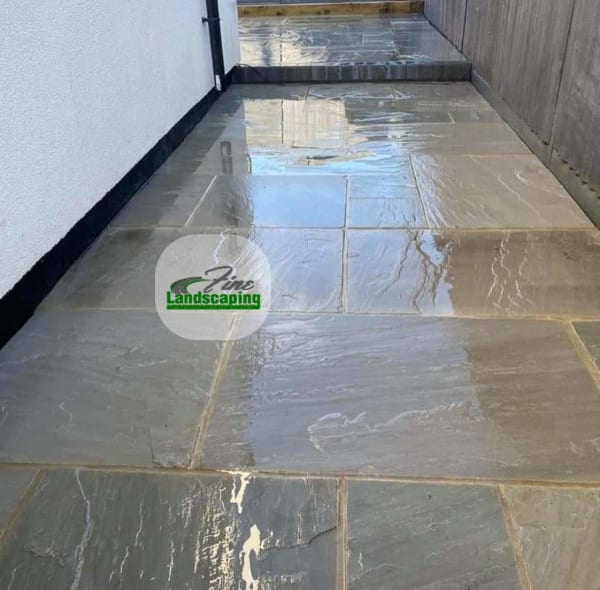

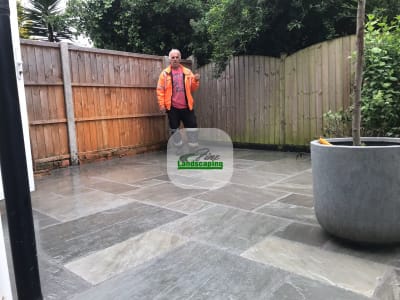
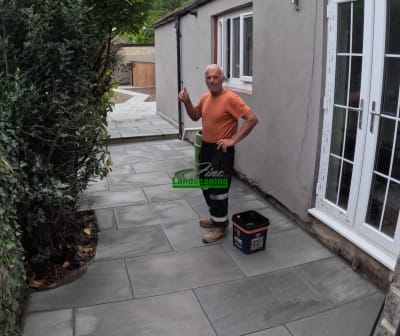
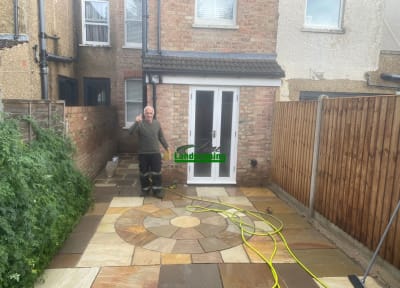
Rated 4.9/5 from over 280 verified reviews
Standard double driveways (40-50m²) in SW19 generally range £4,800-£7,200 including excavation and sub-base preparation. Larger Victorian frontages or complex gradients near Wimbledon Common may reach £8,000-£12,000 depending on drainage requirements.
Absolutely - from the Apostles roads through to South Wimbledon, covering all SW19 and SW20 postcodes. Recent projects include Pepys Road, Bushey Road and several properties backing onto Cannizaro Park.
Most residential permeable installations complete within 5-7 working days, weather permitting. Excavation and sub-base take 2-3 days, with surfacing completed by day 5. Resin-bound surfaces need 24 hours before light foot traffic.
Each installation carries decade-long protection covering both permeability performance and structural integrity. This includes annual drainage testing for the first three years, ensuring your surface maintains its designed infiltration rates throughout changing seasons.
Permeable systems actually reduce strain on existing drainage by managing water at source. The sub-base stores rainwater, releasing it slowly into the ground rather than overwhelming old pipes. Where clay soil prevents full infiltration, we incorporate partial drainage connections to manage extreme weather events.
Get your free, no-obligation quote today.