
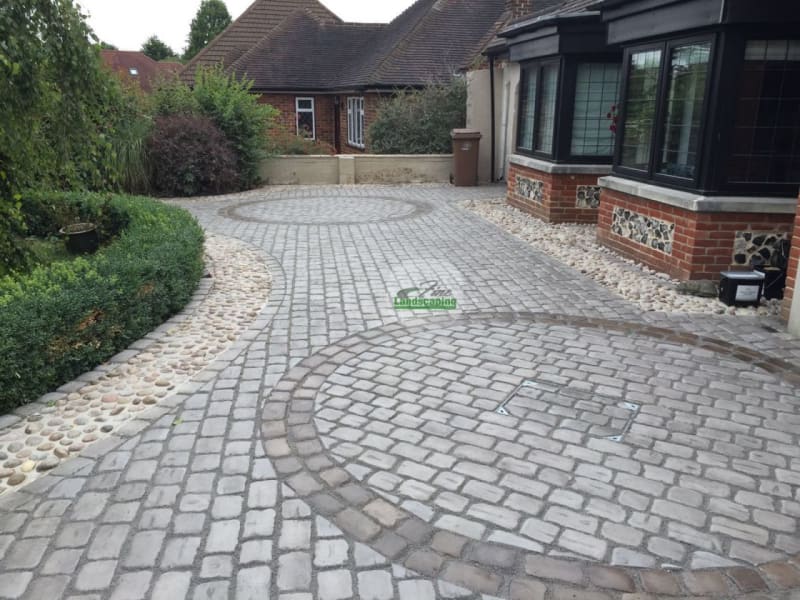
Dulwich stands apart from much of South London with its unique blend of period architecture, carefully managed estate regulations, and exceptionally high standards of property presentation. For homeowners looking to upgrade their driveways in SE21, resin-bound surfacing has emerged as the premium choice that balances heritage aesthetics with modern performance.
We've worked extensively on Driveways in Dulwich, where the combination of Victorian and Edwardian properties, stringent Dulwich Estate requirements, and conservation area restrictions creates unique challenges that demand specialist knowledge and exceptional craftsmanship.
Why Resin Driveways Suit Dulwich's Character Properties
The large detached Victorian and Edwardian houses along College Road and Dulwich Village demand driveways that complement their architectural significance. Unlike block paving or tarmac, resin-bound surfaces offer a sophisticated, seamless appearance that sits comfortably alongside period features.
The material's versatility allows us to create bespoke designs that respect the established character while meeting modern drainage requirements. This matters enormously in Dulwich, where the Dulwich Estate and Southwark Council's conservation officers scrutinise every external alteration.
We recently completed a particularly striking installation on Gallery Road, where a traditional Victorian villa required a driveway that wouldn't compete with the property's original features. The honey-toned resin surface we installed echoes the buff-coloured brickwork while providing the permeability Southwark planning requires.
Understanding Dulwich's Soil and Drainage Challenges
The London clay that dominates SE21 creates specific challenges for any hard landscaping project. This heavy, poorly-draining soil expands when wet and contracts during dry periods, placing enormous stress on rigid surfaces.
Resin-bound driveways offer a crucial advantage here. Their flexibility accommodates the ground movement that characterises London clay without cracking or lifting. More importantly, their full permeability addresses surface water drainage—a requirement that's become non-negotiable under current building regulations.
The Dulwich Wood Variation
Properties in the Dulwich Wood area often benefit from sandy pockets within the clay, offering slightly improved drainage. However, the acidic soil conditions throughout Dulwich mean we always conduct thorough ground preparation, ensuring the sub-base provides stable, long-term support.
The mature trees that characterise Dulwich's streetscape—particularly along Calton Avenue and around Dulwich Park—add another layer of complexity. Tree roots can disrupt traditional driveway surfaces, but resin's permeability actually benefits tree health by allowing water and air to reach the root zone.
We always work closely with arboricultural consultants when installing driveways near protected trees. The no-dig installation methods we can employ with resin surfaces often make the difference between project approval and refusal.
Navigating Dulwich Estate Design Requirements
The Dulwich Estate's influence extends across much of SE21, imposing design standards that go well beyond standard council planning requirements. These aren't mere suggestions—they're enforceable conditions that can halt projects or require costly modifications.
For driveways, the Estate typically requires materials and colours that harmonise with the established palette. We maintain a library of pre-approved resin aggregate combinations that have successfully passed Estate scrutiny on previous projects.
The Estate particularly values the seamless integration of driveways with front gardens. This is where resin excels—we can create subtle transitions between the driveway and planted borders, avoiding the harsh edges that characterise block paving or concrete.
Premium Resin Options for Period Properties
Not all resin driveways are created equal, and Dulwich properties demand the highest specifications. We exclusively use UV-stable, two-part polyurethane resins that maintain their appearance and structural integrity for 15-20 years.
| Resin Type | Suitability for Dulwich | Cost per m² | Key Benefits |
|---|---|---|---|
| Standard Resin Bound | Good for side/rear driveways | £80-£100 | Permeable, durable, cost-effective |
| Premium UV-Stable | Excellent for prominent frontages | £100-£130 | Superior colour retention, extended lifespan |
| Bespoke Heritage Blend | Ideal for conservation areas | £120-£150 | Custom aggregate mixes, period-appropriate tones |
Aggregate Selection for Period Character
The aggregate choice fundamentally determines how well a resin driveway complements a period property. For the Victorian houses predominant in Dulwich Village, we typically recommend warm honey or buff tones that echo traditional gravel paths.
Georgian villas benefit from cooler, more refined aggregates—pale golds or subtle creams that suggest the restrained elegance of the period. The substantial 1930s properties common around Belair House often suit slightly bolder aggregate mixes with more tonal variation.
We've developed several signature blends specifically for Dulwich projects, drawing on natural stone aggregates from British quarries. These create surfaces that feel rooted in place rather than imported from generic catalogues.
Spring Installation: Ideal Timing for Dulwich Projects
April offers perfect conditions for resin driveway installation in SE21. The warming soil and increasing daylight hours create optimal curing conditions, while the ground has dried sufficiently from winter rainfall without the complications of summer heat.
Spring installation means your new driveway fully hardens and stabilises before any potential summer holidays, and you'll enjoy a pristine surface throughout the prime garden season. For properties planning entertaining or garden parties—common in Dulwich's social calendar—this timing proves invaluable.
The spring period also allows us to coordinate driveway work with complementary projects. We recently completed a comprehensive scheme on College Road that combined a bespoke resin driveway with formal garden design elements, including a parterre garden and Dulwich Estate-approved hardwood gates.
The Installation Process for High-Specification Projects
Dulwich clients rightly expect show-garden-standard workmanship, and our installation process reflects these elevated expectations. Every project begins with comprehensive ground surveys assessing soil composition, drainage patterns, and any subsidence risks.
The London clay beneath SE21 requires particularly robust sub-base preparation. We typically excavate to 200-250mm depth, installing a carefully graded Type 1 MOT stone sub-base with proper compaction in layers. This prevents the ground movement that would compromise lesser installations.
Drainage Integration
While resin-bound surfaces are fully permeable, the clay subsoil isn't. We install comprehensive drainage solutions beneath every Dulwich driveway, connecting to soakaways or—where permitted—existing surface water systems.
This proves particularly important for larger driveways serving the substantial Edwardian properties on Calton Avenue, where driveway areas can exceed 80m². Without proper drainage infrastructure, even permeable surfaces can't prevent localised flooding.
- Site survey and design consultation: Including Dulwich Estate requirements review
- Planning and approvals: Coordinating with Southwark Council and Dulwich Estate as needed
- Ground preparation: Excavation, drainage installation, and sub-base construction
- Edge restraints: Installing subtle but robust edging systems
- Resin application: Hand-trowelled installation ensuring perfect finish
- Curing and sealing: Protected curing period with final surface protection
Comparing Costs: Resin vs Traditional Driveway Materials
Resin driveways represent a significant investment, but context matters. When compared against the alternatives suitable for Dulwich's period properties, the cost differential narrows considerably.
| Material | Cost per m² (inc. installation) | Lifespan | Dulwich Estate Approval |
|---|---|---|---|
| Gravel (loose) | £25-£40 | 5-10 years | Usually acceptable |
| Block paving (heritage) | £70-£95 | 20-25 years | Requires careful specification |
| Natural stone setts | £120-£180 | 50+ years | Generally approved |
| Premium resin bound | £100-£150 | 15-20 years | Increasingly popular |
Loose gravel, while initially cheaper, requires regular replenishment and creates maintenance headaches—something few Dulwich homeowners tolerate. Natural stone setts offer unmatched longevity but at costs that exceed even premium resin installations.
For detailed pricing information tailored to your specific project, see our complete guide for South London, which breaks down costs by project size and specification level.
Maintenance and Long-Term Performance
Dulwich's well-maintained gardens set high standards that extend to driveways. Fortunately, resin-bound surfaces require minimal maintenance whilst delivering excellent long-term appearance.
The seamless surface prevents weed growth—a constant battle with block paving or gravel. An occasional pressure wash (we recommend annual cleaning) removes surface debris and maintains the original appearance. For the mature tree-lined streets around Dulwich Picture Gallery, this ease of maintenance proves particularly valuable.
The UV-stable resins we specify for Dulwich projects resist the colour fading that plagued earlier resin installations. After a decade, properly installed surfaces show minimal degradation—crucial for properties where kerb appeal directly impacts significant property values.
Coordinating with Broader Landscaping Projects
Many Dulwich homeowners approach driveways as part of comprehensive property upgrades. The spring season offers ideal conditions for coordinated projects that transform entire front gardens.
We frequently combine resin driveway installations with complementary services: new fencing that meets Dulwich Estate specifications, automated gates with appropriate heritage styling, integrated lighting systems, and replanting schemes that frame the new driveway.
This holistic approach ensures visual coherence and can actually reduce overall costs through efficient project management. The College Road project mentioned earlier exemplifies this approach, where the resin driveway formed one element of a complete front garden transformation.
Planning Your Dulwich Driveway Project?
We specialise in premium resin installations for period properties throughout SE21, with deep understanding of Dulwich Estate requirements and conservation area regulations. Our spring schedule is filling quickly for 2026 installations.
Frequently Asked Questions
How much does a resin driveway cost for a typical Dulwich property?
For a standard 50-60m² driveway serving a Victorian or Edwardian house in SE21, expect costs between £6,000 and £9,000 including all groundworks, drainage, and premium UV-stable resin. Larger driveways for substantial properties on College Road or Dulwich Village may cost £10,000-£15,000 depending on site complexity and specification. These prices reflect the high-quality materials and specialist installation required to meet Dulwich Estate standards and achieve the longevity period properties demand.
Do I need Dulwich Estate approval for a new resin driveway?
If your property falls within the Dulwich Estate's jurisdiction (which covers much of SE21), you'll need their approval for any driveway alterations, even if planning permission isn't required from Southwark Council. The Estate reviews designs to ensure they maintain the area's established character, focusing on appropriate colours, materials, and integration with the street scene. We recommend consulting them early in the planning process, ideally with sample materials and detailed drawings showing how the driveway complements your property's period features.
How long does resin driveway installation take, and when's the best time?
A typical Dulwich driveway installation takes 5-7 working days from excavation to completion, though complex projects with extensive drainage requirements may need longer. Spring (April-May) offers ideal installation conditions—the ground has dried from winter rainfall, temperatures support proper resin curing, and completion before summer allows you to enjoy the new surface during the prime garden season. The resin requires 24-48 hours curing before light use, with full hardness achieved within a week.
Will a resin driveway damage the roots of mature trees?
Resin-bound driveways are actually one of the most tree-friendly hard surfacing options available, which matters enormously in Dulwich where mature trees are protected and highly valued. The permeable surface allows water and air to reach roots, and we can install resin using no-dig methods within tree protection zones. This contrasts sharply with concrete or impermeable block paving that can suffocate roots and kill trees. For properties on tree-lined streets like Calton Avenue, we work with arboricultural consultants to ensure installations protect tree health whilst meeting your access needs.
How does London clay affect resin driveway installation in SE21?
The heavy London clay throughout Dulwich requires particularly thorough ground preparation to ensure long-term driveway performance. We excavate deeper than standard (typically 200-250mm) and install robust stone sub-bases with comprehensive drainage systems beneath the resin surface. Clay's expansion and contraction with moisture changes would crack rigid surfaces, but resin's flexibility accommodates this movement. The permeability of resin-bound surfaces also prevents surface water accumulation, though the clay subsoil means we always install proper drainage infrastructure to soakaways or approved connection points.