
If you're planning a new driveway this spring, you've probably come across two of the most popular options: resin driveways and block paving. Both have their strengths, and choosing between them isn't always straightforward.
Here in South London and Surrey, we install both types regularly across Croydon, Bromley, Sutton and beyond. We've seen firsthand what works well in different situations, and we're here to break down the differences so you can make the right choice for your home.
At a Glance: Resin vs Block Paving Comparison
| Criteria | Resin Bound | Block Paving |
|---|---|---|
| Cost per m² | £80-£120 | £60-£90 |
| Installation time | 1-3 days | 3-5 days |
| Lifespan | 15-25 years | 20-25 years |
| Maintenance | Very low (occasional clean) | Moderate (weeding, re-sanding) |
| Drainage | Excellent (fully permeable) | Good (permeable if installed correctly) |
| Colour options | Wide range, custom blends | Good variety, limited to block colours |
| Repair difficulty | Moderate (needs professional patching) | Easy (individual blocks replaceable) |
| Weed resistance | Excellent (sealed surface) | Fair (weeds grow between joints) |
| Slip resistance | Excellent when wet | Good to excellent |
| Resale appeal | Modern, high-end look | Traditional, proven appeal |
What Is Resin Bound Paving?
Resin bound paving is a modern surfacing option that mixes natural aggregates (small stones) with a clear resin binder. The mixture is laid over a solid base to create a smooth, seamless surface with no loose stones.
It's become incredibly popular across Dulwich, Crystal Palace and Streatham over the past decade, particularly for homeowners who want a contemporary look with minimal upkeep.
Resin Driveway Pros
- Seamless finish: No joints or gaps means a sleek, modern appearance that suits contemporary homes perfectly
- Fully permeable: Water drains straight through, meeting SUDS regulations without needing additional drainage systems
- Low maintenance: No weeds to pull, no sand to top up — just an occasional pressure wash keeps it looking fresh
- Quick installation: Most driveways can be completed in 1-3 days, weather permitting
- Comfortable to walk on: The smooth surface is easier on feet and easier to keep clean than textured alternatives
- Customisable colours: Mix different aggregate colours to match your property perfectly
Resin Driveway Cons
- Higher upfront cost: Expect to pay £80-£120 per m² compared to £60-£90 for block paving
- Requires specialist installation: Not a DIY job — poor installation leads to cracking and drainage issues
- Can crack on unstable bases: The sub-base must be absolutely solid or cracks will appear
- Difficult to repair: Patching is noticeable, and colour-matching can be tricky
- UV sensitivity: Cheaper resins may yellow over time in direct sunlight
A standard 50m² driveway in South London costs between £4,000 and £6,000 installed, including groundworks and edging.
Resin Driveway Lifespan
A properly installed resin bound driveway should last 15-25 years with minimal maintenance. The key factors affecting lifespan are the quality of the base preparation and the UV stability of the resin used.
We've seen well-maintained resin driveways in Norbury and Mitcham still looking excellent after 15 years, while poorly installed ones start showing cracks within three years.
What Is Block Paving?
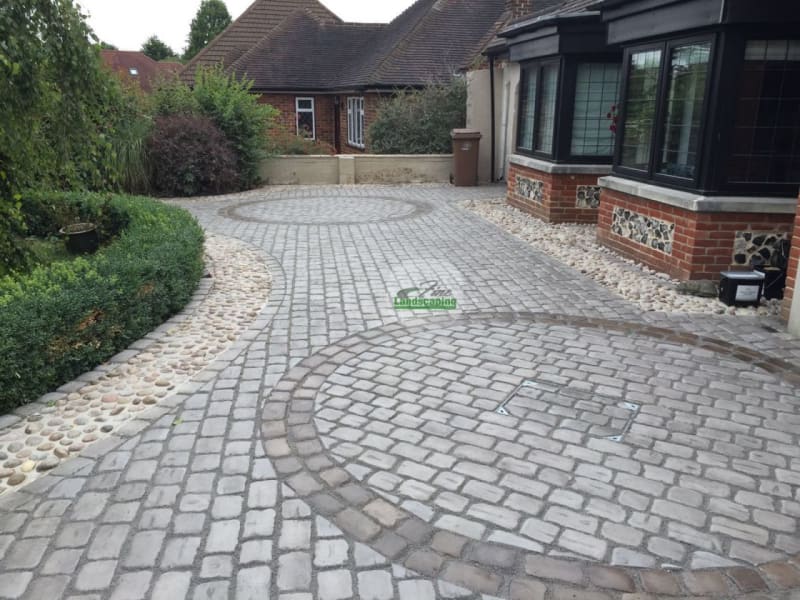
Block paving uses individual concrete or clay blocks laid in patterns over a sand bed. It's the traditional choice that's been popular across the UK for decades, and it remains a solid option for many homeowners.
You'll see block paving everywhere from Victorian terraces in Penge to modern developments in Purley — it's proven, versatile, and readily available.
Block Paving Pros
- Lower initial cost: Generally £60-£90 per m² makes it more budget-friendly upfront
- Easy to repair: Individual blocks can be lifted and replaced without affecting the rest of the driveway
- Proven longevity: Well-laid block paving can last 20-25 years or more
- Traditional aesthetic: Adds classic kerb appeal that buyers recognise and value
- Pattern options: Herringbone, stretcher bond, basketweave — plenty of design choices
- Good resale value: Block paving is a known quantity that appeals to a wide range of buyers
- Available everywhere: Easy to source materials and find experienced installers
Block Paving Cons
- Requires ongoing maintenance: Weeds grow between joints, sand needs topping up, occasional re-pointing required
- Longer installation time: Typically takes 3-5 days for a standard driveway
- Joints can shift: Heavy vehicles or poor installation can cause blocks to move or sink
- Can stain: Oil and other spills soak into concrete blocks more easily than sealed surfaces
- Requires regular cleaning: The textured surface and joints trap dirt and organic matter
A standard 50m² driveway in South London costs between £3,000 and £4,500 installed, including sub-base and edging.
Block Paving Lifespan
Quality block paving should last 20-25 years with proper maintenance. Clay blocks tend to outlast concrete ones, but they also cost more initially.
The actual lifespan depends heavily on the quality of installation — particularly the sub-base depth and compaction. We've seen 30-year-old block paving in Beckenham still going strong, and 5-year-old installations in Sydenham already settling unevenly.
We always recommend getting the groundwork right first — it's the foundation everything else depends on. Skimp on the sub-base and you'll have problems within years, regardless of which surface you choose.
Which Should You Choose?
The right choice depends on your priorities, budget, and property style. Here's how to decide:
Choose Resin Bound If:
- You want a modern, contemporary look that stands out
- Low maintenance is a priority — you don't want to spend weekends weeding
- You have drainage concerns and need guaranteed permeability
- You're willing to invest more upfront for lower ongoing costs
- Your property has a modern or minimalist design aesthetic
- You want the project completed quickly (ideal for this spring if you're planning summer garden parties)
Choose Block Paving If:
- Budget is your primary concern and you want to minimise initial outlay
- You prefer a traditional, classic appearance that suits period properties
- You like the flexibility of easy repairs and future alterations
- You don't mind seasonal maintenance tasks
- You want maximum resale appeal to the widest range of buyers
- You appreciate the variety of patterns and laying options available
Real-World Scenario: A Croydon Semi-Detached
Last month, we worked with a couple in South Croydon who were replacing their old concrete driveway. They had two cars, a sloping drive, and drainage issues after heavy rain.
Initially, they leaned towards block paving to save money. But after we explained the drainage benefits of resin bound and showed them samples, they chose a golden aggregate resin surface that complemented their 1930s semi beautifully.
The installation took two days. Six weeks later, they called to say they'd had several neighbours ask about it, and the standing water problem they'd lived with for years had completely disappeared. The extra £1,200 investment proved worthwhile for their specific needs.
That said, we've also completed stunning block paving projects in similar properties where the traditional look was exactly what the homeowner wanted. There's no single right answer.
Installation Considerations for Spring 2026
April is actually an ideal time for either type of installation. The ground has dried out from winter but we haven't hit the peak summer heat yet, which can affect resin curing times.
For resin driveways, we need temperatures above 10°C and dry conditions for 24 hours after installation. Spring weather in South London usually cooperates, though we always check the extended forecast before starting.
Block paving is less weather-dependent and can be laid in most conditions, though heavy rain during installation isn't ideal. Spring's generally settled weather makes it perfect for getting your driveway sorted before the summer.
Maintenance Requirements Compared
Resin bound surfaces need very little ongoing care. An annual pressure wash keeps them looking fresh, and occasional brushing removes leaves and debris. That's genuinely it for most installations.
Block paving requires more attention. You'll need to weed the joints 2-3 times per year, top up kiln-dried sand annually, and clean off any oil stains promptly. Every 3-5 years, re-sealing the blocks helps protect against staining and keeps colours vibrant.
Neither is particularly demanding compared to maintaining a lawn or patio, but there's a clear difference in the time commitment required.
The Verdict for South London Homeowners
After installing both types across Bromley, Sutton, and surrounding areas for over a decade, here's our honest assessment:
Resin bound is the premium choice for homeowners who value aesthetics, want minimal maintenance, and can stretch their budget. It's particularly brilliant for modern properties, sloping drives, and situations where drainage is critical.
Block paving is the sensible choice for budget-conscious homeowners, period properties where traditional styling matters, and anyone who wants maximum flexibility for future changes or repairs.
Both will serve you well if installed properly. The installation quality matters far more than which material you choose — a poorly laid resin driveway will fail faster than expertly installed block paving, and vice versa.
Ready to Transform Your Driveway This Spring?
Whether you're leaning towards resin bound or block paving, we'll help you make the right choice for your property and budget. We serve homeowners throughout South London and Surrey with expert installation and honest advice.
Get Your Free QuoteFrequently Asked Questions
How much does a resin driveway cost compared to block paving in 2026?
Resin bound driveways typically cost £80-£120 per m² installed, while block paving costs £60-£90 per m². For a standard 50m² driveway in South London, expect to pay £4,000-£6,000 for resin or £3,000-£4,500 for block paving. The price difference reflects the specialist materials and faster installation time for resin surfaces.
Which lasts longer, resin or block paving?
Both options offer similar longevity when properly installed. Resin bound driveways last 15-25 years, while block paving typically lasts 20-25 years. The actual lifespan depends more on installation quality (particularly the sub-base) than the surface material itself. Block paving edges ahead slightly on maximum lifespan, but resin requires less maintenance during its lifetime.
Can I install a resin or block paving driveway myself?
Block paving is theoretically a DIY project if you have good groundwork skills, though it's physically demanding and mistakes are costly. Resin bound installation is not recommended as a DIY job — it requires specialist equipment, precise mixing ratios, and experience to achieve a smooth, crack-free finish. Poor installation of either type will lead to expensive failures within just a few years.
How long does it take to install a resin driveway vs block paving?
Resin bound driveways are significantly faster to install, typically taking 1-3 days for a standard driveway (after groundworks are complete). Block paving takes 3-5 days for the same area due to the labour-intensive process of laying individual blocks. Both require similar groundwork preparation time beforehand, which can add several days depending on the existing surface condition.
Which is better for drainage, resin or block paving?
Resin bound surfaces offer superior drainage because they're fully permeable — water drains directly through the entire surface at rates up to 600 litres per m² per minute. Block paving can also be permeable if installed with proper gaps and sub-base, but drainage occurs only through the joints between blocks. For properties with serious drainage concerns or clay soil, resin bound is the more reliable choice.