
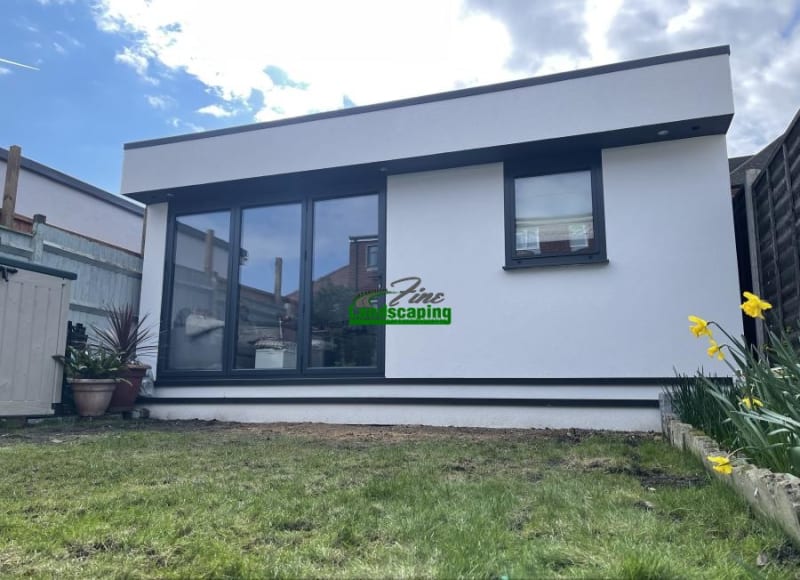
If you're planning a garden room this spring, understanding planning permission is crucial before you start. The good news? Most garden rooms in South London and Surrey fall under 'permitted development' and don't require formal planning permission.
But the rules aren't always straightforward, and getting it wrong can be costly. We've helped homeowners across Croydon, Bromley, Sutton and surrounding areas navigate these regulations for years, so let's break down exactly what you need to know.
When Planning Permission Is NOT Required
Under permitted development rights, you can build a garden room without planning permission if it meets all these criteria:
- Size and height: Maximum 2.5m high if within 2m of a boundary, or up to 4m high (dual-pitched roof) / 3m high (any other roof) if further away
- Garden coverage: The garden room plus any other outbuildings don't cover more than 50% of your total garden area
- Position: It's at the rear or side of your property (not between the main house and the street)
- Single storey: Garden rooms must be single-storey only
- No verandas or balconies: Elevated platforms aren't included in permitted development
- Eaves height: Maximum 2.5m where the structure is within 2m of a boundary
These rules apply to most properties in areas like Norbury, Streatham, Dulwich, Crystal Palace and Mitcham. Spring 2026 is an ideal time to start your project, as ground conditions are perfect and you'll have the structure ready for summer use.
We always advise homeowners to measure twice and check the regulations carefully. A garden room that's just 10cm too tall or too close to the boundary can trigger a planning requirement.
When Planning Permission IS Required
You'll definitely need to apply for planning permission if:
- Listed buildings: Your property is listed or in a conservation area (common in areas like Dulwich, parts of Bromley and historic Croydon)
- Article 4 direction: Your property has restricted permitted development rights
- Flat or maisonette: You live in a flat or maisonette (permitted development rights typically don't apply)
- Size exceeds limits: Your garden room is larger than permitted development allows
- Commercial use: You plan to use it as a separate dwelling or for business purposes requiring customer visits
- Front garden: The structure would be visible from the street or positioned forward of the main house
South London Council Information
Each South London borough handles planning applications slightly differently. Here's what you need to know for our main service areas:
Croydon Council
Croydon has several conservation areas, particularly around Purley and South Croydon. They're generally efficient with planning applications but strict on design guidelines. The planning portal is comprehensive and includes a helpful pre-application advice service (£150 for written advice).
Bromley Council
Bromley is London's largest borough with varied requirements across different areas. Beckenham and Penge have multiple conservation zones. They offer a fast-track planning service for an additional fee, which can reduce timelines by 2-3 weeks.
Sutton Council
Sutton typically processes applications efficiently and has fewer conservation areas than neighbouring boroughs. They're particularly helpful with pre-application enquiries, which we recommend for garden rooms over 20m².
Lambeth Council
Covering Streatham and Norbury, Lambeth has strict requirements in conservation areas. They're particularly focused on sustainable design and may request details about materials and environmental impact.
Southwark Council
Dulwich falls under Southwark, which has some of London's strictest conservation area rules. Pre-application advice is strongly recommended and costs £150-£300 depending on complexity.
Lewisham Council
Lewisham covers areas including Sydenham and has a straightforward online planning portal. They're generally supportive of garden rooms that meet design guidelines.
Merton Council
Merton, including Mitcham, processes most standard applications within the statutory timeframe. They offer a validation checklist to ensure your application is complete before submission.
Croydon: 020 8726 6000 | planning.control@croydon.gov.uk
Bromley: 020 8464 3333 | planning@bromley.gov.uk
Sutton: 020 8770 5000 | planning@sutton.gov.uk
Lambeth: 020 7926 1000 | planning@lambeth.gov.uk
Southwark: 020 7525 5000 | planning.enquiries@southwark.gov.uk
Lewisham: 020 8314 6000 | planning@lewisham.gov.uk
Merton: 020 8274 4901 | planning@merton.gov.uk
The Planning Application Process: Step-by-Step
If you do need planning permission, here's exactly what to expect:
Step 1: Pre-Application Enquiry (Optional but Recommended)
Contact your council's planning department with your proposal. Most councils charge £150-£300 for written advice. This typically takes 2-3 weeks and can save you money by identifying issues early.
Step 2: Prepare Your Application
You'll need detailed drawings (plans, elevations, site location plan), a design and access statement, and photographs. Many homeowners hire an architect or planning consultant at this stage — budget £500-£1,500 for professional drawings.
Step 3: Submit Your Application
Applications are submitted online through the Planning Portal. You'll need to pay the application fee at this point (see costs below).
Step 4: Validation and Consultation
The council checks your application is complete (1-2 weeks), then consults neighbours and relevant departments. Neighbours have 21 days to comment.
Step 5: Decision
The council must decide within 8 weeks for standard applications or 13 weeks for major applications. In practice, straightforward garden room applications in South London typically take 6-10 weeks.
Standard householder application: £258 (set by government)
Pre-application advice: £150-£300 (varies by council)
Professional drawings: £500-£1,500
Total typical cost: £900-£2,000
Building Regulations vs Planning Permission: What's the Difference?
This confuses many homeowners, but it's crucial to understand both may apply to your garden room.
Planning permission is about whether you CAN build something — it considers impact on neighbours, design, and how the structure fits the local area.
Building regulations are about HOW you build it — covering structural safety, insulation, electrical work, and fire safety. Most garden rooms over 15m² or with electrical installations require building regulations approval, even if they don't need planning permission.
| Aspect | Planning Permission | Building Regulations |
|---|---|---|
| What it covers | Location, size, appearance, impact on area | Structural safety, insulation, fire safety, electrics |
| When required | If outside permitted development | Usually if over 15m² or has power/water |
| Cost | £258 application fee | £300-£500 for building control |
| Timeline | 6-10 weeks typical | Inspections during construction |
When we install garden rooms, we work with qualified building control inspectors to ensure full compliance. This protects your investment and ensures the structure is safe and properly insulated.
Building regulations aren't optional just because you don't need planning permission. We've seen homeowners struggle to sell their property because garden rooms were built without proper building control sign-off.
Common Pitfalls to Avoid
Over the years working across Croydon, Bromley and Surrey, we've seen these mistakes repeatedly:
1. Assuming All Garden Rooms Are Exempt
Just because your neighbour didn't need permission doesn't mean you won't. Conservation areas, listed buildings, and Article 4 directions change everything. Always check your specific property.
2. Ignoring the 50% Rule
Many homeowners forget to include existing sheds, garages and outbuildings when calculating the 50% coverage limit. If you already have a large shed and extensive landscaping features, you might exceed this without realising.
3. Measuring Height Incorrectly
Height is measured from ground level to the highest point. On sloping gardens (common in Crystal Palace and Sydenham), this can be tricky. Measure from the highest ground level adjacent to the building.
4. Building Too Close to Boundaries
The 2m boundary rule is strict. Even if your fence isn't exactly on the boundary line, you need to measure from the actual legal boundary. Check your deeds or hire a surveyor if uncertain.
5. Not Considering Utilities
Garden rooms with plumbing or significant electrical work may trigger additional requirements. If you're planning a home office or garden annex with a bathroom, factor this in early.
6. Forgetting Party Wall Agreements
If your garden room is within 3m of a neighbour's structure and will have foundations deeper than theirs, you may need a party wall agreement. This is separate from planning permission but equally important.
What Happens If You Build Without Permission?
Building without required planning permission is a planning breach. Councils can issue an enforcement notice requiring you to remove the structure or submit a retrospective application.
Retrospective applications cost the same but are viewed less favourably. More importantly, they create stress and uncertainty — you might have to dismantle your new garden room entirely.
If selling your property, solicitors will ask about planning permission for any structures. Without proper documentation, sales can fall through or buyers may reduce their offer significantly.
How Fine Landscaping Can Help
We've been installing garden rooms across South London and Surrey for years, and we understand the regulations inside out. Our service includes:
- Free initial consultation to assess whether you need planning permission
- Advice on positioning and sizing to maximise space while staying within permitted development
- Recommendations for trusted architects and planning consultants when needed
- Full compliance with building regulations, including coordinating inspections
- Complete project management from groundworks to final installation
This April, we're seeing increased demand for garden rooms as homeowners make the most of spring weather for installations. The earlier you start the planning process, the sooner you'll be enjoying your new space.
We also handle all the ancillary work that makes your garden room perfect — from patio areas around the entrance to proper drainage and landscaping to integrate the room seamlessly into your garden.
Ready to Get Started?
Get expert advice on your garden room project with a free, no-obligation consultation. We'll assess your property, explain the planning requirements, and provide a detailed quote.
Get Free QuoteFrequently Asked Questions
How much does planning permission cost for a garden room in South London?
The government-set planning application fee is £258 for householder applications across all South London boroughs. However, you'll likely also need professional drawings (£500-£1,500) and possibly pre-application advice (£150-£300), bringing the total cost to around £900-£2,000. This is separate from the cost of actually building the garden room.
How long does it take to get planning permission for a garden room?
Councils must decide within 8 weeks for standard householder applications, though most straightforward garden room applications in South London take 6-10 weeks in practice. If you opt for pre-application advice first, add another 2-3 weeks. Starting your application in spring means you could have approval by early summer and the garden room installed by autumn.
Do I need building regulations approval even if I don't need planning permission?
Yes, in most cases. Building regulations and planning permission are separate requirements. Garden rooms over 15m² or with electrical installations typically need building regulations approval regardless of planning permission status. This covers structural safety, insulation, fire safety and electrical work, and costs around £300-£500 for building control inspection.
Can I build a garden room in a conservation area in South London?
Yes, but you'll almost certainly need planning permission. Conservation areas (common in Dulwich, parts of Bromley, Penge and historic Croydon) have restricted permitted development rights. Even smaller garden rooms often require approval, and councils scrutinise design and materials more carefully. Always contact your local planning department before proceeding with any work in a conservation area.
What's the maximum size garden room I can build without planning permission?
There's no specific maximum size, but it must meet several criteria: maximum 2.5m high if within 2m of a boundary (or up to 4m with a dual-pitched roof if further away), single-storey only, and together with other outbuildings it cannot cover more than 50% of your total garden area. A typical suburban garden in Croydon or Sutton might accommodate a 20-30m² garden room under permitted development, but this varies by property.