
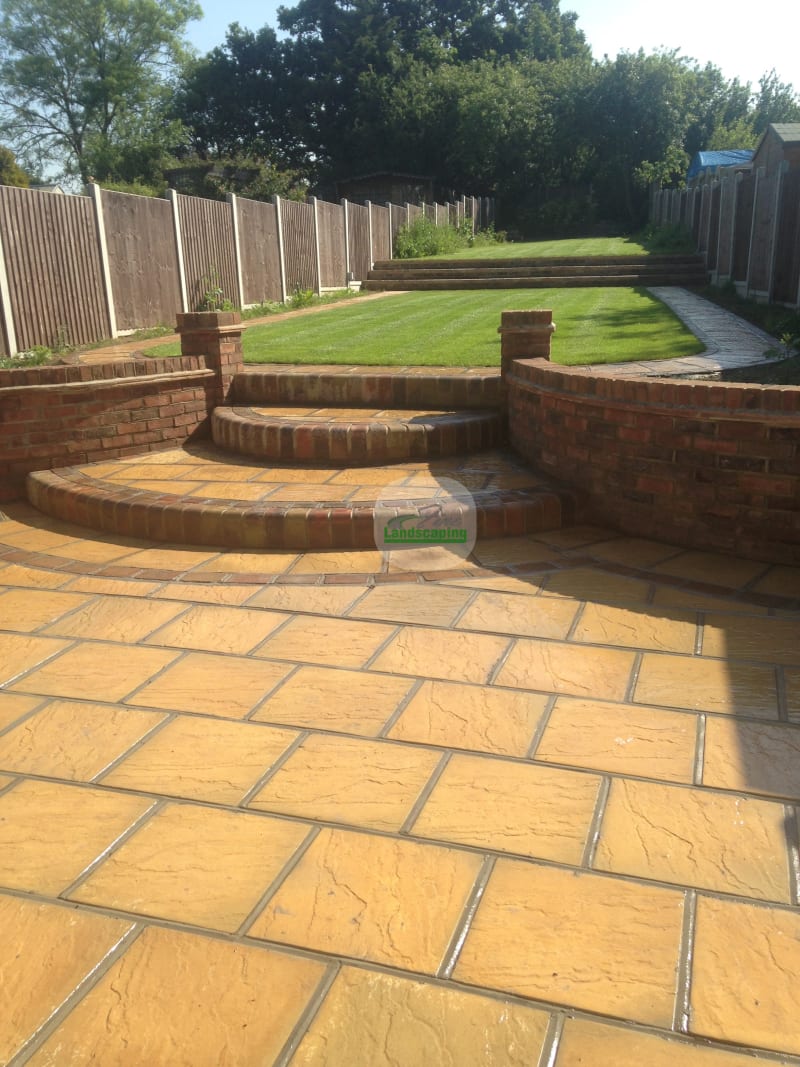
Front gardens in Norbury have enormous potential that often goes unrealised. Whether you're on one of the grand Edwardian semis along Norbury Crescent or a Victorian terrace near the station, your front garden is the first impression visitors get of your home.
As Norbury's local Garden Design in Norbury specialists based right here in SW16, we've transformed dozens of front gardens across the area. The key is working with Norbury's challenging heavy clay soil rather than against it, and creating designs that complement the period character of these beautiful homes.
Understanding Norbury's Front Garden Challenges
Before we dive into design ideas, it's crucial to understand what makes Norbury front gardens unique. The heavy London clay that underlies the entire area creates specific challenges that generic garden designs simply don't address.
The clay becomes waterlogged in winter, turning lawns into boggy messes, then cracks and shrinks during summer droughts. We've seen countless rigid paving installations along London Road and Green Lane that have cracked and shifted because installers didn't account for this clay movement.
Another consideration is driveway conversions. Front gardens along main roads face constant pressure for off-street parking, but the London Borough of Croydon requires permeable surfacing for new driveways to manage surface water runoff. This actually works in your favour, as permeable solutions also handle clay drainage better.
Design Styles That Work for Norbury Period Properties
The Classic Edwardian Front Garden
For the substantial Edwardian and 1920s semis along Norbury Crescent and the surrounding avenues, a formal approach respects the architecture beautifully. We typically design these with a central path (often retaining or recreating the original decorative tile work), framed by symmetrical planting beds.
Box hedging (Buxus sempervirens) provides structure year-round, while lavender, roses, and hardy geraniums add colour without competing with the house's grand proportions. The key is restraint — these homes are the stars, and the front garden should frame rather than overwhelm.
On a recent project on Norbury Crescent, we retained the original Victorian tile path but rebuilt the borders with proper drainage cells beneath. The clay was excavated to 40cm depth, and we installed a gravel drainage layer before backfilling with improved topsoil. It's performed brilliantly through two wet winters now.
Victorian Terrace Front Gardens
The Victorian terraces closer to Norbury Station typically have smaller front gardens, often just 3-4 metres deep. Here, every centimetre counts. We favour low brick walls (often matching the original boundary walls) with rendered coping, creating raised beds that help with the drainage issues.
Vertical interest is crucial in these compact spaces. Climbing roses or clematis on the front wall, compact shrubs like Pittosporum 'Tom Thumb', and evergreen grasses provide structure without eating up precious space. A smart path — perhaps engineering brick or granite setts — leads to the front door.
Contemporary Low-Maintenance Designs
For the inter-war houses and newer developments around Pollards Hill South, contemporary designs can work superbly. We're seeing increasing demand for low-maintenance front gardens that look sharp year-round but don't require weekend gardening sessions.
These typically combine permeable paving (satisfying Croydon Council's drainage requirements) with architectural planting — think ornamental grasses like Miscanthus, bold foliage plants like Fatsia japonica, and perhaps a specimen tree like Amelanchier for seasonal interest.
| Design Style | Best For | Typical Cost | Maintenance Level |
|---|---|---|---|
| Classic Edwardian | Period semis | £3,500-£6,000 | Medium |
| Victorian Formal | Terraced houses | £2,500-£4,500 | Medium-High |
| Contemporary Low-Maintenance | All property types | £4,000-£7,000 | Low |
| Wildlife-Friendly Cottage | Larger plots | £2,800-£5,000 | Medium |
Solving the Driveway Dilemma
Let's address the elephant in the room — or rather, the car in the front garden. Many SW16 homeowners need parking, but removing your entire front garden for tarmac isn't the answer (and won't meet Croydon Council's requirements anyway).
We design parking solutions that work with the garden rather than replacing it. A single parking bay with permeable resin-bound surfacing or block paving can sit alongside retained planting areas. The key is keeping at least 40% of the front garden as planted area or lawn.
For clay soils like ours, we always excavate deeper than standard — typically 300-350mm — and install a substantial sub-base with drainage falls. The clay must be prevented from pushing up through the paving during winter expansion. We learned this the hard way on early projects before we truly understood Norbury's ground conditions.
Plant Choices for Norbury's Heavy Clay
Not all plants tolerate waterlogged clay in winter. Here's what we've found reliably thrives in Norbury front gardens without special soil preparation:
Shrubs That Love Clay
- Potentilla — flowers all summer, compact varieties perfect for front gardens
- Weigela — gorgeous spring flowers, tolerates clay beautifully
- Spiraea — tough as nails, various sizes available
- Viburnum tinus — evergreen structure with winter flowers
- Roses — actually prefer clay soil; David Austin varieties are superb
Perennials for Clay Borders
- Geranium (cranesbill) — groundcover that thrives in clay
- Hemerocallis (daylilies) — reliable and colourful
- Heuchera — excellent foliage, tolerates shade
- Astilbe — loves moisture, perfect for shadier spots
- Rudbeckia — late summer colour, clay-tolerant
For more challenging dry shade under street trees, we use tough ferns, Bergenia, and hardy geraniums. Along sunny south-facing walls, Mediterranean herbs like lavender and rosemary struggle in winter waterlogging despite summer heat — they need raised beds with improved drainage.
The Installation Process for Front Garden Makeovers
Understanding what's involved helps you plan properly and budget realistically. Here's how we approach a typical Norbury front garden transformation:
Step 1: Design and Planning (Week 1)
We visit your property, assess the existing conditions, measure accurately, and discuss your needs. For Norbury properties, we always probe the soil to check clay depth and drainage. We'll produce a detailed design with plant schedule and hard landscaping specifications.
If you're installing a driveway, we check whether you need planning permission. Most front garden driveways in Norbury don't require it if you use permeable surfacing, but dropped kerbs need Croydon Council approval and can take 6-8 weeks.
Step 2: Clearance and Excavation (Days 1-2)
Existing plants, paving, and topsoil are removed. For clay gardens, we typically excavate 300-400mm depth for paved areas and 400-500mm for planting beds. The clay is removed — you can't work it in place. We usually hire a grab lorry for efficiency on Norbury's residential streets.
Step 3: Drainage Installation (Day 2-3)
This is where Norbury projects differ from other areas. We install land drains connecting to soakaways or, where possible, the main drainage system (with Thames Water approval). For driveways, we create proper drainage falls and use permeable construction throughout.
Step 4: Hard Landscaping (Days 3-5)
Paths, driveways, edging, and walls are installed. We use concrete haunching for all edging — essential on clay to prevent movement. For our Garden Design in Norbury projects, we typically use materials that complement the period architecture: engineering brick, natural stone, or quality block paving.
Step 5: Soil Improvement and Planting (Days 5-7)
We backfill planting areas with improved topsoil — typically blending good quality topsoil with composted bark and horticultural grit to improve drainage. Plants are installed with mycorrhizal fungi to help establishment. We add mulch to suppress weeds and conserve moisture.
Step 6: Final Details (Day 7)
Final grading, turfing if required, cleanup, and a thorough briefing on aftercare. We provide maintenance instructions specific to your new plants and the clay conditions.
Common Mistakes to Avoid
We've seen these errors repeatedly across Norbury, and they're all avoidable with proper planning:
Ignoring drainage: The number one mistake. Clay doesn't drain naturally. Every paved area needs proper falls and drainage. Every planting bed needs soil improvement or raised construction.
Choosing inappropriate plants: Mediterranean plants like lavender and cistus struggle in waterlogged winter clay, no matter how sunny your front garden is in July. Choose plants suited to heavy, moisture-retentive soil.
Inadequate excavation depth: Standard excavation depths don't work on clay. We excavate deeper and install better sub-bases. It costs more upfront but lasts decades longer.
Poor quality materials: Your front garden is on permanent display. Cheap paving flags stain and spall. Thin topsoil compacts and waterlog. Quality materials look better longer and actually perform better on difficult clay soils.
Planting too close to foundations: Given subsidence concerns in Norbury, keep larger shrubs and any trees well away from house foundations. Anything that grows over 3m tall should be planted at least that distance from the building.
Forgetting winter appearance: That colourful summer border will be bare sticks from November to March. Include evergreen structure — box, holly, evergreen grasses, and winter-flowering shrubs like Sarcococca.
Real Project: Norbury Crescent Transformation
Our flagship local project on Norbury Crescent demonstrates what's possible with Norbury's challenging conditions. The property is a substantial 1920s semi with a typical 12m x 8m front garden that had been neglected for years.
The existing lawn was more moss than grass, permanently wet, and the original tile path was cracked and dangerous. The owners wanted parking for one car, an attractive path, and low-maintenance planting that looked good year-round.
We excavated the entire front garden to 400mm depth, removing the waterlogged clay. We installed a comprehensive drainage system with perforated pipes leading to a soakaway in the front corner (coordinated with existing utilities). The driveway area received a 250mm MOT Type 1 sub-base with a geotextile membrane below, then 50mm bedding layer, and finally resin-bound surfacing in a warm golden aggregate.
We retained a 3m wide planting border along the front boundary wall, backfilled with improved topsoil mix. We planted a mix of evergreen structure (box balls, Viburnum tinus) with seasonal colour from roses, hardy geraniums, and ornamental grasses. A rebuilt brick path leads to the front door, matching the house's original details.
Two years later, it still looks superb. The drainage has handled two wet winters perfectly, and the owners report they spend about 30 minutes monthly on maintenance — mostly deadheading and the occasional trim.
Planning Permission and Council Requirements
Most front garden makeovers in Norbury don't require planning permission, but there are important rules from the London Borough of Croydon:
Driveways: If you're creating or extending a driveway, you must use permeable surfacing or direct water to a lawn or border (not the street). This applies to any paved area over 5m². Permeable options include resin-bound surfacing, permeable block paving, or gravel with cellular support.
Dropped kerbs: You need council approval to drop the kerb and create a vehicle crossing. Apply to Croydon Council's highway department. Current fees are around £1,200-£1,800 depending on width, plus 6-8 weeks processing time.
Walls and fences: Front boundary walls and fences under 1m height don't need permission. Over 1m requires planning approval. Most Norbury properties look best with traditional brick walls around 600-800mm height.
Trees: While Norbury has no conservation area, some individual trees have Tree Preservation Orders (TPOs). Check with Croydon Council before removing any significant tree. Street trees belong to the council — never remove them yourself.
For more detailed guidance on garden transformations, see our complete guide for South London.
Maintenance Tips for Norbury Front Gardens
A well-designed front garden shouldn't be high maintenance, but it does need some attention to look its best year-round:
Spring (March-April): Cut back ornamental grasses and perennials. Apply a general fertiliser to borders. Check drainage gullies are clear after winter. Mulch beds with composted bark to suppress weeds.
Summer (June-August): Deadhead roses and perennials to extend flowering. Water new plants during dry spells — established plants should be fine. Trim box hedging and topiary in late summer. Keep paths swept and tidy.
Autumn (September-November): Cut back dead perennial growth or leave for winter structure and wildlife. Rake fallen leaves from lawns and paving. Check drainage is working as winter rains begin. Plant spring bulbs in borders.
Winter (December-February): Keep paths clear of leaves and debris (they get slippery). Check for frost heave on paving edges. Prune deciduous shrubs if needed. Enjoy winter-flowering Viburnum tinus and Sarcococca scent.
For clay soils specifically, avoid walking on wet lawns and borders in winter — you'll compact the soil terribly. Wait until spring when it's dried out a bit.
Ready to Transform Your Norbury Front Garden?
As Norbury's local garden design specialists, we understand SW16's clay soil challenges and period property character intimately. We'll create a front garden that looks superb year-round and handles our difficult conditions perfectly.
Get Free QuoteFrequently Asked Questions
How much does a front garden makeover cost in Norbury?
A typical Norbury front garden makeover costs £3,500-£7,000 depending on size and complexity. This includes full excavation to handle clay soil, proper drainage installation, quality paving or driveway, and planting with improved soil. Norbury projects cost 15-20% more than easier areas because of the essential drainage work the clay demands, but this investment prevents future problems and ensures longevity.
Do I need planning permission for a front garden makeover in SW16?
Most front garden makeovers don't need planning permission in Norbury. However, if you're creating a driveway over 5m², you must use permeable surfacing to comply with London Borough of Croydon requirements. You'll need council approval (and pay fees) for dropped kerbs to create vehicle access. Walls over 1m height also require planning permission, though traditional low walls around 600-800mm don't.
How long does a front garden makeover take?
A typical Norbury front garden transformation takes 5-7 working days once we start on site. The design and planning phase adds 1-2 weeks beforehand. If you need a dropped kerb, add 6-8 weeks for Croydon Council approval before work begins. We schedule most front garden projects between April and October when weather is more reliable and plants establish better, though hard landscaping can be installed year-round.
What plants grow well in Norbury's clay soil?
Many plants thrive in Norbury's heavy clay once established. Roses love clay soil, as do shrubs like Viburnum, Weigela, Potentilla, and Spiraea. For perennials, hardy geraniums, Hemerocallis (daylilies), Rudbeckia, and Astilbe all perform well. The key is choosing plants suited to moisture-retentive soil rather than Mediterranean species that need perfect drainage. We improve planting areas with composted bark and grit, but work with the clay rather than trying to completely replace it.
Can I park on my front garden in Norbury?
Yes, you can convert your front garden to parking in Norbury, but you must use permeable surfacing for any paved area over 5m² to meet Croydon Council's drainage requirements. You'll also need council approval for a dropped kerb to access the road legally. We recommend retaining at least 40% of the front garden as planted area for appearance and environmental benefits. Permeable resin-bound surfacing or block paving both work well on Norbury's clay soil with proper sub-base preparation.