
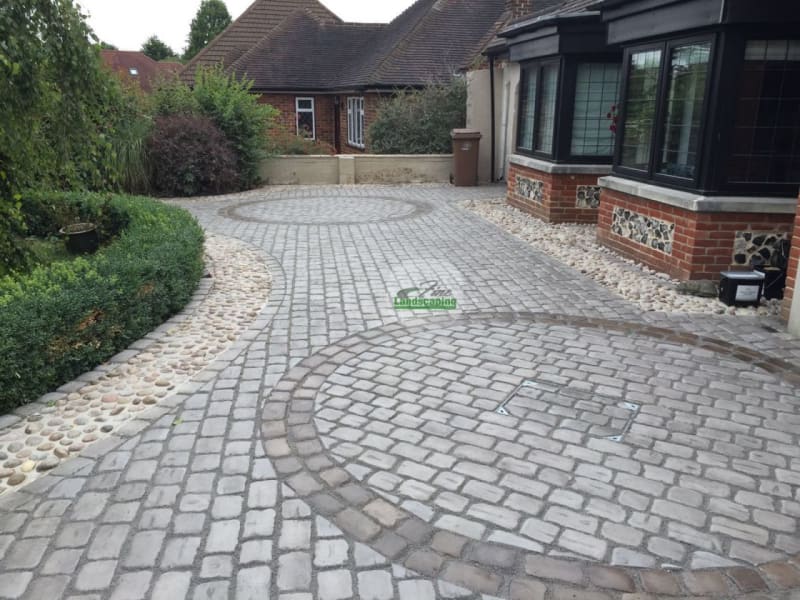
Spring 2026 is the perfect time to think about creating off-street parking with a new driveway. But before you start breaking ground, understanding the dropped kerb permission process is absolutely essential. We've guided hundreds of homeowners through this process across Croydon, Bromley, and surrounding boroughs, and we're here to make it straightforward for you.
The rules around dropped kerbs are strict for good reason — they affect pedestrian safety, drainage, and highway access. Let's walk through everything you need to know to get your project approved first time.
When Planning Permission IS Required
You will need planning permission for a dropped kerb and driveway in these situations:
- Creating any new vehicle access to your property from a public road
- Widening an existing dropped kerb or vehicle crossover
- Properties on classified roads (A-roads or B-roads like the A23 or A232 in Croydon)
- Conservation areas — common in areas like Crystal Palace, Dulwich, and parts of Streatham
- Listed buildings or properties within their curtilage
- Driveways using non-permeable materials over 5m² without proper drainage
- Removing front garden boundary walls or hedges that contribute to street character
In Croydon specifically, the council is particularly strict about maintaining front garden greenery and ensuring proper drainage. They've been cracking down on unauthorised crossovers since 2024, so getting permission before starting work is more important than ever.
When Permission May NOT Be Required
There are very limited circumstances where you might not need planning permission:
- Repairs to an existing authorised dropped kerb (like-for-like replacement only)
- Internal driveway improvements that don't affect the highway or kerb
- Properties with existing lawful vehicle access where you're not making changes to the crossover
However — and this is crucial — even if planning permission isn't required, you'll still need a vehicle crossover licence from your local council's highways department. This is a separate process that covers the actual construction work on the public highway.
We always recommend checking with your council before assuming permission isn't needed. A quick phone call can save thousands in potential enforcement action.
South London Council Requirements
Each South London borough handles dropped kerb applications slightly differently. Here's what you need to know for the main areas we serve:
Croydon Council
Croydon requires both planning permission and a Section 184 licence for vehicle crossovers. They're particularly concerned about front garden parking removing green space, so expect scrutiny on drainage and landscaping. The planning fee is £206, with the crossover licence costing between £1,200-£2,800 depending on the width and location.
Croydon also requires at least 50% of your front garden to remain permeable or planted. This means you can't simply concrete over the entire area — you'll need to incorporate permeable driveway materials or retain planting areas.
Bromley Council
Bromley operates a combined application process which can speed things up. Planning permission costs £206, and the vehicle crossover application ranges from £1,500-£3,500. Bromley is strict about visibility splays and won't approve crossovers that compromise pedestrian or road safety.
Sutton Council
Sutton requires separate applications but processes them concurrently. They charge £206 for planning and £1,400-£2,600 for the crossover works. Sutton is particularly focused on sustainable drainage (SuDS) compliance.
Lambeth Council
Lambeth has additional requirements in their numerous conservation areas. Planning permission is £206, with crossover licences from £2,000-£4,000. Processing can take longer here, especially in areas like Streatham and Dulwich where streetscape character is protected.
Southwark Council
Southwark operates a strict policy limiting new crossovers on certain roads. They charge £206 for planning and £2,200-£3,800 for highway works. Many applications in Southwark require additional traffic safety assessments.
Lewisham Council
Lewisham charges £206 for planning permission and £1,600-£3,200 for crossover licences. They have specific requirements about retaining street trees and may refuse applications where trees would be affected.
Merton Council
Merton requires both permissions and charges £206 for planning plus £1,500-£2,900 for the crossover. They're particularly concerned about cumulative loss of front gardens in residential areas and may request additional landscaping mitigation.
Croydon: 020 8726 6000 | planning.control@croydon.gov.uk
Bromley: 020 8464 3333 | planning@bromley.gov.uk
Sutton: 020 8770 5000 | planning@sutton.gov.uk
Lambeth: 020 7926 1000 | planning@lambeth.gov.uk
Southwark: 020 7525 5000 | planning.enquiries@southwark.gov.uk
Lewisham: 020 8314 6000 | planning@lewisham.gov.uk
Merton: 020 8274 4901 | planning@merton.gov.uk
The Application Process: Step-by-Step
Getting your dropped kerb approved involves several stages. Here's exactly what you need to do:
Step 1: Pre-Application Research (Week 1)
Check your property title deeds to confirm you own the land to the highway boundary. Contact your council's planning department to confirm requirements for your specific location. Take photographs and measurements of your frontage.
Cost: Free (or £50-£150 for formal pre-application advice)
Step 2: Prepare Your Planning Application (Weeks 1-2)
You'll need to submit:
- Completed planning application form
- Site location plan (1:1250 scale)
- Block plan showing the proposed crossover (1:500 or 1:200 scale)
- Elevation drawings showing gate/fence changes
- Drainage and permeability details
- Planning fee (£206 across all boroughs)
Many homeowners find it easier to use a planning consultant for this stage. We can recommend trusted professionals who specialise in dropped kerb applications across South London.
Step 3: Submit Planning Application (Week 2)
Submit online through the Planning Portal or directly to your council. You'll receive an acknowledgement within 5 working days with your application reference number.
Cost: £206 (planning fee)
Step 4: Consultation Period (Weeks 3-6)
Your council will consult with highways, drainage, and sometimes environmental teams. Neighbours may be notified depending on your location. The council may request additional information or amendments during this period.
Standard processing time: 8 weeks (but can extend to 12-13 weeks in busy periods)
Step 5: Apply for Vehicle Crossover Licence (Can be simultaneous)
While your planning application is being processed, you can apply for the Section 184 highway licence. This requires:
- Completed crossover application form
- Detailed construction drawings
- Proof of property ownership
- Proof of planning permission (or confirmation it's not required)
- Crossover licence fee (£1,200-£4,000 depending on borough and width)
Some councils do the crossover construction work themselves; others allow approved contractors to do it. At Fine Landscaping, we're approved contractors for several South London boroughs, which can streamline the process significantly.
Step 6: Receive Permissions and Schedule Work (Weeks 8-10)
Once both permissions are granted, you can schedule the work. The council's highways team will typically carry out the actual kerb lowering and reinstate the pavement, while you or your chosen contractor handles the driveway construction on your property.
We recommend scheduling dropped kerb work for April through October when weather conditions are most favourable. Right now in spring 2026, conditions are ideal for this type of project.
Planning Permission: £206
Vehicle Crossover Licence: £1,200-£4,000
Professional drawings (if needed): £300-£600
Total: £1,706-£4,806 before any construction work begins
Building Regulations vs Planning Permission
This is a common area of confusion, so let's clear it up. Planning permission is about the principle of development — whether the proposed change is acceptable in terms of land use, appearance, and impact on neighbours and the street scene.
Building regulations cover the technical standards of construction — structural integrity, drainage, fire safety, and accessibility. For dropped kerbs, you typically don't need building regulations approval, but you do need to comply with highways construction standards.
The vehicle crossover licence (Section 184 licence) is the mechanism that ensures construction meets highways standards. It's separate from planning permission but equally mandatory.
Some councils combine these processes; others keep them separate. This is why timelines can vary significantly between boroughs.
We always tell clients to budget for at least 10-12 weeks from initial application to starting work. Trying to rush the process usually backfires and can result in rejected applications that need resubmitting.
Common Pitfalls to Avoid
After helping homeowners across Croydon, Norbury, Mitcham, and beyond, we've seen the same mistakes crop up repeatedly. Here's how to avoid them:
Starting Work Before Permission is Granted
This is by far the most common and costly mistake. Some homeowners assume permission is a formality and start work before approval comes through. If your application is refused, you'll need to reinstate everything at your own expense — often costing more than the original work.
Inadequate Drainage Plans
Since 2008, driveways over 5m² must either use permeable materials or direct water to a suitable drainage system (not the highway). Many applications are refused because drainage hasn't been properly addressed. Our drainage solutions can help you design a compliant system.
Ignoring Front Garden Character
Councils increasingly reject applications that would remove too much greenery or harm the character of residential streets. Successful applications usually retain some planting, use permeable surfaces, and maintain boundary treatments where appropriate.
Poor Visibility Splays
Your new driveway must allow safe visibility when exiting onto the road. High walls, dense hedges, or poor positioning can lead to refusal on safety grounds. We always conduct a site survey to check visibility before clients apply.
Underground Services
Failing to check for underground gas, water, electric, or telecom services is dangerous and can derail your project. Always request plans from utility companies before starting work.
Assuming Permitted Development Rights Apply
While some driveway work falls under permitted development, this almost never applies to the dropped kerb itself, which always affects the public highway. Don't rely on general permitted development guidance for vehicle crossovers.
Not Considering Parking Demand
Some councils will refuse applications in areas with high on-street parking pressure, arguing that removing a parking space from the street would harm local residents. This is more common in dense residential areas of Lambeth and Southwark.
| Common Pitfall | Cost of Fixing | Time Impact |
|---|---|---|
| Working without permission | £1,000+ fine plus reinstatement costs | 3-6 months plus reapplication |
| Inadequate drainage details | £300-£800 for revised plans | 4-8 weeks delay |
| Poor visibility considerations | £2,000-£5,000 to relocate access point | 3-4 months delay |
| Missing utility checks | £500-£3,000 damage repairs | 1-4 weeks delay |
Working with Approved Contractors
While you can manage the planning process yourself, working with an experienced contractor who understands local requirements can save significant time and money. At Fine Landscaping, we've completed dropped kerb and driveway projects across every South London borough.
We can help with:
- Pre-application site surveys and feasibility assessments
- Liaising with council planning and highways departments
- Preparing technical drawings and drainage designs
- Coordinating the crossover construction with council works
- Installing compliant, attractive driveways that meet all regulations
Our typical timeline from initial consultation to completed driveway is 12-16 weeks, including all permissions. This spring season is particularly good for planning applications — councils are often less busy than in summer, and you can have your new driveway completed before the autumn weather sets in.
We work extensively in Croydon, Norbury, Purley, Beckenham, Penge, Sydenham, and throughout South London and Surrey. Whether you're planning a simple dropped kerb for one car or a larger driveway project, we can guide you through every step of the process.
Making Your Application Successful
To maximise your chances of first-time approval, follow these professional tips:
- Use permeable materials: Resin-bound, permeable block paving, or gravel driveways score well with planning officers concerned about flooding and drainage
- Retain greenery: Keep at least 50% of your front garden as soft landscaping or use permeable surfaces throughout
- Quality drawings: Professional, scaled drawings show you're taking the process seriously and make assessment easier
- Address drainage explicitly: Show exactly how surface water will be managed — this is a major concern for all councils
- Consider boundary treatments: Low walls, hedges, or railings can address council concerns about open-plan frontages while still allowing vehicle access
- Check with neighbours: While not required, discussing your plans with immediate neighbours can prevent objections
- Provide context: If similar crossovers exist on your street, reference them in your application
Planning officers want to approve applications — they're not trying to be difficult. They're balancing your needs against highways safety, drainage requirements, and neighbourhood character. A well-prepared application that addresses these concerns proactively will move through the system much more smoothly.
Ready to Get Started?
We offer free site surveys and can advise on the full planning and permissions process for your dropped kerb and driveway project. Our team has extensive experience with all South London councils and can help ensure your application succeeds first time.
Get Free QuoteFrequently Asked Questions
How much does it cost to get a dropped kerb installed in Croydon?
The total cost for a dropped kerb in Croydon typically ranges from £3,000-£7,000. This includes planning permission (£206), the vehicle crossover licence (£1,200-£2,800), and the physical construction work. The exact cost depends on the width of the dropped kerb, ground conditions, and whether additional drainage work is required. The council's highways team usually carries out the actual kerb lowering, with costs included in the crossover licence fee.
How long does it take to get dropped kerb permission approved?
Planning permission typically takes 8 weeks, though it can extend to 12-13 weeks during busy periods or if additional information is requested. The vehicle crossover licence can be applied for simultaneously and usually takes 4-6 weeks to process. Overall, you should budget 10-14 weeks from initial application to receiving all necessary permissions and being able to start construction work.
Can I install a dropped kerb without planning permission?
No, you cannot legally install a dropped kerb without permission in almost all circumstances. You need both planning permission and a Section 184 vehicle crossover licence from your council. Installing without permission can result in enforcement action, fines up to £1,000, and you may be required to remove the crossover and reinstate the kerb at your own expense. Even if planning permission isn't technically required in rare cases, you still always need the crossover licence for work affecting the public highway.
What happens if my dropped kerb application is refused?
If your application is refused, you'll receive a detailed explanation of the reasons. You can then either appeal the decision (which takes 3-6 months and costs £465) or submit a revised application addressing the council's concerns. Most refusals are due to drainage issues, safety concerns, or impact on street character — problems that can usually be resolved with design changes. Working with an experienced contractor can help identify and address potential issues before applying.
Do I need a dropped kerb if I already have a driveway?
If your driveway crosses the pavement to reach the road, you need a properly constructed dropped kerb even if the driveway has existed for years. Many older properties have informal access where cars simply drive over a standard kerb, which is technically illegal and can damage the pavement and underground services. You can apply for retrospective permission, though it's more expensive and complicated than getting permission before creating the access. Councils are increasingly enforcing against unauthorised vehicle crossings.