
As March arrives and the first signs of spring emerge across South London and Surrey, garden owners begin thinking about transforming tired, patchy lawns into lush green spaces. If your lawn has suffered through the winter months, spring presents the perfect opportunity to lay fresh turf and create the garden of your dreams.
Turfing offers an instant transformation that seeding simply cannot match. Within weeks, you can enjoy a pristine lawn that's ready for summer barbecues, children's games, and lazy Sunday afternoons. However, successful turfing requires proper preparation and timing – and spring is one of the best seasons to get it right.
Why Spring Is Perfect for Laying Turf
The South East England climate provides ideal conditions for turfing between March and May. The soil is warming up after winter, rainfall is typically abundant, and temperatures are mild enough to prevent the turf from drying out too quickly. These conditions encourage rapid root establishment, giving your new lawn the best possible start.
Unlike autumn turfing, spring installation allows you to enjoy your new lawn throughout the entire summer season. The grass has several months of optimal growing conditions ahead, helping it develop a robust root system before facing the challenges of next winter.
At Fine Landscaping, we've observed that spring-laid turf in the Surrey area typically establishes faster than turf laid at other times of year, provided the preparation work is thorough and aftercare is consistent.
Preparing Your Garden for New Turf
The secret to a beautiful lawn lies in meticulous preparation. Rushing this stage is the most common mistake homeowners make, and it's one that will affect your lawn for years to come.
Site clearance should be your first priority. Remove all existing grass, weeds, and debris from the area. This can be done by stripping the old turf with a spade or using a turf cutter for larger areas. Don't be tempted to lay new turf over old grass – this creates an uneven surface and prevents proper root penetration.
Once cleared, it's time to improve your soil structure. South London clay soils, common throughout much of our service area, benefit enormously from the addition of organic matter and sharp sand. This improves drainage and creates the friable texture that grass roots love. Spread a 3-5cm layer of quality topsoil or compost across the area and work it into the existing soil.
Ground levelling requires patience and attention to detail. Use a rake to create a smooth, even surface, breaking down any large clumps of soil. The ground should be firm but not compacted – imagine the texture of a sponge cake rather than concrete. Walk across the prepared area with your weight on your heels; if you sink more than a centimetre, the soil needs firming.
Key preparation steps include:
- Remove all stones, roots, and debris larger than 2cm
- Ensure proper drainage, particularly in low-lying areas common in parts of Surrey
- Create a slight slope away from buildings to prevent waterlogging
- Allow the soil to settle for a week before laying turf if possible
- Apply a pre-turfing fertiliser a few days before installation
Laying Your Turf: Getting It Right
Fresh turf is a perishable product – it cannot be left rolled up for more than 24 hours without deteriorating, especially as temperatures rise in spring. Plan your turfing project so you can lay all the turf on the day of delivery.
Start laying from the longest straight edge, typically alongside a path or patio. Lay the turves in a brick-bond pattern, similar to brickwork, which creates a stronger structure and prevents visible lines developing as the lawn matures. Press each turf firmly into position, ensuring good contact between the turf roots and the soil beneath.
Avoid walking on freshly laid turf by working from planks laid across the new lawn. Use a sharp knife to cut turf to size around edges and obstacles – neat edges make all the difference to the finished appearance.
After laying, give the entire area a thorough watering and brush a light topdressing of sandy loam into the joints between turves. This encourages the separate pieces to knit together quickly.
Aftercare: Nurturing Your New Lawn
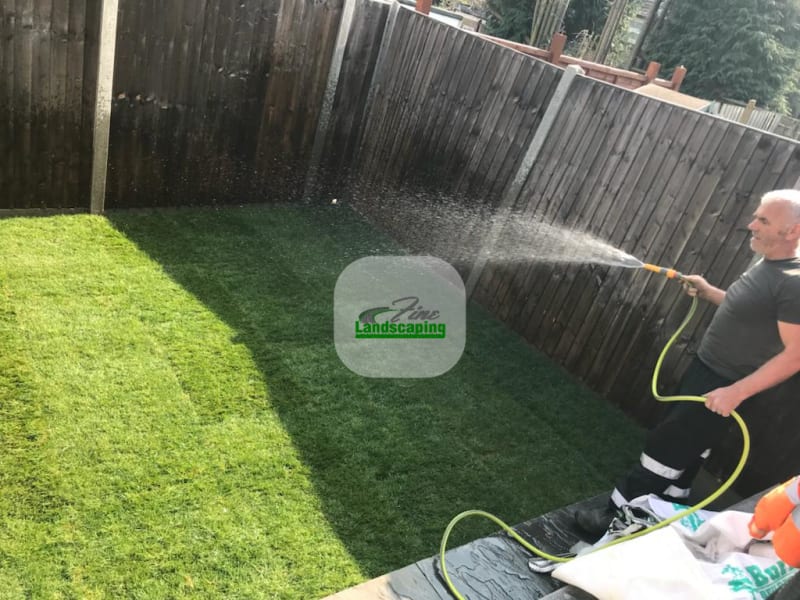
Watering is absolutely critical during the first month. Your new turf needs consistent moisture to establish roots into the soil below. In dry spells, water daily for the first week, then every other day for the following three weeks. Early morning watering is best, allowing the grass to dry before evening.
The unpredictable spring weather in South London and Surrey means you'll need to adjust your watering schedule according to rainfall. Check daily by lifting a corner of turf – if the soil beneath is dry, watering is needed.
Avoid walking on new turf for at least three weeks. The first mow should wait until the grass reaches about 5-6cm height, typically 2-3 weeks after laying. Set your mower to its highest setting and ensure the blades are sharp – ragged cuts damage new grass and create entry points for disease.
Within six to eight weeks, your new lawn should be fully established and ready for regular use. By summer, you'll have a beautiful green space that adds value to your property and provides the perfect setting for outdoor living.
If you're considering turfing your South London or Surrey garden this spring but feel overwhelmed by the process, the team at Fine Landscaping can handle everything from ground preparation through to aftercare advice, ensuring your new lawn thrives for years to come.