
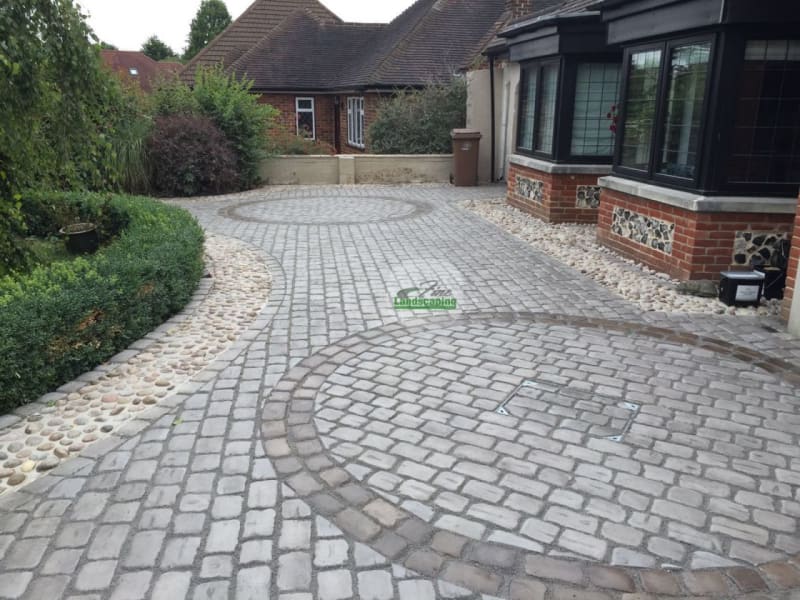
Croydon's dramatic transformation from suburban satellite to South London's bustling regeneration hotspot has created unique challenges for homeowners looking to upgrade their driveways. Whether you're in a Victorian terrace off South End, an Edwardian semi near Croydon Minster, or one of the new-build developments springing up across the town centre, the question of driveway materials has never been more relevant.
This April, as spring brings ideal conditions for groundwork and installation, we're seeing unprecedented interest in resin driveways across CR0. The combination of permeable drainage, low maintenance, and contemporary aesthetics makes resin bound surfacing particularly suited to Croydon's diverse property landscape.
Why Resin Driveways Work Particularly Well in Croydon
Croydon's geology presents specific challenges that make resin bound surfacing an intelligent choice. The underlying London clay, which dominates most of the borough, creates notoriously poor drainage conditions. This is especially problematic in the lower-lying areas near the Wandle headwaters, where localised pockets of Thanet Sand don't always prevent waterlogging during heavy rainfall.
Traditional block paving or tarmac driveways in Croydon often develop surface water pooling, particularly in the extensive Victorian and Edwardian streets radiating out from the town centre. Resin bound systems, being fully permeable, allow water to drain straight through to the sub-base, eliminating standing water and reducing the risk of ice formation during winter months.
We recently completed a driveway installation in Croydon on Park Lane where the homeowners specifically chose resin bound surfacing to address persistent drainage issues. The ground-floor property had suffered from water pooling for years, and the permeable resin system transformed both functionality and aesthetics.
Croydon Property Types and Suitable Resin Styles
The sheer variety of housing stock across Croydon means there's no one-size-fits-all approach to driveway design. What works beautifully for a 1960s housing block in Addiscombe might look entirely wrong on a Victorian terrace near Surrey Street Market.
Victorian and Edwardian Properties (South Croydon, Church Street Conservation Area)
For period properties, we typically recommend warmer aggregate blends that complement original brickwork and garden walls. Golden-toned or buff aggregates work particularly well with the red and yellow London stock bricks common in these areas. The Central Croydon Conservation Area and Church Street Conservation Area have specific guidelines about maintaining character, and while driveways aren't usually subject to strict planning controls, choosing sympathetic colours helps preserve street aesthetics.
These properties often have relatively narrow frontages (3-4 metres wide) with original garden walls or low brick boundaries. Resin bound surfacing in these contexts should enhance rather than dominate, typically using 10-12mm aggregate size for a refined finish.
1960s Housing Blocks and Post-War Developments
The functional architecture of Croydon's mid-century housing estates benefits from contemporary resin finishes. Cooler grey tones or even darker charcoal aggregates create clean, modern lines that complement the geometric forms of these buildings. These properties often have larger driveways (40-60m²) offering scope for creative design elements like contrasting borders or defined parking bays.
New-Build Regeneration Developments
The extensive new-build activity across Croydon has created hundreds of properties with parking spaces requiring appropriate surfacing. Many of these developments have poor subsoil quality due to builder's rubble and compacted clay, making proper preparation absolutely critical. We always excavate to virgin ground level, removing contaminated material before installing the sub-base.
Contemporary aggregate blends in silver-grey or graphite work beautifully with modern architectural palettes, and the clean finish aligns with the design-led aesthetic of regeneration properties.
Realistic Costs for Croydon Resin Driveways in 2026
Pricing for resin driveways across South London has stabilised in 2026 after the material cost fluctuations of previous years. For Croydon properties, you can expect the following investment levels:
| Driveway Size | Material Cost per m² | Total Project Cost | Typical Property Type |
|---|---|---|---|
| 20-30m² | £85-£110 | £2,400-£3,600 | Victorian terrace, narrow frontage |
| 35-50m² | £80-£105 | £3,200-£5,500 | Edwardian semi, standard drive |
| 55-75m² | £75-£100 | £4,800-£7,800 | Detached, larger suburban plot |
| 80m²+ | £70-£95 | £6,400+ | Multi-vehicle, commercial |
These costs assume standard preparation requirements. However, Croydon's London clay frequently necessitates additional drainage measures. Properties on George Street or near the town centre commercial areas may require enhanced sub-base depth due to heavier usage patterns and proximity to bus routes causing ground vibration.
What Affects Your Croydon Driveway Cost?
- Ground conditions: London clay requires proper membrane installation and potentially enhanced drainage, adding £300-£800 to typical projects
- Access restrictions: Properties near High Street or in terraced rows with limited vehicle access may incur additional labour costs (£200-£500)
- Existing surface removal: Removing old concrete or deteriorated tarmac adds £15-£25 per m² to project costs
- Edging requirements: Installing new brick or sett edging to define boundaries costs £25-£45 per linear metre
- Pattern or design work: Incorporating contrasting borders, company logos, or decorative patterns adds £400-£1,200 depending on complexity
The London Clay Challenge: Preparation Is Everything
We cannot overstate the importance of proper groundwork preparation in Croydon. The London clay that underlies most of CR0 expands when wet and contracts during dry periods, creating significant movement that will crack or deform inadequately prepared surfaces.
For every Croydon driveway we install, we excavate to minimum 200mm depth, often 250mm where clay conditions are particularly challenging. The sub-base preparation is what determines whether your resin driveway lasts 15-20 years or starts failing within five.
Our standard specification for Croydon properties includes:
- Full excavation to remove existing surface and contaminated subsoil
- Geotextile membrane installation to prevent clay migration into the sub-base
- Minimum 150mm compacted MOT Type 1 sub-base in three layers
- Additional drainage channels where ground falls are inadequate
- Edging restraints to prevent lateral movement
- Final resin bound surface at 18-20mm depth
This preparation is particularly crucial for new-build properties where builder's rubble has been used as infill. We recently worked on a regeneration development where excavation revealed brick waste, timber offcuts, and plastic sheeting within the top 300mm of 'soil' – completely unsuitable as a driveway foundation.
Spring 2026: The Perfect Time for Installation
April represents ideal conditions for resin driveway installation across Croydon. The combination of moderate temperatures (typically 12-16°C), lower rainfall probability, and drying ground conditions creates optimal circumstances for both groundwork and resin application.
Resin bound systems require ambient temperatures above 5°C during installation and curing. Spring weather provides consistent conditions without the extreme heat of summer (which can cause too-rapid curing) or the wet, cold challenges of autumn and winter installation.
The London clay beneath Croydon properties is currently in transition from winter saturation to spring drying. This April period allows us to excavate and work the ground effectively without the waterlogging issues common from November through February, or the concrete-hard conditions that develop during prolonged summer dry spells.
Real Croydon Projects: What Works in Practice
Beyond our Park Lane project mentioned earlier, we've completed numerous resin installations across CR0's varied housing stock. Each project demonstrates how material choice and design approach must respond to specific property characteristics and local conditions.
South End Victorian Terrace Project
A narrow 22m² frontage with original boundary walls required careful colour selection to complement the yellow London stock brickwork. We used a golden aggregate blend with a charcoal border, creating definition without overwhelming the compact space. Enhanced drainage was essential due to the property sitting at the bottom of a sloping street, requiring French drain installation along the boundary.
Addiscombe Semi-Detached Installation
A standard 1930s semi with 48m² of existing, cracked concrete driveway. Removal revealed severely compacted clay and inadequate sub-base (just 75mm of hardcore). Complete excavation to 250mm depth, new drainage falls, and a contemporary silver-grey resin finish transformed both functionality and kerb appeal. Total investment: £4,600.
These projects illustrate that successful driveways in Croydon require understanding of local conditions, not just material specification.
Planning Considerations and Council Requirements
The London Borough of Croydon, like all London councils, requires that new or replacement driveways over 5m² use permeable materials or provide adequate drainage to prevent surface water runoff onto public highways. Resin bound surfacing automatically satisfies this requirement, being fully permeable.
For properties within the Central Croydon Conservation Area or Church Street Conservation Area, you should consult the council's planning department before significant alterations to front boundaries or garden character. However, like-for-like driveway replacement rarely requires planning permission, even within conservation zones.
Properties near Fairfield Halls or the Croydon Clocktower may have additional considerations if they're listed or within the setting of listed buildings. We always recommend confirming requirements before commencing work.
Maintenance and Longevity in Croydon Conditions
Resin bound driveways are remarkably low-maintenance, but Croydon's specific challenges require awareness. Proximity to the town centre and commercial areas along George Street or High Street means increased likelihood of oil stains, chewing gum, and general urban debris.
Regular pressure washing (annually or bi-annually) maintains appearance and ensures drainage performance. The permeable structure means dirt and contaminants don't accumulate on the surface as they do with traditional paving. For properties near Surrey Street Market or areas with mature tree coverage, more frequent sweeping prevents organic material blocking the surface voids.
Properly installed resin driveways in Croydon should deliver 15-20 years of service life before requiring attention. The key determinant is sub-base quality – which is why we invest heavily in preparation rather than cutting corners to reduce quotations.
Choosing the Right Contractor for Your Croydon Project
The rapid growth in resin driveway popularity has unfortunately attracted inexperienced operators offering unrealistically low prices. These installations frequently fail within 2-5 years due to inadequate preparation, incorrect resin-to-aggregate ratios, or sub-standard materials.
When evaluating contractors for your Croydon driveway project, verify:
- Experience with London clay conditions and local ground preparation requirements
- Willingness to excavate to appropriate depth rather than surfacing over existing bases
- Use of quality resin systems (Resiblock, Addagrip, or equivalent) rather than budget alternatives
- Comprehensive insurance and guarantees (minimum 10 years for materials and workmanship)
- Portfolio of local projects you can view or visit
We encourage homeowners to get a free quote from multiple contractors, comparing not just price but specification detail, preparation methodology, and material quality.
Ready to Transform Your Croydon Driveway?
Fine Landscaping has completed dozens of resin driveway installations across CR0, from Victorian terraces to modern regeneration properties. Our understanding of local ground conditions and property types ensures your driveway will look beautiful and perform flawlessly for decades.
Frequently Asked Questions
How much does a resin driveway cost in Croydon?
For a typical Croydon property with a 40-50m² driveway, expect to invest £3,500-£5,500 including groundwork preparation, sub-base installation, edging, and resin bound surfacing. Costs vary based on ground conditions, with London clay often requiring enhanced drainage measures. Properties requiring extensive excavation or access restrictions may cost more, whilst larger driveways benefit from economies of scale with per-metre costs reducing to £70-£95 for projects over 80m².
How long does resin driveway installation take in Croydon?
A standard 45m² driveway typically requires 3-5 working days from excavation to completion. Day one involves removing existing surfaces and excavating to required depth. Days two and three cover sub-base installation, compaction, and edging work. The final day or two involves resin application and finishing. London clay conditions may extend groundwork phases if drainage solutions are required. You can walk on the surface after 4-6 hours and drive on it after 24 hours in spring temperatures.
Do I need planning permission for a resin driveway in Croydon?
Most Croydon driveway replacements don't require planning permission, even within conservation areas like Central Croydon or Church Street, provided you're not significantly altering boundary walls or garden character. Resin bound surfacing is fully permeable, automatically satisfying London Borough of Croydon drainage requirements for surfaces over 5m². However, if you're creating a new vehicular access or significantly enlarging an existing driveway, you should consult the council's planning department. Listed buildings or properties adjacent to listed structures may have additional considerations.
Why is proper preparation so important for Croydon driveways?
Croydon sits predominantly on London clay, which expands when wet and contracts during dry periods, creating significant ground movement. Without adequate excavation depth (minimum 200mm), proper membrane installation, and well-compacted MOT Type 1 sub-base, this movement will crack or deform the resin surface within a few years. New-build properties across Croydon's regeneration zones often have builder's rubble as subsoil, requiring complete removal before installation. Proper preparation is the difference between a 15-20 year lifespan and premature failure.
What colour resin works best for different Croydon property types?
Victorian and Edwardian properties in South Croydon and conservation areas benefit from warmer tones like golden, buff, or honey aggregates that complement traditional brickwork. Mid-century housing blocks and 1960s developments suit contemporary grey or charcoal finishes that enhance their geometric architecture. New-build regeneration properties work beautifully with silver-grey or graphite blends that align with modern design palettes. The key is choosing aggregates that enhance rather than clash with existing architectural materials and the character of your street.