
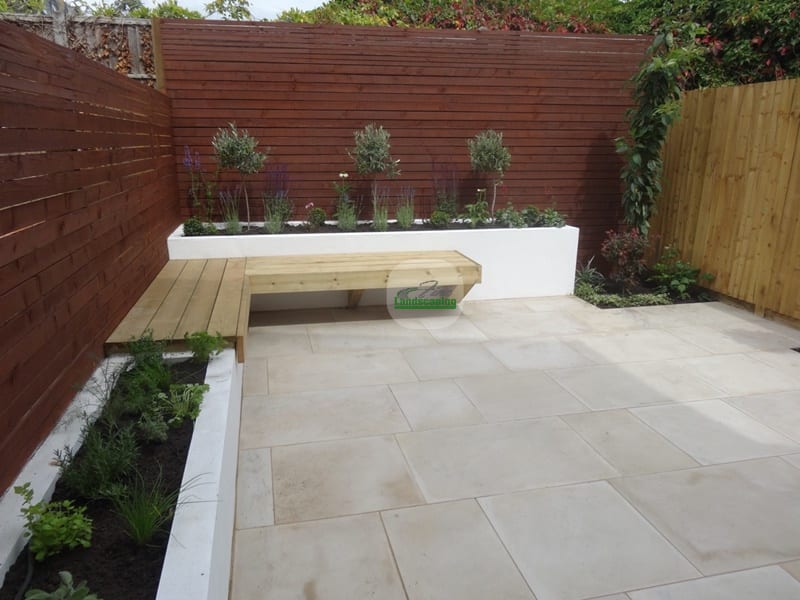
Spring 2026 is the perfect time to be planning a new patio, and if you're researching materials, you've likely narrowed it down to two popular choices: porcelain paving or natural stone. Both create stunning outdoor spaces, but they differ significantly in cost, performance, and maintenance requirements.
We've installed hundreds of patios across South London and Surrey — from Norbury to Bromley, Croydon to Dulwich — and homeowners always ask us the same question: which is actually better? The honest answer is that it depends on your priorities, and we're here to help you make the right choice for your garden.
Comparison Table: Porcelain vs Natural Stone
| Criteria | Porcelain Paving | Natural Stone |
|---|---|---|
| Cost per m² | £55-£95 (materials) | £35-£80 (materials) |
| Installation Cost | £85-£120 per m² (total) | £75-£110 per m² (total) |
| Lifespan | 50+ years | 30-50 years |
| Slip Resistance | Excellent (R11 rated) | Good (varies by finish) |
| Stain Resistance | Excellent (non-porous) | Poor to moderate (requires sealing) |
| Colour Consistency | Very uniform | Natural variation |
| Maintenance | Very low (occasional clean) | Moderate (sealing, cleaning) |
| Frost Resistance | Excellent (minimal water absorption) | Good (depends on stone type) |
| Environmental Impact | Manufactured product | Natural quarried material |
| Aesthetic Appeal | Contemporary, precise | Traditional, characterful |
Porcelain Paving: The Modern Choice
Porcelain paving has exploded in popularity over the past five years, and it's easy to see why. These man-made tiles are manufactured at incredibly high temperatures, creating a dense, hard-wearing surface that's practically indestructible.
What makes porcelain particularly appealing for busy South London families is its resistance to pretty much everything — stains, scratches, moss, and weathering. We've installed porcelain patios in Streatham and Crystal Palace that still look brand new after years of use.
Pros of Porcelain Paving
- Extremely low porosity: Virtually no water absorption means no staining from spills, oils, or tannins
- Consistent appearance: Every tile looks identical, creating a uniform, contemporary finish
- Minimal maintenance: A simple sweep and occasional wash with soapy water is all you need
- Excellent slip resistance: Most porcelain slabs are R11 rated, making them safer when wet
- Frost-proof: No risk of cracking or spalling during harsh winters
- Fade-resistant: Colours remain vibrant for decades without sealing
- Large format options: Available in slabs up to 1200mm x 600mm for a sleek, modern look
Cons of Porcelain Paving
- Higher upfront cost: Typically £10-£20 per m² more expensive than natural stone
- Harder to cut: Requires diamond blades and specialist tools, increasing installation time
- Can feel "too perfect": Some homeowners prefer the natural variation of stone
- Limited recycling options: Not a natural material, though extremely long-lasting
- Can be slippery if polished: Always choose textured or R11-rated finishes for outdoor use
Lifespan and Durability
Porcelain is genuinely built to last a lifetime. With proper installation on a solid base, you're looking at 50+ years of service with virtually no degradation. We've never been called back to replace damaged porcelain due to weathering or normal wear.
The key is the installation quality. Porcelain is rigid and won't flex like natural stone, so the sub-base must be perfectly prepared and compacted to prevent any movement.
Natural Stone Patios: Timeless Character
Natural stone — particularly Indian sandstone, limestone, and granite — has been the traditional choice for British patios for centuries. Each piece is unique, quarried from the earth with its own colour variations, fossils, and natural markings.
For period properties in areas like Dulwich, Beckenham, and Penge, natural stone often feels more appropriate. It develops a beautiful patina over time and blends seamlessly with traditional garden designs.
Pros of Natural Stone
- Natural beauty: Each slab is unique with authentic colour variation and texture
- Lower material cost: Indian sandstone starts from £35 per m² for quality materials
- Environmental credentials: A natural quarried product with minimal processing
- Traditional aesthetic: Perfect for period properties and cottage gardens
- Ages beautifully: Develops character over time rather than looking worn
- Easier to cut and work with: Can be shaped on-site without specialist equipment
- Repair-friendly: Individual slabs can be replaced if damaged
Cons of Natural Stone
- Requires regular sealing: Every 2-3 years to prevent staining and weathering
- Stains more easily: Porous surface absorbs oils, wine, leaf tannins
- More maintenance: Needs regular cleaning and treatment to look its best
- Colour variation: Can be inconsistent between batches (though some love this)
- Prone to algae and moss: Especially in shaded gardens common in South London
- Some types can flake: Lower-quality sandstone may delaminate in frost
- Fades over time: Natural colours can lighten with UV exposure
Lifespan and Durability
Quality natural stone, properly installed and maintained, will last 30-50 years. We've seen Victorian York stone patios still going strong after more than a century, though they do require ongoing care.
The key factor is choosing the right stone. Premium Indian sandstone, granite, and limestone all perform well in the UK climate, while cheaper grades can deteriorate within 10-15 years.
We always recommend getting the groundwork right first — whether you choose porcelain or stone, the sub-base and drainage are what determine long-term performance. A properly prepared foundation costs the same regardless of surface material.
Which Should You Choose?
The decision really comes down to three factors: your budget, your property style, and how much maintenance you're willing to do. Let's break down the best choice for different situations.
Choose Porcelain Paving If:
- You want a contemporary, architectural look
- You have a modern property or extension
- Low maintenance is a priority (young families, busy professionals)
- You entertain frequently and worry about stains
- Your patio gets heavy use (children, pets, furniture)
- You're happy to invest more upfront for long-term savings
- You have a shaded area prone to algae growth
Choose Natural Stone If:
- You prefer traditional, characterful aesthetics
- You have a period property or cottage-style garden
- Budget is your primary constraint
- You appreciate natural variation and uniqueness
- You don't mind occasional maintenance tasks
- You want to match existing stonework in your garden
- Environmental impact concerns you (though both have pros and cons)
Real-World Scenario: The Sydenham Garden Renovation
Last spring (2025), we worked with the Thompson family in Sydenham who were torn between these exact options. They had a 30m² south-facing patio area off their kitchen extension and a budget of around £3,500.
After discussing their lifestyle — two young children, a dog, and regular barbecues — we recommended porcelain paving. Yes, it pushed their budget slightly (final cost was £3,750), but the non-porous surface meant no worrying about dropped food, muddy paws, or BBQ grease staining the patio.
We installed large-format 900mm x 600mm grey porcelain slabs with minimal joints, creating a sleek extension of their indoor space. Twelve months on, the patio still looks pristine with nothing more than the occasional sweep and jet wash.
Had they been retired homeowners with a period cottage and a love of traditional gardens, we'd have recommended premium Indian sandstone instead. Context is everything when choosing patio materials.
Installation Considerations for Both Materials
Regardless of which material you choose, successful installation requires the same professional approach. We always follow this process for patios across South London and Surrey:
- Excavation: Remove existing surface and dig to appropriate depth (typically 200-250mm)
- Sub-base: Install and compact 100-150mm of MOT Type 1 hardcore
- Drainage: Ensure proper falls (1:80 minimum) away from buildings
- Bedding layer: 30-50mm mortar bed (or 20mm porcelain paving adhesive for porcelain)
- Laying: Professional installation with consistent joints and levels
- Jointing: Appropriate pointing (resin for porcelain, mortar for stone)
- Sealing: Apply quality sealant to natural stone (not needed for porcelain)
The installation timeline for a typical 25m² patio is 3-5 days regardless of material. April and May are ideal months for patio installation in South London — the ground has dried from winter, and you'll have the whole summer to enjoy it.
Maintenance: What to Expect Long-Term
The ongoing maintenance requirements differ significantly between these materials, and this should factor into your total cost calculation.
Porcelain Paving Maintenance
Annual tasks: Sweep regularly, jet wash once or twice a year with plain water. That's genuinely it. No sealing, no special treatments, no stain removal products needed.
Lifetime cost: Virtually zero beyond occasional cleaning.
Natural Stone Maintenance
Annual tasks: Regular sweeping, jet washing (careful with pressure on sandstone), treating moss/algae growth in autumn, checking for loose or damaged slabs.
Every 2-3 years: Re-seal the entire patio with quality stone sealant (£150-£300 for professional application on 25m², or £50-£80 DIY for materials).
Lifetime cost: Approximately £1,500-£3,000 over 30 years for a typical patio.
When you factor in maintenance costs, the price gap between porcelain and natural stone narrows considerably over the patio's lifespan. For many of our clients in Purley and Norbury, this tips the decision toward porcelain.
Making Your Final Decision
Both porcelain paving and natural stone create beautiful, functional outdoor spaces. We've installed both materials across hundreds of South London gardens, and satisfied clients with each option.
If you're still unsure, we're happy to show you examples of both materials, discuss your specific garden conditions, and provide accurate quotes. Spring 2026 is the perfect time to get your patio project underway — we're booking installations for May and June right now.
Our team serves all of South London and Surrey, from complete garden transformations to straightforward patio installations. We'll help you make the right choice for your property, lifestyle, and budget — no pressure, just honest professional advice.
Ready to Get Started on Your New Patio?
Get a free, no-obligation quote for porcelain or natural stone patio installation. We'll visit your property, discuss your options, and provide detailed pricing with no hidden costs.
Get Free QuoteFrequently Asked Questions
How much does a porcelain patio cost compared to natural stone?
In April 2026, porcelain paving typically costs £85-£120 per m² installed in South London, while natural stone (Indian sandstone) costs £75-£110 per m² installed. For a typical 25m² patio, that's roughly £2,125-£3,000 for porcelain versus £1,875-£2,750 for natural stone. However, when you factor in long-term maintenance costs (sealing natural stone every 2-3 years), the lifetime cost difference is much smaller.
Which is more slippery when wet: porcelain or natural stone?
Quality porcelain paving is actually less slippery when wet, provided you choose textured or R11-rated slabs specifically designed for outdoor use. Natural stone varies depending on type and finish — riven sandstone offers good grip, while smooth limestone can be slippery. We always recommend R11-rated porcelain or textured natural stone finishes for patios, especially in shaded areas that stay damp.
How long does it take to install a patio?
A typical 25m² patio takes 3-5 days to install professionally, regardless of whether you choose porcelain or natural stone. This includes excavation, sub-base preparation, laying, and jointing. Porcelain can take slightly longer due to the specialist cutting required and adhesive setting times. Weather conditions in spring are usually ideal for patio installation, with work typically scheduled between April and October.
Does porcelain paving crack or break easily?
Porcelain is extremely hard and durable, but it's also rigid, which means proper installation is crucial. When laid correctly on a well-compacted sub-base with full adhesive coverage, porcelain virtually never cracks under normal use. Problems only occur with inadequate ground preparation or installation shortcuts. We've installed hundreds of porcelain patios across South London with zero cracking issues when proper methods are followed.
Do I need to seal porcelain paving?
No, porcelain paving doesn't require sealing — in fact, it's one of its biggest advantages. The manufacturing process creates an extremely dense, non-porous surface that's naturally stain-resistant and weatherproof. Natural stone, on the other hand, should be sealed every 2-3 years to protect against staining, weathering, and algae growth. This makes porcelain significantly lower maintenance over its lifetime.