
With July bringing peak garden season to Bromley, there's never been a better time to sort out your garden fencing. Whether you're looking out over a well-established garden on Widmore Road or managing a property near the Churchill Theatre, the right fence can transform how you enjoy your outdoor space during these long summer evenings.
But fencing in BR1 comes with its own unique challenges. The heavy Weald clay that dominates Bromley's geology behaves very differently from the London clay found in northern boroughs, and with the London Borough of Bromley covering the largest land area in the capital, there's extensive Tree Preservation Order coverage to navigate too.
We've been installing Fencing in Bromley for years, and we've learned that what works beautifully in Beckenham might need a different approach when dealing with the drainage issues common along Hayes Lane or the conservation area requirements near Bromley Town Centre.
Why Bromley Gardens Need Special Fencing Considerations
Those beautiful 18-25 metre deep gardens characteristic of Bromley's 1930s semi-detached properties weren't just designed for aesthetics. The generous proportions reflect an era when outdoor space genuinely mattered, and many still feature the original rockeries and ornamental ponds from decades of careful cultivation.
But beneath that established planting lies Bromley's biggest challenge: heavy Weald clay soil with notoriously poor drainage. Unlike the lighter soils in neighbouring areas, this clay expands when wet and contracts when dry, putting enormous pressure on fence posts throughout the year.
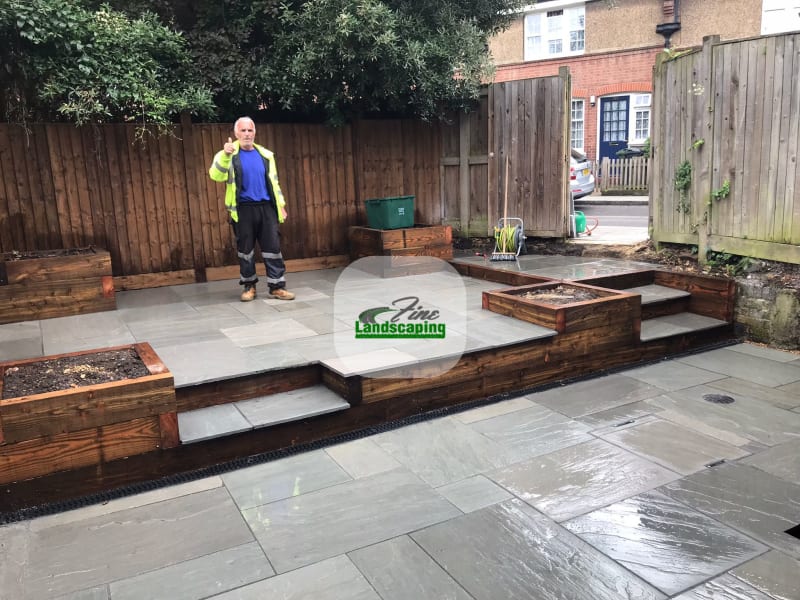
We saw this firsthand during a recent project on Plaistow Lane, where we installed new closeboard fencing alongside a large Indian sandstone patio. The homeowners had replaced their fence three times in fifteen years because previous installers hadn't accounted for the clay's behaviour. Our solution involved deeper-set concrete foundations and gravel backfill for drainage—it's been solid for two years now.
Understanding Conservation Area Requirements in BR1
If your property falls within the Bromley Town Centre Conservation Area or Shortlands Conservation Area, you'll need to be particularly careful about fencing choices. While most residential fencing doesn't require planning permission, conservation areas impose additional restrictions.
Generally, you can install or replace fencing up to 1 metre high at the front boundary and 2 metres elsewhere without permission. But in conservation areas, the London Borough of Bromley takes a closer look at materials and styles to ensure they're sympathetic to the area's character.
Those substantial Edwardian family homes on leafy avenues near Church House Gardens often suit traditional close-board oak fencing or painted picket styles rather than modern composite panels. We always recommend checking with planning before starting work if you're in a conservation area—it saves potential headaches later.
Working Around Protected Trees
Bromley has extensive TPO coverage, and those mature specimen trees that make the borough so attractive can complicate fencing projects. If your fence line runs near a protected tree, you'll need to maintain adequate distance from the root protection area.
This often means creative solutions. We've designed panel layouts that curve around root zones, installed post-and-rail fencing with wider spacing to minimise root disturbance, and worked with tree surgeons to ensure compliance. Boundary disputes over overhanging branches are common here, but cutting roots during fence installation can lead to serious legal and ecological consequences.
Choosing the Right Fencing Style for Bromley Properties
Your choice of fencing should reflect both your property type and the specific conditions of your plot. Here's what we typically recommend for different Bromley property styles:
1930s Semi-Detached and Detached Houses
These properties dominate much of Bromley and typically have generous side access and rear gardens. Close-board fencing remains the most popular choice—it's strong, private, and suits the period aesthetic perfectly.
For the challenging Weald clay, we always use pressure-treated posts set in concrete with gravel drainage at the base. The posts take the brunt of soil movement, so quality here matters more than anywhere else.
Victorian Properties Near Town Centre
Victorian terraces and villas closer to The Glades Shopping Centre often have smaller courtyard gardens but original boundary walls at the front. Here, we frequently install painted picket fencing or traditional iron railings that complement the architectural style.
These properties often sit in or near conservation areas, so material choices need careful consideration. We've had excellent results with powder-coated aluminium railings that mimic traditional wrought iron but require virtually no maintenance.
Modern Apartment Blocks
Ground-floor flats with private gardens need secure, attractive fencing that clearly defines boundaries. Hit-and-miss fencing works well here—it provides privacy while maintaining light flow, crucial for smaller urban gardens.
Composite fencing has become increasingly popular for these properties. It handles the clay soil movement better than timber, won't warp or rot, and the initial investment pays off over a 25-year-plus lifespan with zero maintenance.
| Fencing Type | Cost per Linear Metre | Lifespan | Best for Bromley Clay? |
|---|---|---|---|
| Closeboard (Pressure-treated) | £85-£120 | 15-20 years | Excellent with proper foundations |
| Featheredge | £75-£110 | 15-20 years | Very good with gravel drainage |
| Composite Panels | £140-£190 | 25+ years | Outstanding—minimal movement |
| Post & Rail (Oak) | £60-£95 | 20-25 years | Good—less affected by soil |
| Picket Fencing | £65-£100 | 12-18 years | Good if painted regularly |
Installation Challenges Specific to Bromley's Clay Soil
We can't stress enough how different working with Weald clay is compared to other soil types. During wet periods—and Bromley certainly gets its share of rain—the clay becomes almost plastic, making it nearly impossible to achieve clean post holes.
In summer, the same clay sets like concrete, causing it to shrink away from fence posts and creating gaps that fill with water come autumn. This cycle of expansion and contraction is relentless.
We always recommend concrete-set posts with gravel drainage for Bromley gardens. It costs slightly more upfront, but you'll avoid the expense and frustration of replacing leaning fence panels every few years.
The Proper Installation Process
For Bromley's conditions, here's our standard approach:
- Dig deeper: We excavate post holes to 750mm minimum, considerably deeper than the standard 600mm recommended elsewhere
- Add drainage: A 150mm layer of gravel at the base prevents water pooling around the post base
- Set in concrete: We use postcrete or ballast mix, ensuring the post is perfectly vertical
- Allow curing time: Unlike quick jobs elsewhere, we wait 48-72 hours before attaching panels—crucial in clay soil
- Install gravel boards: These protect the fence panels from ground moisture and extend lifespan significantly
Properties along Palace Road and the more elevated parts of Plaistow Lane sometimes have better drainage, but we never assume. A quick drainage test—digging a hole and filling it with water—tells us everything we need to know about the site conditions.
Managing Drainage Issues When Installing Fencing
Those ageing ornamental ponds that characterise many established Bromley gardens often create localised drainage problems. If your fence line runs near one, or if you're planning to remove an old pond, you'll need to think carefully about water management.
We often combine Fencing services with drainage solutions—installing French drains alongside fence lines or creating soakaways to handle excess water. This is particularly important on the lower-lying areas near Bromley Palace Park where water naturally accumulates.
Maximising Your Outdoor Space This Summer
With July bringing perfect weather for garden enjoyment, good fencing does more than mark boundaries—it creates the backdrop for outdoor living. We've noticed a real trend in Bromley toward integrating fencing with broader garden projects.
That Plaistow Lane project we mentioned earlier is a perfect example. The family wanted to maximise their garden's potential for entertaining, so we coordinated the fence installation with a new patio area featuring a built-in barbecue. The fence provided privacy for the entertaining space while the warm-toned timber complemented the Indian sandstone beautifully.
If you're thinking about garden improvements, consider how fencing integrates with other elements. A new fence might be the perfect opportunity to add decking in a sunny corner, create defined zones with low garden walls, or install artificial grass in high-traffic areas near the fence line.
Maintenance and Longevity in Bromley Conditions
Even the best-installed fence needs maintenance to handle Bromley's climate and soil conditions. The combination of wet winters and dry summers puts real stress on timber fencing.
We recommend annual treatments for timber fences—a quality preservative applied in spring protects against moisture ingress and UV damage during summer. Pay particular attention to the bottom of fence panels where they meet gravel boards, as this is where rot typically starts.
For those Victorian and Edwardian properties where painted fencing is traditional, budget for repainting every 4-5 years. It's worth the investment to maintain both appearance and weather protection.
Planning Your Fencing Project
Summer is actually an ideal time to plan fencing work, even if you schedule installation for autumn. The ground conditions are easier to assess when dry, you can see exactly how you use your garden during peak season, and you'll have time to navigate any planning requirements if you're in a conservation area.
For more comprehensive guidance on choosing the right fence for your property, see our complete guide for South London, which covers everything from planning permission to material choices.
If you're in Bromley, Beckenham, Chislehurst, or Hayes and want to discuss your specific fencing needs, we're always happy to visit and provide honest advice. Every garden is different, and those well-proportioned Bromley plots deserve fencing solutions tailored to their unique conditions.
Ready to Get Started?
Whether you need new fencing for a 1930s semi in BR1 or you're renovating a Victorian garden near the town centre, we'll provide a free, detailed quote based on your property's specific needs and the challenging Weald clay conditions.
Get Free QuoteFrequently Asked Questions
How much does garden fencing cost in Bromley?
Garden fencing in Bromley typically costs between £75-£120 per linear metre for standard closeboard or featheredge fencing, including installation. Composite fencing ranges from £140-£190 per metre. Prices in BR1 are often slightly higher than other areas because the heavy Weald clay requires deeper post foundations and additional drainage measures. A typical 20-metre rear garden fence usually costs £1,700-£2,400 fully installed with concrete posts and gravel boards.
Do I need planning permission for a fence in Bromley?
Generally, you don't need planning permission for fencing up to 1 metre high at the front boundary or 2 metres elsewhere in Bromley. However, if your property is in the Bromley Town Centre Conservation Area or Shortlands Conservation Area, stricter rules apply and the council may require approval for materials and styles. Properties with Tree Preservation Orders also need careful consideration to avoid damaging protected root zones. We always recommend checking with the London Borough of Bromley planning department before starting work in conservation areas.
Why do fence posts fail so often in Bromley gardens?
Fence posts fail in Bromley primarily because of the heavy Weald clay soil that dominates the borough. This clay expands when wet and contracts when dry, creating constant movement that loosens posts set at standard depths or without proper drainage. Unlike the London clay found further north, Weald clay is heavier and more prone to waterlogging. Posts need to be set at least 750mm deep in concrete with gravel drainage at the base to withstand these challenging conditions. Many failed fences we replace were installed to standard specifications that simply don't work in Bromley's unique soil.
How long does fence installation take in Bromley?
A typical 20-metre fence installation in Bromley takes 2-3 days. Day one involves removing old fencing and excavating post holes (harder work in clay soil than other areas). Day two covers setting posts in concrete and allowing cure time—we wait 48-72 hours in Bromley due to the clay's moisture retention. Day three involves fitting panels, gravel boards, and finishing details. Projects may take longer if we encounter drainage issues, protected tree roots, or need to work around established rockeries and ponds common in BR1 gardens.
What's the best fencing material for Bromley's clay soil?
Composite fencing performs best in Bromley's heavy Weald clay because it doesn't absorb moisture and handles soil movement without warping. However, pressure-treated timber closeboard remains popular and performs well when properly installed with deep concrete foundations and gravel drainage. For Bromley conditions, we always prioritise the quality of installation over material choice—even the best fencing material will fail if posts aren't set correctly for the clay soil. Oak post-and-rail fencing also works excellently as it's naturally more flexible and less affected by ground movement.