
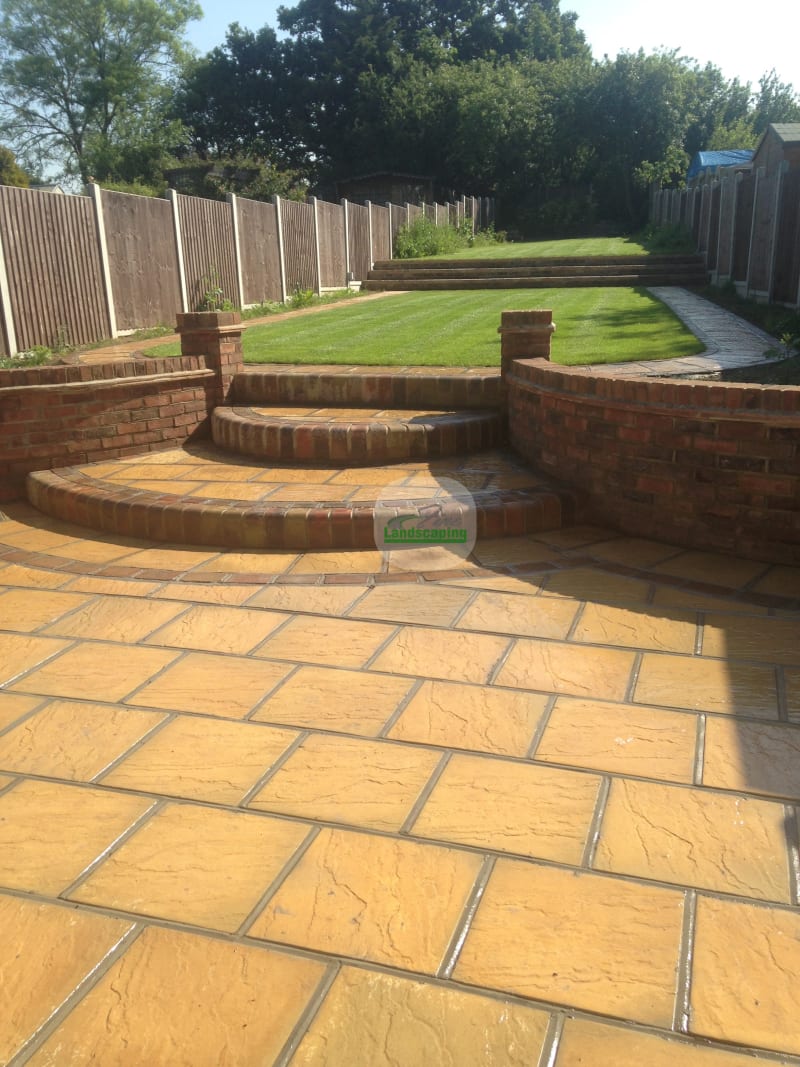
The front gardens along Norbury Crescent and Green Lane tell a story. These Edwardian and 1920s properties were designed with generous front spaces that welcomed visitors and showcased the homeowner's pride. Yet many SW16 front gardens now struggle with their identity — caught between parking pressure, outdated layouts, and neglected potential.
As Norbury's local landscaping specialists, we've transformed dozens of front gardens in this area. We understand what makes these spaces unique: the heavy clay soil that waterlogs in winter, the period features worth preserving, and the balance between kerb appeal and practical modern needs.
This guide shares front garden makeover ideas specifically for Norbury homes, drawing on our experience with the local soil conditions and property styles that define SW16.
Understanding Norbury's Front Garden Challenges
Before diving into design ideas, you need to understand what makes Norbury front gardens different from those in neighbouring areas like Streatham or Thornton Heath.
The heavy London clay here is particularly unforgiving in front gardens. Unlike rear gardens where drainage issues might just mean a boggy lawn, front garden waterlogging creates pooling near your entrance, stained paving, and that perpetual damp smell. We see this constantly along London Road and Pollards Hill South.
Many Norbury properties also have subsidence history. This means any front garden redesign needs careful consideration of planting near foundations and proper root barriers. The Victorian terraces near the station are particularly susceptible.
Front gardens here also face specific pressure for driveway conversions, though the Garden Design in Norbury approach we recommend balances parking with planting and permeability.
Design Styles That Work for Period Properties
Your front garden should complement your home's architecture, not fight against it. Here's what works for Norbury's characteristic property types.
For Edwardian Semis (Norbury Crescent Area)
These homes deserve front gardens with structure and formality. Think low brick walls with pier caps, symmetrical planting beds, and quality natural stone paving. Indian sandstone in buff or grey tones works beautifully.
We recently completed a flagship project on Norbury Crescent that showcased this approach. The front garden featured retained original tile path edging, new Indian sandstone steps, and deep mixed borders filled with evergreen structure plants that look good year-round despite the clay soil.
Box hedging (where you can maintain it) or alternative evergreens like Ilex crenata provide that classic formal edge. Raised beds solve drainage issues while adding architectural interest.
For Victorian Terraces (Station Area)
Smaller front gardens need simpler, more focused designs. A well-chosen feature tree (Japanese maple on improved soil, or multi-stem Amelanchier), quality paving, and carefully edited planting work better than trying to cram too much in.
On clay soil, resist the urge to plant moisture-lovers near the house. Yes, the soil stays wet in winter, but summer brings severe cracking. Go for tough Mediterranean plants in improved soil pockets instead.
For 1920s and Inter-War Houses
These properties suit a softer, more cottage-style approach. Curved path edges, mixed informal planting, and permeable gravel areas create relaxed charm while managing drainage naturally.
Consider resin bound surfacing for driveways — it's permeable, doesn't crack with clay movement, and looks far better than tired old tarmac.
Practical Front Garden Layouts for Norbury
Let's talk about layouts that actually work with SW16's challenges rather than pretending they don't exist.
The Balanced Driveway-Garden Split
Most Norbury front gardens can accommodate parking without sacrificing all greenery. A 2.5m wide driveway leaves room for substantial planting beds.
The key is proper drainage design from the start. On Norbury's clay, this means excavating deeper than you'd think (typically 300-350mm for driveways), installing a permeable sub-base, and ensuring water drains away from the house.
The No-Parking Garden
If you don't need parking, you have wonderful options. Front gardens can become true showcase spaces with the right design.
Consider these elements:
- A generous patio area near the bay window for container displays
- Curved gravel paths through planted borders (gravel on membrane solves clay drainage better than solid paving)
- A specimen tree as a focal point (positioned carefully away from foundations)
- Layered planting with evergreen structure and seasonal interest
- Statement garden walls with decorative brick detailing
The Compact Solution for Smaller Fronts
Victorian terraces near Norbury Station often have minimal front space. Here, quality trumps quantity every time.
A beautifully executed small entrance area — perhaps 3-4 square metres of premium paving, one perfect plant in an elegant pot, and a restored front wall — creates more impact than an overstuffed, cluttered space.
Materials That Handle Clay Soil
Material choice matters enormously on Norbury's clay. We've seen too many cracked concrete paths and failed rigid paving because homeowners (or their contractors) didn't respect the ground conditions.
| Material | Clay Suitability | Cost per m² | Notes |
|---|---|---|---|
| Resin Bound | Excellent | £85-£120 | Flexible, permeable, no cracking |
| Block Paving | Good | £65-£95 | Individual blocks move with clay, preventing cracks |
| Indian Sandstone | Good (if properly laid) | £75-£110 | Needs full mortar bed on concrete base with movement joints |
| Gravel | Excellent | £35-£55 | Best drainage solution, needs good edging |
| Concrete/Tarmac | Poor | £45-£70 | Cracks badly with clay movement |
We always recommend resin bound or block paving for Norbury driveways. The clay soil here will crack rigid surfaces — it's not a question of if, but when. Flexible materials move with the ground and look good for decades.
Planting for Clay and Kerb Appeal
Front garden planting in SW16 needs to look good from the street, survive clay conditions, and not threaten foundations. That's a tall order, but absolutely achievable.
Structure Plants That Work
Evergreen structure gives your front garden year-round presence. On improved soil (we typically excavate and replace with quality topsoil in planting areas), these perform well:
- Photinia 'Red Robin' — Red new growth, clay-tolerant, great for screening
- Pittosporum tenuifolium — Elegant foliage, various cultivars, handles clay
- Viburnum tinus — Winter flowers, tough as boots, evergreen
- Sarcococca confusa — Winter scent, shade-tolerant, compact
- Lavender — Only in raised, well-drained positions
Feature Trees for Front Gardens
Choose carefully. Trees near Norbury houses need non-invasive root systems due to subsidence concerns. Stay 5-6m minimum from foundations.
Safe choices include multi-stem Amelanchier (stunning spring blossom), Acer griseum (peeling bark interest), and Crataegus (hawthorn varieties). Avoid willows, poplars, and large oaks entirely.
You can learn more about our complete approach in our complete guide for South London.
Seasonal Interest for Summer
With summer entertaining season here in June 2026, consider how your front garden contributes to your home's welcoming atmosphere. Rose standards provide elegant focal points and divine scent. Hardy geraniums and nepeta soften hard edges with billowing June flowers.
We're also seeing increased interest in edible front gardens — blueberry bushes (acid-lovers, so need ericaceous compost in raised beds), espalier fruit trees on walls, and herb gardens near entrances.
Common Mistakes to Avoid
We've fixed enough failed front gardens around Green Lane and London Road to know what goes wrong. Here's what to avoid.
Ignoring Drainage
This is the number one failure point. On Norbury clay, every front garden redesign needs proper drainage consideration. That means:
- Adequate excavation depth (not just laying paving on clay)
- Permeable sub-base materials
- Fall away from the house (minimum 1:60)
- Consideration of where water goes when it leaves your property
The London Borough of Croydon requires permeable surfacing for new driveway conversions over 5m². But even if your project is exempt, good drainage protects your investment.
Planting Too Close to Buildings
Given Norbury's subsidence history, this is critical. Keep substantial planting at least 1.5m from walls. Trees need far more clearance — their eventual canopy spread is your guide.
Cheap Groundworks
The groundwork makes or breaks a front garden project. Skimping on excavation, using poor-quality sub-base, or inadequate drainage creates problems within months on clay soil.
Over-Planting Small Spaces
Victorian terrace front gardens suffer when homeowners cram in too much. A few choice plants, beautifully grown, always outshine a jumbled collection.
Planning Permission and Council Requirements
Most front garden makeovers in Norbury don't need formal planning permission, but there are important rules to know.
The London Borough of Croydon requires permeable surfacing (or adequate drainage to permeable areas) for new driveways over 5m². This applies to most Edwardian properties along Norbury Crescent and Green Lane.
Dropped kerbs require separate permission from Croydon Council's highways department. This process typically takes 6-8 weeks and costs £800-£1,200 including the work.
While Norbury has no designated conservation areas, character assessment areas apply. This mainly affects demolition of front boundary walls, which typically requires planning permission if the wall is original and contributes to street character.
Always check with get a free quote consultation — we guide clients through these requirements as part of every front garden project.
Budgeting Your Front Garden Makeover
What does a quality front garden transformation actually cost in Norbury? Here are realistic 2026 figures based on our recent local projects.
Basic refresh: £2,500-£4,000 (new planting, gravel path, wall repairs)
Mid-range makeover: £5,000-£8,500 (driveway, paving, planting, drainage)
Complete transformation: £9,000-£15,000+ (full redesign, walls, quality materials, substantial planting)
The wide range reflects property size, material choices, and complexity. Our Norbury Crescent project fell in the upper range because it included extensive drainage work (essential on that heavy clay), premium materials, and substantial structural elements.
For a typical Edwardian semi in SW16, we usually budget around £7,000-£9,000 for a complete front garden makeover including permeable driveway, quality paving, new planting, and proper drainage.
The Fine Landscaping Approach to Front Gardens
Being based in Norbury gives us intimate knowledge of what works here. We've learned (sometimes the hard way, early in our journey) that respecting the clay soil isn't optional — it's fundamental to every successful project.
Our process starts with proper ground assessment. We dig test pits to understand drainage and soil depth. On properties with subsidence history, we work with your structural engineer's recommendations.
We then design for longevity. That means:
- Deeper excavation than standard (300-350mm minimum for hard surfaces)
- Quality sub-base materials specified for clay conditions
- Proper drainage falls and outlets designed into every project
- Flexible materials that move with seasonal clay movement
- Planting in improved soil with appropriate species selection
Norbury clay taught us respect. Every project we do here reflects that hard-won understanding. Your front garden will be here for decades — we build accordingly.
Visit our Garden Design services page to see our broader approach, and get a free quote for your front garden makeover.
Ready to Transform Your Norbury Front Garden?
We're your local experts for front garden makeovers that work with SW16's challenging clay soil. Get a free, no-obligation quote and design consultation.
Get Free QuoteFrequently Asked Questions
How much does a front garden makeover cost in Norbury?
A typical front garden makeover for a Norbury semi costs £5,000-£9,000, including permeable driveway installation, quality paving, drainage work, and planting. Basic refreshes start around £2,500-£4,000 for replanting and path upgrades, while complete transformations with walls, premium materials, and extensive drainage can reach £12,000-£15,000. Norbury's heavy clay soil requires proper groundworks that add to costs but are essential for long-term success.
Do I need planning permission for a front garden driveway in Norbury?
Most Norbury front garden driveways don't need planning permission if you use permeable surfacing or drain to a permeable area. However, Croydon Council requires this for any hard surfacing over 5m². You'll need a separate dropped kerb application through highways, which takes 6-8 weeks and costs around £800-£1,200. If you're removing an original front wall on certain characterful streets, you may need permission for that element.
What's the best surface for driveways on Norbury's clay soil?
Resin bound surfacing and block paving work best on Norbury's heavy clay because they're flexible enough to move with seasonal soil expansion and contraction without cracking. Rigid materials like concrete and tarmac crack badly here as the clay shrinks in summer and swells in winter. Proper installation with deep excavation (300-350mm), quality sub-base, and good drainage is essential regardless of surface choice. We've seen properly installed resin bound and block paving last 20+ years on local clay soil.
How long does a front garden makeover take?
A typical Norbury front garden transformation takes 5-10 working days depending on scope. Simple replanting and path upgrades might take 2-3 days, while complete makeovers with driveway installation, drainage work, and substantial planting require 7-10 days. If you need a dropped kerb, add 6-8 weeks for council approval before work starts. Clay soil conditions can extend timelines slightly in very wet weather, as proper excavation and compaction aren't possible in waterlogged conditions.
What plants work in Norbury front gardens with clay soil?
Tough evergreens like Photinia 'Red Robin', Viburnum tinus, and Pittosporum tenuifolium handle Norbury's clay well when planted in improved soil. For feature trees, choose species with non-invasive roots like multi-stem Amelanchier or Acer griseum, positioned at least 5-6m from the house due to subsidence concerns. We typically excavate planting areas and backfill with quality topsoil to give plants the best start. Mediterranean plants like lavender only work in raised, well-drained positions, as clay stays too wet in winter despite summer cracking.