
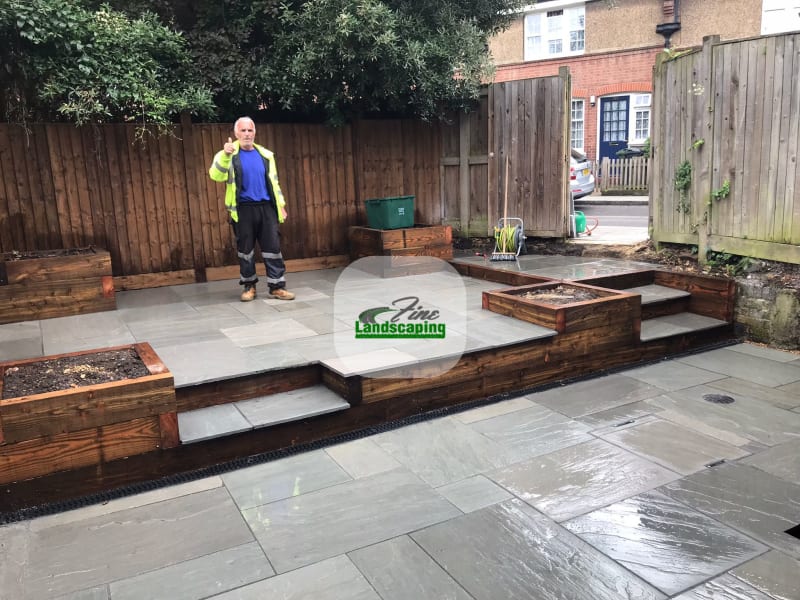
Summer 2026 has arrived in full force, and Sutton homeowners are making the most of their outdoor spaces. Whether you're enjoying evening barbecues in your inter-war semi's garden or creating a peaceful retreat in your Victorian terrace near the High Street, the right fencing can transform how you use your garden during these long, sunny days.
At Fine Landscaping, we've installed Fencing in Sutton for over two decades, and we understand that SM1 properties present unique challenges and opportunities. The chalk soil conditions, conservation area requirements, and the distinct character of 1930s suburban gardens all influence which fencing solutions work best.
Understanding Sutton's Garden Character
Sutton's gardens reflect the area's predominantly inter-war development, with many properties retaining their original 1930s layouts complete with curved paths and rockeries. These classic suburban gardens typically feature well-tended lawns and rose beds, often bounded by mature privet or hawthorn hedging that's now reaching the end of its useful life.
The soil conditions across SM1 – Upper Chalk with a clay-with-flints cap in higher areas – provide excellent drainage but create alkaline conditions that affect both planting choices and fence post installation. We regularly work along streets like Cedar Road and Carshalton Road where these geological features are particularly pronounced.
Fencing Styles That Suit Sutton Properties
For Inter-War Semi-Detached Houses
The most common property type throughout Sutton, these homes typically feature generous side and rear gardens. Close board fencing remains our most popular choice here, providing the privacy that modern families crave whilst complementing the architectural period. The vertical feather-edge boards create clean lines that work beautifully with the geometric styling of 1930s properties.
For properties backing onto the green spaces near Manor Park or the quieter residential streets off Throwley Way, we often recommend stepping the fence height to maintain good neighbour relations whilst maximising privacy where it matters most. The chalk-based soil here allows for secure concrete post installation, though we always use longer posts in areas where the clay-with-flints cap is thinner.
Victorian Terraces Near the High Street
These compact gardens require more thoughtful fencing solutions. Painted picket fencing works wonderfully for front boundaries, particularly within the Sutton Town Centre Conservation Area where sympathetic materials are essential. For rear gardens, we often install taller close board panels with decorative trellis tops that add height without creating an oppressive feeling in smaller spaces.
Recently, we completed a project on a Victorian terrace just off the High Street where we replaced collapsing concrete posts with new timber posts and feather-edge boards, then trained climbing roses along the top section – perfectly suited to Sutton's alkaline soil conditions and creating a beautiful, fragrant boundary that thrives in the chalk.
1930s Detached Properties in Carshalton Beeches
These larger properties often feature established gardens with mature boundaries. When original fencing needs replacement, we find that post-and-rail fencing with hit-and-miss boards offers an excellent balance of privacy and openness. This style allows air circulation that benefits the mixed native hedging we frequently plant alongside, supporting the biodiversity goals that Sutton Council actively promotes.
Materials and Longevity in Sutton's Conditions
The well-draining alkaline soil and relatively sheltered position of most Sutton gardens create favourable conditions for timber fencing, though material choice significantly affects lifespan.
| Fencing Type | Cost per metre (installed) | Expected Lifespan | Best For |
|---|---|---|---|
| Close Board (pressure-treated) | £95-£135 | 15-20 years | Full privacy, inter-war properties |
| Hit-and-Miss | £85-£120 | 12-18 years | Semi-privacy with airflow |
| Picket Fencing | £70-£95 | 15-20 years | Front gardens, conservation areas |
| Composite Fencing | £145-£195 | 25+ years | Low maintenance, modern apartments |
| Post-and-Rail | £65-£90 | 20-25 years | Larger properties, wildlife-friendly |
We exclusively use pressure-treated timber for our Fencing services, which significantly extends lifespan in Sutton's conditions. The concrete gravel boards we install at ground level prevent the panels from sitting directly in soil, addressing the main cause of premature rot even in well-draining chalk soil.
Working With Sutton's Conservation Areas
Properties within the Sutton Town Centre Conservation Area and Benhilton Conservation Area face specific requirements regarding boundary treatments. We've worked extensively in both areas and understand the importance of maintaining historical character whilst providing functional, attractive fencing.
For a property near All Saints Church Benhilton last summer, we installed traditional oak post-and-rail fencing with chestnut paling that respected the conservation area's rural heritage character. The planning officer specifically commended the choice of natural materials and traditional construction methods.
Conservation area work requires extra care and consultation, but the results are worth it. We help clients navigate the planning process and ensure their fencing enhances both their property and the wider streetscape.
The Cedar Road Case Study
Our recent complete 1930s garden renovation on Cedar Road demonstrates how fencing integrates with broader landscaping goals. The original privet hedge had become gappy and overgrown, and the timber fencing behind it had completely failed at ground level.
We removed both the hedge and old fencing, then installed new close board panels with concrete posts set deep into the chalk substrate. Along sections visible from the house, we added decorative trellis tops and installed mixed native hedging in front – hawthorn, field maple, and dog rose – creating a layered boundary that provides immediate privacy whilst the hedge establishes.
The client specifically wanted to support local wildlife, so we incorporated gaps at ground level for hedgehogs and selected native species that provide berries and shelter. This approach aligned perfectly with Sutton Council's environmental policies whilst creating a beautiful, functional boundary that complements the restored curved path layout and alpine rockery.
Privacy Solutions for Modern Apartments
The town centre regeneration zone has brought numerous modern apartment developments with small private terraces and balconies. These spaces present unique challenges – communal areas often have strict rules about modifications, and weight-bearing considerations limit options.
For ground-floor apartments with small private gardens, we frequently install composite fencing systems that require minimal maintenance and offer clean, contemporary aesthetics. These materials work particularly well where garden space is limited and every element needs to contribute to the overall design.
Planters integrated with fencing panels create instant privacy whilst adding greenery – essential in compact urban gardens. We select plants suited to Sutton's alkaline conditions, such as lavender, rosemary, and hardy geraniums, which thrive in containers and require minimal intervention.
Maximising Summer Enjoyment With Strategic Fencing
This peak season is when your fencing investment really pays dividends. Privacy fencing transforms how confidently you can use your outdoor space, whether you're working from a garden office, practicing yoga on your patio, or simply enjoying a glass of wine on a warm evening.
We've noticed that many Sutton homeowners are creating distinct garden zones this summer – dining areas, play spaces, kitchen gardens – and fencing helps define these spaces whilst maintaining overall garden flow. Lower decorative fencing (1.2-1.5m) creates subtle divisions without the visual weight of full-height panels.
For properties along busier roads like Carshalton Road, acoustic fencing with additional mass helps reduce traffic noise, making gardens more peaceful during these long summer evenings. Combined with strategic planting, this creates genuinely usable outdoor rooms even in urban locations.
Combining Fencing With Other Garden Features
The most successful garden projects we complete integrate fencing with other elements. A new boundary fence provides the perfect opportunity to add Garden Design features that enhance your outdoor space.
Consider adding a gate that matches your fencing style, creating a proper entrance to different garden areas. We often incorporate built-in planters or bench seating against fence panels, maximising space efficiency in typical Sutton suburban gardens. These integrated features look intentional and cohesive rather than afterthoughts.
Installation Considerations for Sutton's Soil
The chalk substrate with clay-with-flints cap creates generally favourable conditions for fence post installation, but local knowledge makes the difference between a fence that lasts 15 years and one that lasts 25.
We always excavate post holes to at least 600mm depth, often reaching 750mm in exposed locations. The chalk provides excellent lateral support once concrete sets, but we've learned that the clay-with-flints layer can create pockets of water retention if not properly managed. Our solution is to add a gravel layer at the hole base before setting posts, ensuring any water drains away rather than pooling around timber.
Site access varies considerably across SM1 properties. Victorian terraces near the High Street often have narrow side access, requiring us to hand-carry materials and use compact equipment. The more spacious inter-war properties typically offer better access, though mature gardens may have established features that require protection during installation.
Costs and Investment
Fencing represents a significant investment in your property, and understanding costs helps you budget effectively. Beyond the per-metre figures in our comparison table, several factors affect total project cost:
- Site preparation: Removing old fencing, concrete posts, or established hedging adds £300-£600 to typical projects
- Height: Panels over 1.8m require additional materials and labour, adding approximately 20% to costs
- Access: Difficult access (narrow side passages, rear gardens only accessible through properties) may add £200-£400 for additional labour time
- Ground conditions: Rocky areas or very compacted clay may require mechanical post-hole digging, adding £15-£25 per post
- Gates: Matching pedestrian gates cost £180-£350 installed, whilst wider gates for side access cost £300-£550
For more detailed pricing specific to your property, you can get a free quote with a site visit. We provide detailed written estimates that break down all costs clearly, with no hidden surprises.
We've seen plenty of cheap fence installations that fail within five years. Proper post installation, quality pressure-treated timber, and concrete gravel boards add upfront cost but deliver value over decades. It's always worth investing in quality.
Sutton-Specific Regulations and Permissions
London Borough of Sutton has clear guidelines regarding fencing, and understanding these before you start prevents costly mistakes. Generally, you can install fencing up to 2 metres high without planning permission, provided it doesn't front a highway. Front garden fencing is limited to 1 metre without permission.
Conservation area properties face additional scrutiny. Within the Sutton Town Centre Conservation Area and Benhilton Conservation Area, even permitted development rights may be restricted. We always recommend checking with the council's planning department before proceeding with work in these designated areas.
The council's strong environmental stance means they look favourably on fencing projects that incorporate wildlife-friendly features – hedgehog gaps, native hedge planting, and permeable boundaries all help your application if permission is required.
Ready to Transform Your Sutton Garden?
Fine Landscaping has been installing quality fencing across Sutton, Wallington, Carshalton, and Cheam for over 20 years. We understand local conditions, council requirements, and what works best for SM1 properties. This summer, enjoy your garden with the privacy and style you deserve.
Get Free QuoteFrequently Asked Questions
How much does fence installation cost in Sutton?
Close board fence installation in Sutton typically costs £95-£135 per metre including materials and labour. A standard rear garden boundary for a semi-detached property (approximately 20 metres) costs £1,900-£2,700 depending on height, style, and site access. This includes removal of old fencing, concrete posts set into Sutton's chalk substrate, pressure-treated panels, and concrete gravel boards.
Do I need planning permission for a garden fence in Sutton?
Generally, you don't need planning permission for fencing up to 2 metres high in rear or side gardens, or 1 metre high fronting a highway. However, properties within Sutton Town Centre Conservation Area or Benhilton Conservation Area may have additional restrictions. We recommend checking with London Borough of Sutton planning department before starting work, particularly for properties near landmarks like All Saints Church Benhilton or along key streets like Carshalton Road.
What's the best fencing for Sutton's chalk soil conditions?
Sutton's chalk substrate with clay-with-flints cap provides excellent conditions for concrete-set timber posts. We recommend pressure-treated close board or hit-and-miss fencing with posts set 600-750mm deep. The well-draining alkaline soil prevents water pooling around posts, significantly extending fence life. Always use concrete gravel boards at ground level to prevent panel contact with soil, even in well-draining conditions.
How long does fence installation take?
A typical residential fence installation for a Sutton semi-detached property (20-metre boundary) takes 2-3 days. This includes removing old fencing, digging post holes in the chalk substrate, setting concrete posts, and installing panels with gravel boards. Larger properties or those requiring significant site preparation may take 4-5 days. Access limitations common to Victorian terraces near Sutton High Street can extend timescales slightly due to hand-carrying materials.
Should I replace my old privet hedge with fencing?
Many inter-war Sutton properties have aging privet hedges that have become gappy and overgrown. Replacing with fencing provides immediate privacy and requires less ongoing maintenance. However, mixed native hedging planted alongside new fencing offers the best of both worlds – instant privacy from panels whilst establishing wildlife-friendly boundaries that support Sutton Council's biodiversity policies. This approach worked beautifully in our recent Cedar Road project where we combined close board fencing with hawthorn, field maple, and dog rose hedging.