
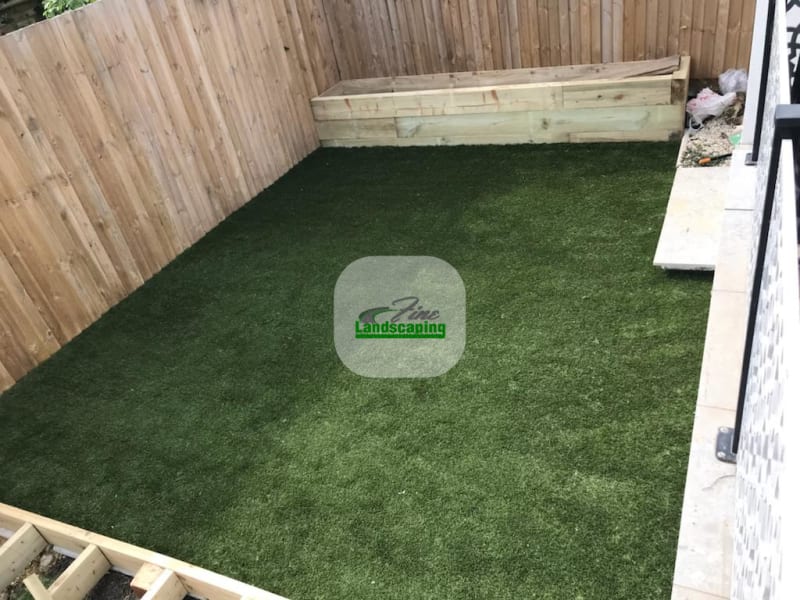
- Best for Budget: Real lawn (£8-15/m² installed vs £45-90/m² for artificial)
- Best for Durability: Artificial grass (15-20 years vs constant maintenance)
- Best for Looks: Tie — quality artificial grass looks green year-round, real grass has authentic charm
- Best for Low Maintenance: Artificial grass (minimal upkeep vs weekly mowing and seasonal care)
It's April 2026, and across South London gardens from Norbury to Bromley, homeowners are planning their spring lawn projects. The question we hear most often at Fine Landscaping is simple: should I stick with a traditional lawn or make the switch to artificial grass?
Both options have their place, and the right choice depends entirely on your lifestyle, budget, and what you want from your outdoor space. We've installed hundreds of both types across Croydon, Sutton, and Surrey, so let's break down exactly what you need to know.
The Direct Comparison: Artificial Grass vs Real Lawn
| Criteria | Artificial Grass | Real Lawn |
|---|---|---|
| Initial Cost (per m²) | £45-90 installed | £8-15 installed |
| Lifespan | 15-20 years | Indefinite (with care) |
| Monthly Maintenance | 15-30 minutes | 4-6 hours |
| Water Usage | None (occasional rinse) | High in summer |
| Year-Round Appearance | Always green | Variable (muddy in winter) |
| Pet Friendly | Excellent (with drainage) | Good (can get muddy) |
| Child Play Areas | Excellent (soft, clean) | Good (but wears quickly) |
| Environmental Impact | Plastic product, no carbon absorption | Carbon sink, supports wildlife |
| Drainage | Excellent (when installed properly) | Variable (depends on soil) |
| Feel Underfoot | Synthetic (improving) | Natural and authentic |
Artificial Grass: The Complete Picture
Modern Artificial Grass services have come a long way from the plastic-looking surfaces of ten years ago. Today's premium products look remarkably realistic, with varied blade lengths, natural colour tones, and even a thatch layer that mimics real grass.
Pros of Artificial Grass
- Zero mowing: Never push a lawnmower again — that's 50+ hours saved every year
- Always green: Looks pristine in January just as it does in July
- No mud: Perfect for families with children or dogs who play outside whatever the weather
- Water savings: No watering needed, which is increasingly important with hosepipe bans becoming more common in Surrey
- Versatile: Works in shady areas where real grass struggles to grow
- Immediate results: Looks perfect from day one, no waiting for seeds to establish
- Pet-friendly: Quality artificial grass drains quickly and is easy to clean
Cons of Artificial Grass
- High upfront cost: The initial investment is significant
- Heat retention: Can get hot in direct summer sun (though newer products address this)
- Not biodegradable: It's a plastic product with environmental considerations
- Eventually needs replacing: Even the best artificial grass won't last forever
- Less natural feel: Doesn't have that authentic grass smell or feel, especially to bare feet
- No wildlife benefit: Doesn't support insects, worms, or other garden biodiversity
Budget range: £45-60/m² installed
Mid-range: £60-75/m²
Premium: £75-90/m²
A typical 50m² garden: £2,250-£4,500 fully installed
What Affects Artificial Grass Pricing?
The quality of the grass itself makes a huge difference. Budget options (£15-25/m² for materials alone) often look plastic and flatten quickly. Premium products (£40-55/m² materials) have multiple blade colours, realistic thatch, and superior resilience.
Installation costs depend on groundwork. If you've got an existing lawn on decent soil, preparation is straightforward. But if we're dealing with heavy clay (common in areas like Dulwich and Penge) or poor drainage, you'll need a more substantial sub-base, which adds £15-25/m² to the project.
We always recommend proper groundwork for artificial grass — cutting corners on the base means problems with drainage and an uneven surface within a year or two.
Real Lawn: The Traditional Choice
There's something inherently satisfying about a well-maintained natural lawn. The smell of fresh-cut grass on a spring morning, the soft feel underfoot, and the knowledge that you're supporting local wildlife — these are things artificial alternatives can't quite replicate.
Pros of Real Lawn
- Lower initial cost: A fraction of the price to install compared to artificial grass
- Natural and authentic: Nothing beats the real thing for look, smell, and feel
- Environmental benefits: Absorbs carbon, produces oxygen, and supports biodiversity
- Cooler in summer: Natural grass stays cooler through evapotranspiration
- Self-repairing: Grows back when damaged (unlike artificial grass which needs patching)
- Endless lifespan: With proper care, lasts indefinitely
- Natural drainage: Works with your soil ecosystem
Cons of Real Lawn
- High maintenance: Weekly mowing, seasonal feeding, aerating, and scarifying
- Water requirements: Needs regular watering during dry spells
- Seasonal appearance: Goes brown in drought, muddy in winter, patchy in shade
- Weather dependent: Can't use it when waterlogged without creating damage
- Ongoing costs: Mower, fertiliser, weed killer, reseeding, and your time
- Wear patterns: High-traffic areas (near patios or play equipment) wear bare quickly
Seeding: £8-12/m² installed
Turfing: £12-18/m² installed
A typical 50m² garden: £400-£900 for initial installation
Annual maintenance: £200-500 (materials, equipment, or professional help)
The True Cost of Real Lawn Over Time
While the initial installation is much cheaper, the ongoing costs add up. A decent petrol mower costs £250-600, and you'll replace it every 5-10 years. Fertiliser, weed treatment, and reseeding run £80-150 annually for an average garden.
If you value your time at even £15/hour, those 4-6 hours monthly during the growing season (April-October) represent £420-630 in labour annually. Over 15 years, that's £6,300-9,450 in time alone.
Which Should You Choose?
This isn't about one being universally better — it's about matching the right solution to your specific situation. Here's how we guide homeowners across Croydon, Streatham, and Mitcham through this decision.
Choose Artificial Grass If You:
- Have young children or dogs who use the garden daily
- Want a consistently pristine appearance year-round
- Have limited time for garden maintenance
- Struggle with shady areas where grass won't grow
- Live in an area with heavy clay soil and drainage issues
- Want to create a clean outdoor living space that's usable in all weathers
- Are willing to invest upfront to save time and hassle long-term
Choose Real Lawn If You:
- Enjoy gardening and find lawn care relaxing rather than burdensome
- Have a limited budget for the initial installation
- Value environmental benefits and supporting local wildlife
- Prefer the authentic look, feel, and smell of natural grass
- Have decent soil and reasonable sun exposure
- Don't mind seasonal variation in appearance
- Want the option to easily change your garden layout in future
A Real-World Scenario: The Johnson Family in Purley
Last spring, we worked with the Johnson family on their 60m² back garden in Purley. They had two young children (ages 3 and 6), a Labrador, and both parents working full-time.
Their existing lawn was patchy, muddy in winter, and wore bare in the high-traffic areas near their decking. They were spending weekends trying to maintain it rather than enjoying it with their kids.
We installed 60m² of mid-range artificial grass at £68/m² (£4,080 total), including proper drainage and a sand-filled base. We also laid block paving borders to create clean edges.
Eighteen months later, they told us it was the best investment they'd made in their home. The children play outside in all weather, the dog runs freely without creating muddy paw prints, and weekend mornings are spent enjoying coffee on the deck rather than mowing.
The artificial grass has completely changed how we use our garden. It sounds silly, but we actually spend time out there now instead of just looking at it through the window while feeling guilty about the mowing.
Installation Considerations for April 2026
April is actually the ideal time for both options. For artificial grass, the ground isn't waterlogged (like in winter) or baked hard (like in summer), making excavation and base preparation much easier.
For real lawn, spring turfing or seeding gives grass the entire growing season to establish before facing winter stress. Soil temperatures are rising, and April showers provide natural irrigation.
What Installation Involves
Artificial Grass: We excavate 75-100mm of topsoil, install a compacted crushed stone sub-base, add a layer of sharp sand, then lay the grass with joints carefully aligned. Edges are secured with treated timber or paving, and infill sand is brushed in. A typical 50m² garden takes 2-3 days.
Real Lawn: We prepare the soil by removing debris, rotovating, leveling, and adding topsoil if needed. Turf is laid in a brick pattern and rolled for contact with soil. Alternatively, we can seed and protect with netting. A 50m² garden takes 1-2 days, but grass needs 2-4 weeks before regular use.
Combining Both Options
You don't have to choose just one. We've designed many gardens in Beckenham and Crystal Palace that use artificial grass in high-traffic or shady areas while keeping real lawn in larger, sunnier spaces.
This hybrid approach works particularly well for families who want a practical play area near the house (artificial) but prefer the look and feel of real grass in the main garden. It's also budget-friendly, letting you invest in artificial grass where it matters most.
Making Your Decision
Start by honestly assessing your priorities. If you value your weekend time and want a garden that's always ready for use, artificial grass delivers that — despite the higher cost. If you enjoy the process of lawn care and the natural ecosystem it supports, real grass remains unbeatable.
Consider your specific conditions too. Heavy shade under trees? Real grass will struggle. Heavy clay soil in areas like Sydenham? Drainage work might make artificial grass relatively more cost-effective. Young family or dogs? The durability of artificial grass often wins out.
We're always happy to visit your garden and talk through the options with no obligation. Sometimes a site visit reveals factors that aren't obvious from the description — like drainage issues, shade patterns, or existing sub-base that might reduce costs.
Ready to Get Started?
Whether you're leaning towards artificial grass, a traditional lawn, or a combination of both, we'll help you create a garden that works for your lifestyle. Serving Norbury, South London, and Surrey since 2015.
Get Free QuoteFrequently Asked Questions
How long does artificial grass last in the UK climate?
Quality artificial grass typically lasts 15-20 years in the UK, even with our wet winters and variable weather. Budget products may only last 8-10 years, especially in high-traffic areas or with pets. The lifespan depends on the quality of materials, the density of the grass, and how well it's installed — proper drainage and a good sub-base make a huge difference.
What's the total cost difference over 15 years?
Artificial grass costs £2,250-4,500 upfront for a 50m² garden with minimal ongoing costs (perhaps £200 over 15 years). Real lawn costs £400-900 initially but requires £200-500 annually in materials and equipment, totaling £3,400-8,400 over 15 years. If you factor in time saved (50+ hours yearly), artificial grass becomes significantly more cost-effective despite the higher initial price.
Does artificial grass get too hot for children and pets in summer?
Artificial grass can get warm in direct summer sun, reaching temperatures 10-20°C higher than natural grass on very hot days. However, newer products incorporate heat-reflective technology that reduces this significantly. A quick spray with the hose cools it instantly, and most gardens in South London have enough shade from fences or trees that it's rarely an issue in practice.
Can I install artificial grass myself to save money?
You can install it yourself, but getting professional results is harder than it looks. The sub-base preparation is critical for drainage and longevity, joining seams invisibly requires skill and specialist tools, and poor installation leads to problems within 1-2 years. DIY might save £20-35/m² in labour, but if you lack the equipment or experience, professional installation is usually worth the investment for a 15-20 year lifespan.
Is artificial grass safe for dogs and easy to clean?
Yes, quality artificial grass is excellent for dogs — it's non-toxic, drains quickly (urine runs straight through), and doesn't get muddy. We recommend hosing it down weekly and using a specialist artificial grass cleaner monthly to prevent odours. Solid waste is removed just like with real grass. The grass itself is more durable than natural lawn, which often wears bare in high-traffic areas or where dogs run along fence lines.