
Best for Budget (Initial): Real Lawn (£8-15/m²)
Best for Long-term Value: Artificial Grass (saves on maintenance)
Best for Durability: Artificial Grass (15-20 years)
Best for Looks: Real Lawn (natural appeal)
Lowest Maintenance: Artificial Grass (minimal upkeep)
Best for Eco-Conscious: Real Lawn (supports biodiversity)
It's the question we hear constantly from homeowners across Norbury, Croydon and Streatham: should I stick with real grass or make the switch to artificial turf? Both options have passionate advocates, and the right choice genuinely depends on your lifestyle, budget and garden priorities.
With spring 2026 bringing perfect conditions for both fresh turf laying and artificial grass installations, we're seeing more South London homeowners than ever weighing up their options. Let's break down everything you need to know to make an informed decision.
Side-by-Side Comparison Table
| Criteria | Artificial Grass | Real Lawn |
|---|---|---|
| Initial Cost | £45-85/m² installed | £8-15/m² for quality turf |
| Lifespan | 15-20 years | Indefinite (with care) |
| Mowing Required | Never | Weekly Apr-Oct |
| Watering Needed | Occasional rinsing only | Regular in dry spells |
| Mud & Mess | None | High in wet weather |
| Child/Pet Wear | Excellent resistance | Patches and worn areas |
| Year-Round Colour | Always green | Brown patches in winter |
| Biodiversity Value | Minimal | Supports insects, birds |
| Heat Retention | Can get hot in summer | Stays cool naturally |
| Drainage | Excellent (40-60L/m²/min) | Variable (soil dependent) |
Artificial Grass: The Complete Breakdown
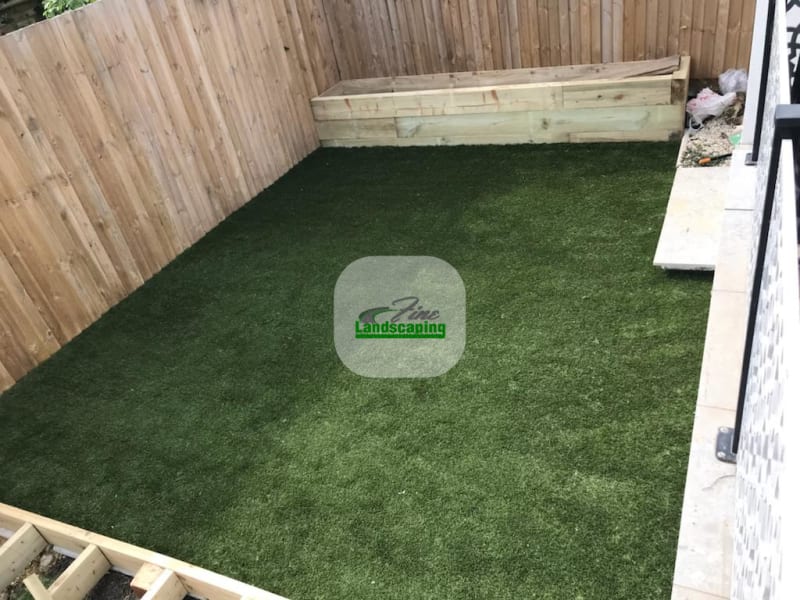
Modern Artificial Grass services have come a long way from the plastic-looking astroturf of the 1990s. Today's premium products look remarkably realistic, with varied blade heights, natural colour variations and proper drainage systems built in.
Pros of Artificial Grass
- Zero mowing: Reclaim your weekends — no more pushing a mower around every Saturday
- No muddy patches: Perfect for families with dogs or children who play outside year-round
- Always looks pristine: Neighbours in Dulwich and Crystal Palace love the consistent appearance
- Water savings: No irrigation needed except occasional rinsing to remove dust or pet waste
- Weed-free: Proper installation with membrane prevents virtually all weed growth
- Usable year-round: No "keep off the grass" periods during wet winter months
- Perfect for problem areas: Thrives in shade where real grass struggles to grow
Cons of Artificial Grass
- Higher upfront cost: Significantly more expensive initially than laying turf
- Heat absorption: Can become uncomfortably hot during summer heatwaves
- Environmental concerns: Made from plastic; eventual disposal is problematic
- No biodiversity: Doesn't support insects, earthworms or natural ecosystems
- Static feel: Some people simply prefer the natural texture of real grass
- Installation critical: Poor groundwork leads to drainage issues and uneven surfaces
- Pet odour potential: Requires regular rinsing if dogs use the area frequently
Budget range: £45-55/m² installed
Mid-range: £60-75/m² installed
Premium products: £80-85/m² installed
Typical 50m² garden: £3,000-4,250 complete installation
Artificial Grass Lifespan & Maintenance
Quality artificial grass installed properly lasts 15-20 years before showing significant wear. High-traffic areas may fade slightly earlier, but most manufacturers offer 10-year guarantees on their premium products.
Maintenance is minimal but not zero. You'll need to brush the pile occasionally to keep blades upright, rinse away dust and debris monthly, and deal with any weeds that sprout around edges. Budget about 30 minutes per month versus several hours weekly for a real lawn.
We always recommend choosing the highest quality artificial grass you can afford. The difference between budget and premium products becomes painfully obvious after just two years, especially in our unpredictable South London weather.
Real Lawn: The Traditional Choice
There's something undeniably appealing about natural grass — the smell after mowing, the soft texture underfoot, and the knowledge you're maintaining a living ecosystem rather than a synthetic surface.
Pros of Real Lawn
- Lower initial cost: Fraction of the price compared to artificial alternatives
- Natural beauty: Authentic appearance that changes with seasons
- Environmental benefits: Produces oxygen, supports wildlife, filters rainwater naturally
- Cooler surface: Stays comfortable even during hot summer days
- Pleasant scent: Fresh-cut grass smell that many homeowners love
- Feels authentic: Natural springiness and texture
- Easily repairable: Patches can be re-seeded or turfed affordably
Cons of Real Lawn
- Constant maintenance: Mowing, edging, feeding, aerating, scarifying
- Weather dependent: Browns during droughts, gets muddy when wet
- Wear patterns: High-traffic areas develop bare patches quickly
- Seasonal dormancy: Looks tired and brown throughout winter months
- Weed battles: Ongoing fight against dandelions, moss and broadleaf weeds
- Water requirements: Needs regular watering during dry spells to stay green
- Equipment costs: Mower, strimmer, aerator and ongoing fuel/electricity
Quality turf supply & laying: £8-15/m²
Topsoil preparation (if needed): £25-35/m³
Annual maintenance costs: £200-400/year (DIY)
Typical 50m² garden: £400-750 installation + ongoing costs
Real Lawn Lifespan & Maintenance
A natural lawn theoretically lasts forever with proper care, but "proper care" is the operative phrase. Expect to spend 2-3 hours weekly during growing season on mowing and edging alone, plus additional time for feeding (quarterly), scarifying (annually), and dealing with problem areas.
Spring 2026 is ideal for establishing new lawns across Bromley, Sutton and surrounding areas. The combination of warming soil and regular April showers gives turf the best possible start, though you'll still need to stay off it for several weeks while it establishes.
Long-Term Cost Comparison
Let's run the numbers for a typical 50m² South London garden over a 15-year period:
Artificial Grass (15 years):
- Installation: £3,500
- Occasional brushing/rinsing: £0 (DIY)
- Minor repairs: £150
- Total: £3,650
Real Lawn (15 years):
- Installation: £600
- Annual maintenance (DIY): £350 × 15 = £5,250
- Mower replacement (twice): £600
- Re-turfing worn areas: £400
- Total: £6,850
Even with conservative estimates for real lawn maintenance, artificial grass becomes cheaper after about 8-10 years. If you hire professionals for lawn care, the break-even point drops to just 4-5 years.
Which Should You Choose?
Choose Artificial Grass If:
- You have young children or dogs who use the garden heavily
- You hate gardening and want minimal maintenance
- Your garden is heavily shaded where real grass won't thrive
- You're in an area like Mitcham or Norbury with heavy clay soil and drainage issues
- You want year-round usability without muddy patches
- Time is more valuable to you than the initial investment
Choose Real Lawn If:
- You have a limited budget and can't afford the initial outlay
- You genuinely enjoy gardening and lawn care as a relaxing hobby
- Environmental concerns and supporting biodiversity are priorities
- You prefer natural materials and authentic garden aesthetics
- Your garden already has healthy, well-established grass
- You have good drainage and suitable growing conditions
Real-World Scenario: The Thompson Family, Streatham
Last month, we completed a project for the Thompson family in Streatham that perfectly illustrates this decision. They have two young children, a Labrador, and both parents work full-time.
Their 60m² rear garden was a muddy disaster for eight months of the year. They'd tried maintaining real grass for three years, spending every dry weekend mowing and repairing patches, only to watch it turn to mud again the following winter.
We installed premium artificial grass at £70/m² (£4,200 total). Within the first year, they'd already saved approximately £600 in lawn care time and products. More importantly, their children could actually use the garden year-round without trailing mud through the house.
The Thompsons' only regret? Not making the switch sooner. Sometimes the right solution is obvious once you honestly assess your lifestyle and priorities rather than what you think a garden "should" have.
Installation Timing: Why Spring 2026 Is Ideal
Whether you choose artificial or real grass, April is genuinely one of the best months for installation across South London and Surrey.
For artificial grass installation, spring weather allows proper ground preparation without the complications of frozen winter soil or scorching summer heat. The ground is workable but not waterlogged, making compaction and levelling much easier.
For real lawn, spring is nature's ideal planting window. Soil temperatures are rising, rainfall is typically reliable, and grass has the entire growing season ahead to establish strong roots before winter. Turf laid in April usually looks established by June.
We're currently booking installations 3-4 weeks out across Croydon, Purley and Sydenham areas. If you're considering a project this spring, get a free quote soon to secure your preferred timing.
The Verdict
There's no universal "winner" in the artificial versus real grass debate — only the right choice for your specific circumstances. We've installed both options for hundreds of satisfied clients throughout South London, and we've seen both choices work brilliantly when they match the homeowner's lifestyle.
If you're time-poor, have heavy garden usage, or struggle with problematic growing conditions, artificial grass delivers outstanding value despite the higher initial cost. If you're budget-conscious, environmentally focused, or genuinely enjoy lawn care, real grass remains a perfectly valid choice.
The key is being honest about your priorities, realistic about your available time, and clear-eyed about long-term costs versus initial investment. Whatever you choose, proper installation makes all the difference — whether that's quality groundwork for artificial grass or thorough soil preparation for real turf.
Ready to Transform Your Garden?
Whether you're leaning towards artificial grass or a pristine new lawn, we'll help you make the right choice for your South London garden. Our team serves Norbury, Croydon, Bromley, Sutton and throughout Surrey with expert installation and honest advice.
Frequently Asked Questions
How much does artificial grass cost compared to real turf in 2026?
Artificial grass costs £45-85/m² installed in South London, while quality turf costs just £8-15/m² laid. However, artificial grass requires virtually no ongoing maintenance costs, while real lawns cost £300-400 annually for DIY upkeep or £800-1,200 for professional care. Over a 15-year period, artificial grass often works out cheaper despite the higher initial investment.
How long does it take to install artificial grass?
A typical 50m² garden takes 2-3 days for professional artificial grass installation, including groundwork, membrane laying, base preparation and fitting. The area is immediately usable once completed — no waiting period required. In comparison, real turf can be laid in a day but needs 3-4 weeks of careful nursing before heavy use, making artificial grass the faster option for families needing quick results.
Does artificial grass get hot in summer?
Yes, artificial grass can become noticeably warmer than real grass on hot sunny days, sometimes reaching uncomfortable temperatures for bare feet. However, modern products with lighter colours and heat-reflective technology perform better than older versions. A quick spray with the hose cools it down instantly, and many homeowners find it's only an issue during genuine heatwaves rather than typical British summer weather.
Will artificial grass work with my dog?
Artificial grass works excellently for dogs and is one of the most popular reasons South London homeowners make the switch. It eliminates muddy paws, doesn't develop bare patches from running, and drains quickly after rain. The key is choosing pet-specific products with antimicrobial backing and rinsing the area regularly (weekly for heavy use) to prevent odour build-up. We recommend products with drainage rates above 40 litres per square metre per minute for dog owners.
Is artificial grass bad for the environment?
Artificial grass has environmental trade-offs. It's made from plastic (typically polyethylene and polyurethane), doesn't support insects or soil ecosystems, and eventually becomes landfill waste. However, it eliminates petrol mower emissions, requires no fertilizers or pesticides, and saves significant water compared to maintaining a pristine lawn. The environmental equation depends heavily on your comparison point — a low-maintenance real lawn beats artificial for ecology, but artificial grass wins against chemically-intensive, heavily-irrigated lawns.