
Those steep Orpington gardens aren't getting any flatter. Whether you're battling the slopes near Chelsfield Village or taming that awkward gradient behind your Victorian terrace, a properly engineered retaining wall transforms unusable space into something spectacular.
Response within 24 hours
Orpington's mix of chalk hills and clay deposits creates unique challenges for homeowners. Properties backing onto the Cray Valley often face serious erosion issues, while those newer estates near St Mary Cray struggle with builders' inadequate terracing. A structural retaining wall isn't just about holding back soil – it's about creating usable garden levels, preventing foundation damage, and actually enjoying that sloped plot you bought.
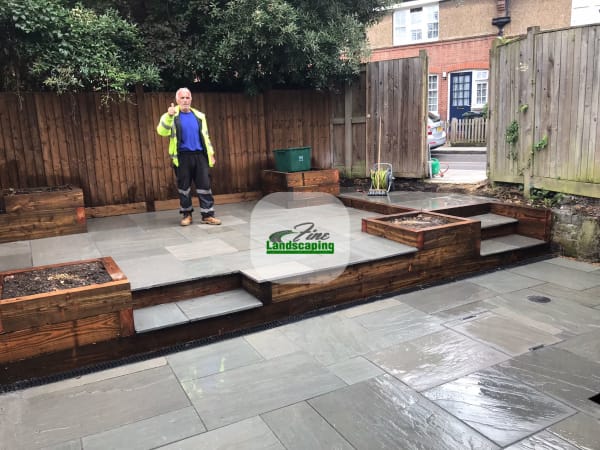
Modern retaining systems go far beyond stacked breeze blocks. Gabion walls suit contemporary homes perfectly, while timber sleeper construction complements period properties throughout Petts Wood. Reinforced concrete blocks handle serious height differences, particularly useful for driveways cut into hillsides. Each material choice depends on soil type, water table levels, and the specific pressures your Orpington slope generates.
Twenty years solving Orpington's terrain puzzles means understanding which walls fail and why. Local knowledge matters when you're dealing with underground springs near the Keston ponds or that notorious blue clay found across BR6.
Rated 4.9/5 from over 280 verified reviews
Basic timber walls start around £180-250 per linear metre. Engineered block systems run £300-450, while natural stone solutions for period properties typically exceed £500. Height, access difficulties, and drainage requirements significantly affect final costs.
Absolutely – from the conservation areas of BR5 to the newer developments across BR6. Regular projects span Chelsfield Village to St Mary Cray, including those tricky sloped gardens backing onto Priory Gardens.
Smaller walls under 1m typically complete within 5-7 days. Larger structural projects requiring deep foundations and drainage systems usually need 2-3 weeks, weather permitting. Planting behind walls needs another 4-6 weeks settling time.
Every retaining wall carries decade-long protection against structural movement or failure. This covers the wall integrity, drainage systems, and any associated groundwork – essentially everything except deliberate damage or extreme weather beyond design parameters.
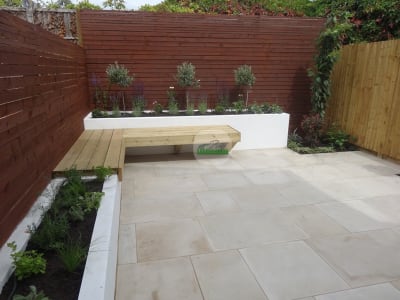
Definitely – combination designs maximise space brilliantly. Integrated steps solve access between levels, while bench seating built into walls creates social spaces. These multi-purpose structures particularly suit smaller Orpington gardens where every square metre counts.
Get your free, no-obligation quote today.