
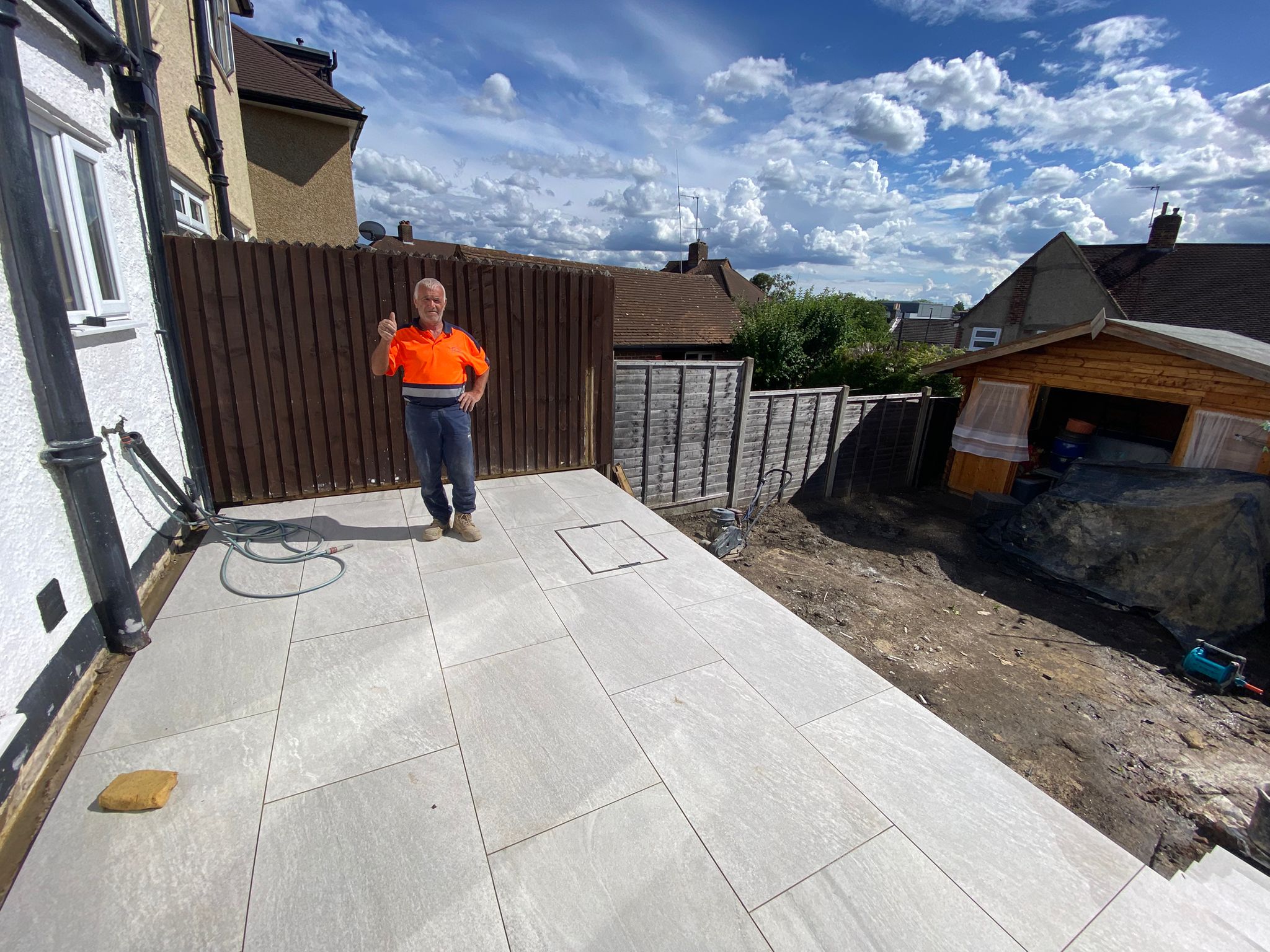
Paving is one of the most effective ways to enhance the look and functionality of your outdoor space. When done properly, it adds structure, improves drainage, and increases the overall value of your property. Here’s how paving should be done the right way:
1. Plan and Design
Start by deciding the area to be paved and the type of material you want to use — concrete, block paving, natural stone, or porcelain. Consider the purpose of the space: driveways require stronger materials than garden paths or patios.
Sketch the layout and make sure you plan for water drainage, edging, and access points.
2. Prepare the Ground
Proper ground preparation is key to long-lasting paving.
Mark out the area with string lines and stakes.
Excavate the soil to a depth of about 150–200mm, depending on the intended use.
Remove all vegetation and debris.
If the ground is soft or clay-heavy, you may need to compact it with a plate compactor to prevent future sinking.
3. Create a Solid Sub-Base
Lay a sub-base layer using MOT Type 1 or crushed stone. This should be around 100–150mm thick.
Compact it in layers to create a stable foundation. The sub-base provides the load-bearing support, so don’t skip this step — poor compaction is one of the main causes of paving failure.
4. Add a Layer of Sharp Sand
Spread a 30–40mm layer of sharp sand over the compacted sub-base.
Use screeding bars or a straight edge to level it off evenly.
The sand should be moist (not dry or muddy) to help the pavers bed firmly in place.
5. Lay the Paving Stones
Start from a straight edge or corner and lay the paving stones according to your pattern (e.g., stretcher bond, herringbone, or random).
Leave a small joint gap (2–5mm) between each slab for jointing sand.
Check levels frequently using a spirit level and rubber mallet to tap down any uneven stones.
6. Cut and Fit Edges
Where needed, use a stone cutter or angle grinder to trim pavers to fit.
Ensure the edges are secure — use concrete or edge restraints to hold them in place and prevent shifting over time.
7. Fill the Joints
Once all pavers are in place, brush kiln-dried sand into the joints.
Compact the surface again to settle the sand and fill any gaps.
Repeat the brushing and compacting until the joints are completely filled.
8. Finishing Touches
Sweep away excess sand and lightly water the area to help the sand settle.
Allow 24–48 hours before heavy use, especially for driveways.
For a professional finish, consider sealing the surface — this helps protect against stains, moss, and weeds.